Every filter and immersion method this site has walked through, cold brew, pour-over, Chemex, French press, moka pot, gets a dedicated ratio and grind size guide with gram amounts and a worked recipe. Espresso, arguably the method where getting the ratio right matters most, has not, even though this site’s own coffee to water ratio chart already lists espresso at 1:2, with 9g to 18g, 18g to 36g, and 20g to 40g worked examples, and the grind size chart already places its texture at 180 to 400 microns. Those figures are correct, but neither page explains what “ratio” actually means for a pressurized shot rather than a gravity-fed brew, or walks through the ristretto, normale, and lungo styles that ratio number splits into. Four independently published guides, from Seattle Coffee Gear, La Marzocco Home, Coffee Bros, and NOVARO, give this site enough to build that missing piece, and they also disagree with each other in one specific, worth-explaining way.
The ratio: 18g in, 36g out, 1:2
For espresso, “ratio” means something more precise than it does for a pour-over or a French press: it is the weight of dry ground coffee packed into the portafilter basket (the dose) against the weight of liquid espresso that ends up in the cup (the yield), measured on a scale rather than eyeballed in a shot glass. NOVARO states the reference point plainly: “start with 18g of coffee in, aim for 36g of espresso out, and use 25-30 seconds as your first time target.” Coffee Bros gives the identical figures for what it calls a normale shot: “a typical normale shot may look like 18 grams of coffee in a double basket, yielding 36 grams of espresso liquid within 30 seconds.” Seattle Coffee Gear’s numbers match too, citing 18 grams of dose against a double basket capacity of roughly 16 to 18 grams, with a 36-gram yield as the standard target.
None of the four sourced guides disagrees on that center point. Where they genuinely diverge is on how far you can move away from 1:2 before a shot stops being a “normale” and becomes a ristretto or a lungo instead, and that disagreement is worth walking through rather than smoothing over.
Where ristretto ends and lungo begins: the real disagreement
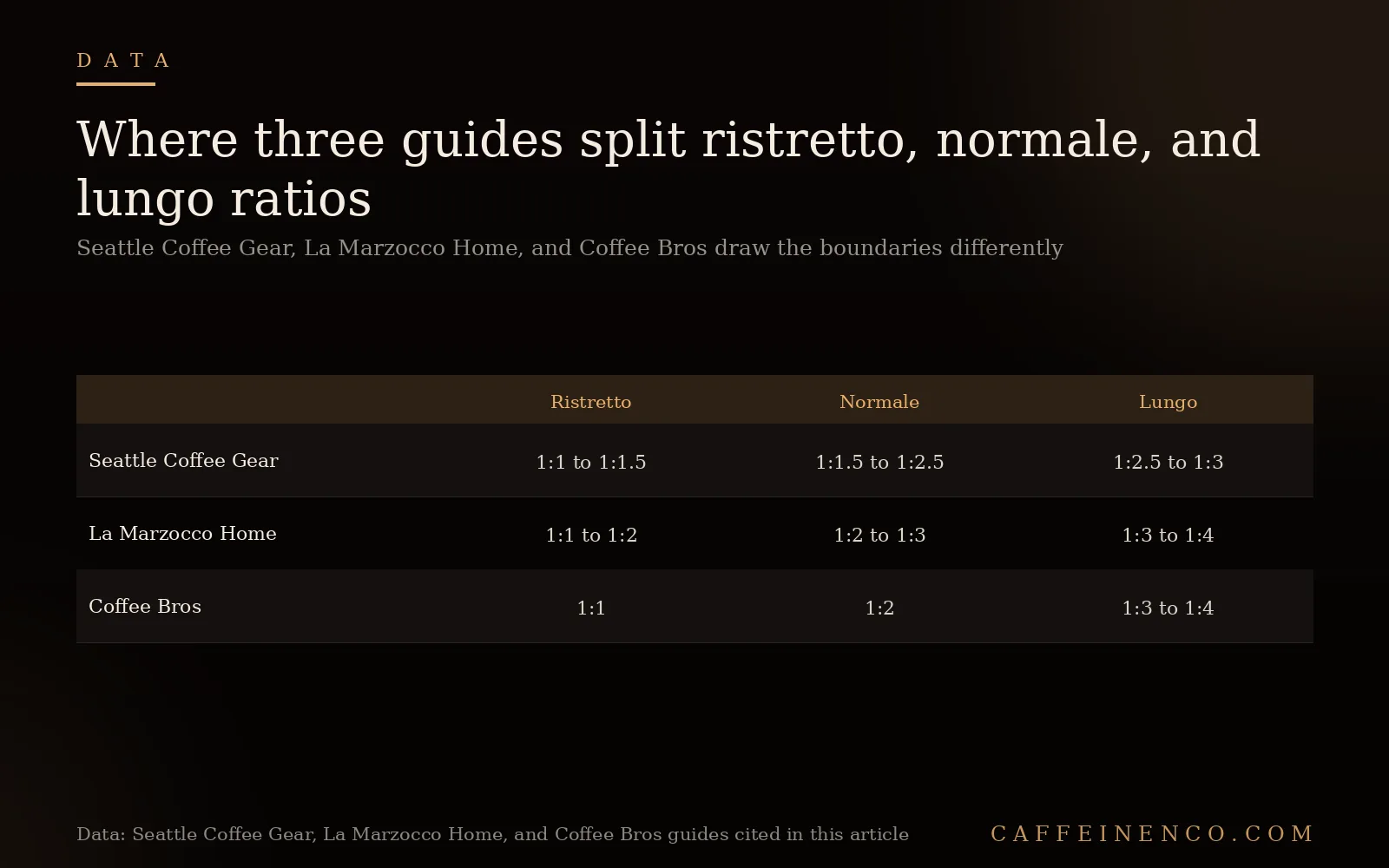
| Guide | Ristretto | Normale | Lungo |
|---|---|---|---|
| Seattle Coffee Gear | 1:1 to 1:1.5 | 1:1.5 to 1:2.5 (SCA “sweet spot” 1:2 to 1:2.5) | 1:2.5 to 1:3 or beyond |
| La Marzocco Home | 1:1 to 1:2 | 1:2 to 1:3 | 1:3 to 1:4 or beyond |
| Coffee Bros | 1:1 (14g dose, 14g yield example) | 1:2 (18g to 36g) | 1:3 to 1:4 (18g to 54g or 72g) |
Seattle Coffee Gear treats a full 1:2 shot as sitting inside its normale band already, close to the SCA’s own “sweet spot” of 1:2 to 1:2.5. La Marzocco Home draws its normale band a full ratio point wider, running 1:2 to 1:3, which means the exact same 1:2.5 shot Seattle Coffee Gear would call normale sits comfortably inside La Marzocco’s normale range too, but a 1:3 shot that Seattle Coffee Gear would already call a lungo is still normale by La Marzocco’s count. Coffee Bros splits the difference by naming 1:2 the normale reference and reserving 1:3 for lungo, closer to Seattle Coffee Gear’s line than La Marzocco’s.
The honest takeaway is that ristretto, normale, and lungo are not three fixed, industry-standard boxes with hard edges; they are a continuum, and different guides draw the two dividing lines in different places. What all four sources agree on completely is the direction of travel and the two anchor points: 1:1 (or close to it) is a ristretto by every guide here, 1:2 is a normale by every guide here, and something at 1:3 or beyond is a lungo by every guide here. Treat the boundary zones between them, roughly 1:1.5 and roughly 1:2.5 to 1:3, as genuinely contested territory where the label depends on which guide you are reading, not a mistake in any one of them.
Worked example: three shots from one dose
Coffee Bros and La Marzocco’s example figures make it easy to see all three styles pulled from the same starting dose:
- Ristretto. Dose 18g, stop the shot at 27g for a 1:1.5 ratio, or as tight as 18g in to 18g out for a full 1:1 if pulling from a single basket at a lighter dose. Expect a thick, syrupy shot concentrated in the first, sweetest compounds to extract.
- Normale. Same 18g dose, let the shot run to 36g for the universally agreed 1:2 reference point, in roughly 25 to 30 seconds per NOVARO and within 30 seconds per Coffee Bros. This is the shot every one of the four sourced guides treats as the sensible default to dial in before trying anything else.
- Lungo. Same 18g dose, extend the pour to 54g for a 1:3 ratio, or as far as 72g for a 1:4 ratio, what Coffee Bros calls “a typical lungo shot,” if a guide’s lungo band runs wider. Expect a lighter body and a brighter, more acidic character as more water passes through the same puck.
Locking the dose at 18g and only changing where you stop the shot is the fastest way to taste the difference between all three styles side by side, using this site’s own grind size chart as the starting grind for all three: 180 to 400 microns, described there as “powdered sugar to fine table salt.”
The grind: fine, and unusually well agreed upon
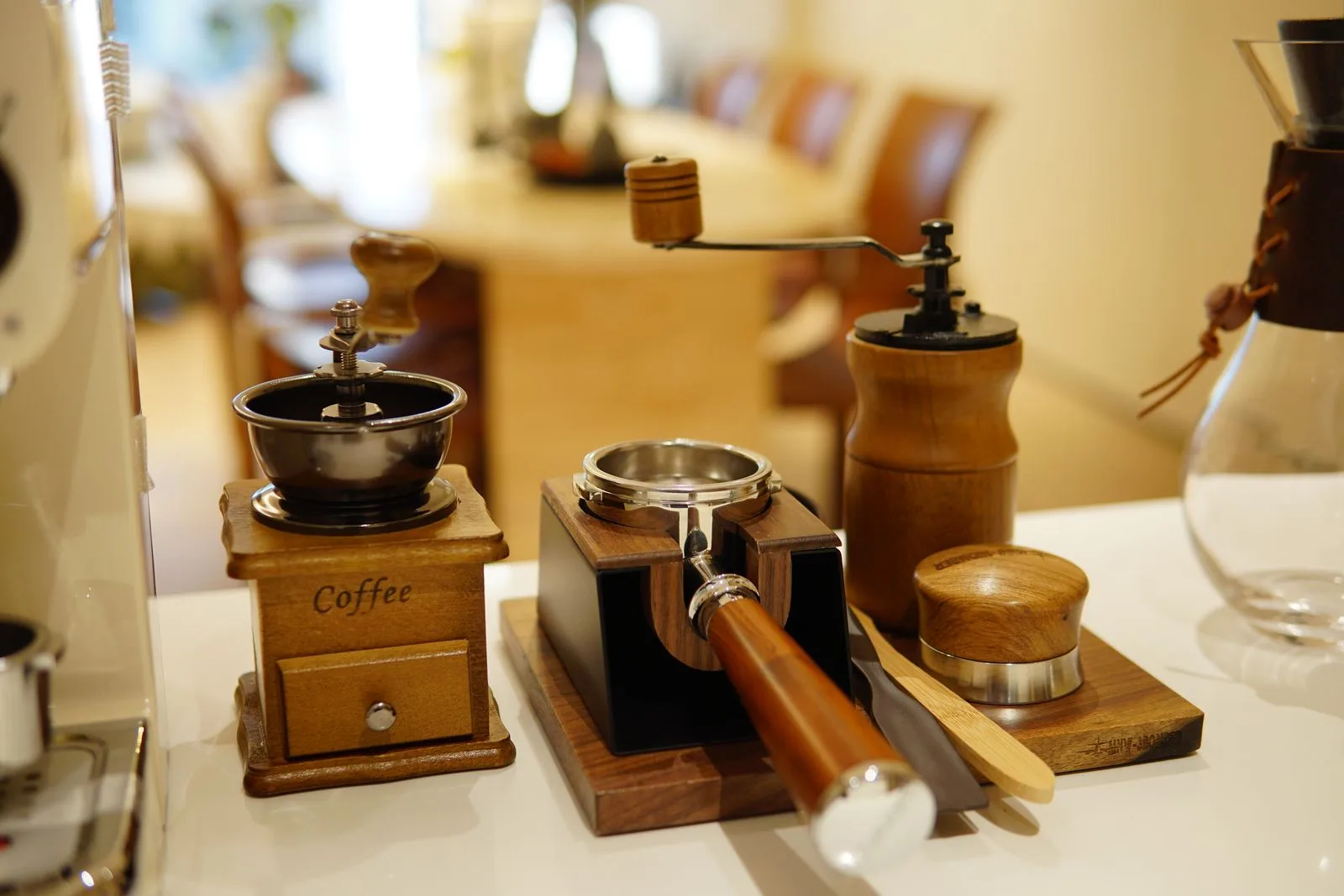
Espresso’s grind window is one of the few points on this site’s own grind size chart singled out as unusually well agreed upon across published sources, sitting at 180 to 400 microns, “comparatively well agreed upon within about 20 microns across sources, likely because it is the method most professionals actually measure with lab equipment rather than describe by eye.” That tight agreement matters more for espresso than for almost any other method on this site, because a shot only has 25 to 30 seconds and a few dozen grams of water to extract properly; a French press or cold brew can compensate for an imperfect grind with extra steep time, but espresso has no such buffer.
A dedicated espresso grinder built to hold a fine, consistent setting makes hitting that narrow window far more repeatable shot after shot than a general-purpose grinder pushed to its finest setting, or you can browse the same category on Amazon. A blade grinder is the one case where this site’s own grind chart is direct: blade grinders “cannot reliably hit any of the ranges in the table above, especially the tighter ones like espresso,” since chopping by chance impact cannot produce the narrow, consistent particle band a portafilter basket needs.
Extraction time: the diagnostic, not the target
NOVARO’s 25 to 30 second window is a beginner starting target, not the full diagnostic story; at the extremes, it gives two separate reference points: “a 36g yield in 15 seconds usually means water moved through the coffee too easily,” while “a 36g yield in 40 seconds usually means the puck offered too much resistance.” Seattle Coffee Gear gives a slightly wider dialing-in range of 25 to 35 seconds, close enough to NOVARO’s window that the two guides cited here are describing the same starting point rather than disagreeing with each other. Worth flagging honestly rather than smoothing over: this site’s own espresso extraction speed guide sources a wider 28 to 36 second window from two different guides, Coffee Bros and Rumble Coffee, and treats that as the more precise diagnostic reference, explicitly ranking a rounded 25 to 30 second figure elsewhere on this site as a quick rule of thumb rather than a hard boundary. Treat the NOVARO and Seattle Coffee Gear numbers above as a beginner-friendly starting point for a first dial-in, and defer to the 28 to 36 second window on that dedicated guide when diagnosing a shot that is genuinely running fast or slow.
The fix in both directions is the same single-variable adjustment. NOVARO’s guidance is direct: for a shot running too fast and tasting sour, “grind finer”; for a shot running too slow and tasting bitter, grind coarser. The core principle both guides share is holding dose and yield fixed at 18g and 36g while changing only the grind, so a shift in flavor or timing can be attributed to one variable instead of several moving at once. For what a shot running well outside either window usually means beyond grind alone, channeling, an unevenly distributed puck, or a worn grinder burr, see this site’s espresso extraction speed guide, and this site’s espresso channeling guide covers the uneven-flow version of the same problem in more depth.
Dosing by weight, not by scoop
A gram scale accurate to at least 0.1g removes the single biggest source of shot-to-shot inconsistency, since a scoop-measured dose can drift by a gram or more depending on how firmly the basket was tamped and how the grounds settled, a difference that matters far more at espresso’s small 18-gram scale than it would in a 240-gram pour-over dose. The same category is available on Amazon. Weighing both the dose going into the basket and the yield coming out of the spouts, rather than trusting a shot glass’s fill line, is what makes the ratios in the table above actually reproducible rather than a rough approximation.
How espresso’s ratio compares to other methods on this site
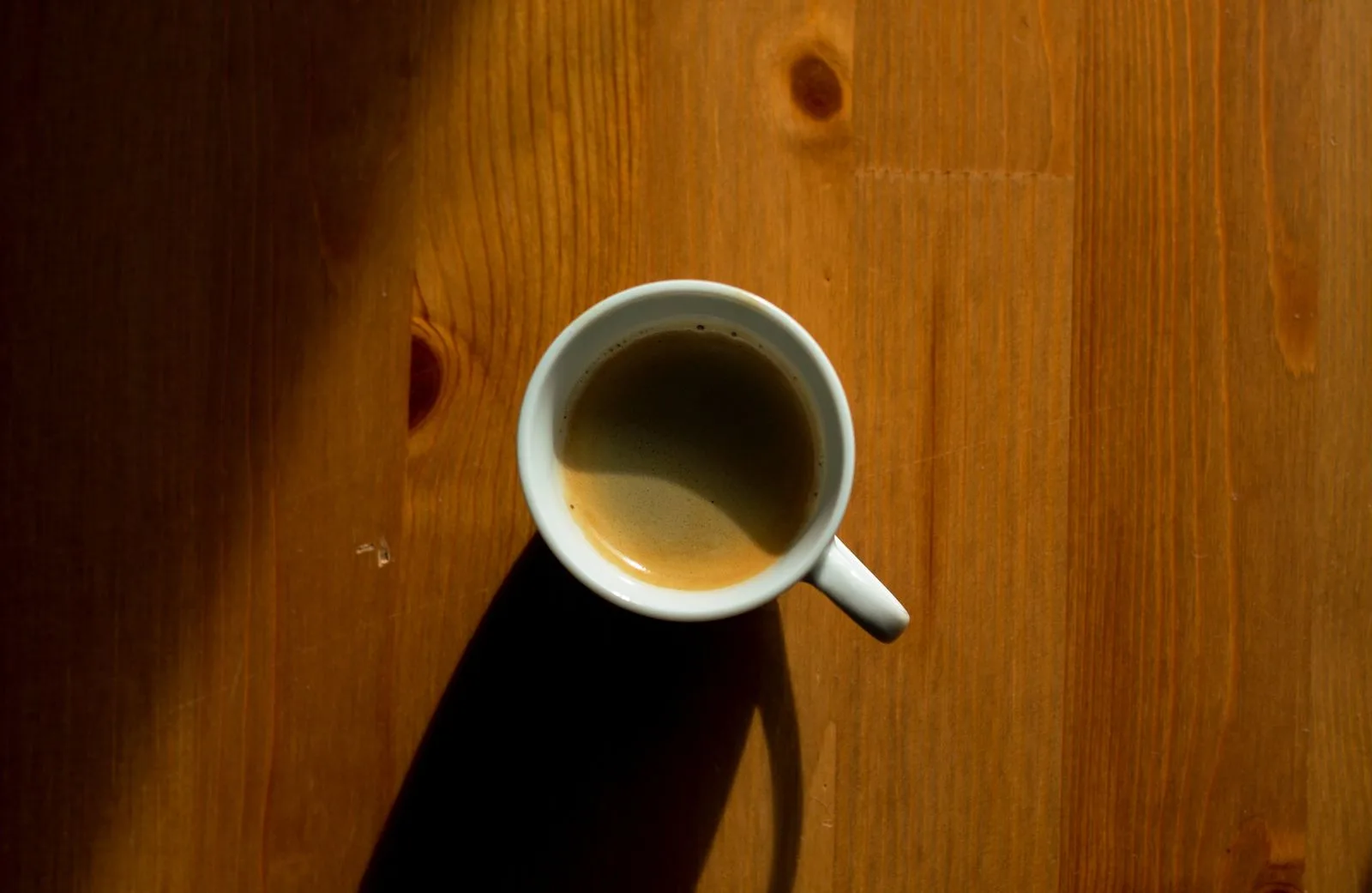
At 1:2, espresso sits at the concentrated extreme of every brew method this site has covered, meaningfully stronger than moka pot’s already-concentrated 1:7 to 1:8 range, which itself sits far below French press’s 1:12 to 1:17 immersion range or drip coffee’s 1:15 to 1:18 range. Even cold brew’s concentrated 1:8 brewing ratio is still four times more dilute than espresso’s 1:2 before any dilution step is applied. That gap is the direct result of pressure rather than a stronger bean or a coincidence: espresso forces a small volume of hot water through a tightly packed, fine puck in under 30 seconds, extracting a similar percentage of the bean’s soluble material as a slower gravity-fed method does, just concentrated into a fraction of the water.
The grind tells the same story from the other direction. At 180 to 400 microns, espresso is one of the finest grinds on this site’s own grind size chart, second only to Turkish/cezve’s 40 to 220 micron range, and still roughly half the size of a moka pot’s 360 to 660 micron range and a fraction of a V60 pour-over’s 400 to 800 microns, because the short contact time under pressure needs far more surface area exposed per gram to extract enough flavor before the shot finishes.
Common mistakes
Judging a shot by the shot glass fill line instead of a scale reading the actual yield weight is the most common mistake, since two “same-looking” pours can differ by several grams depending on how much crema and foam sit on top, and crema volume varies with bean freshness independent of the liquid weight underneath it. Chasing the 25 to 30 second window as a target in itself, rather than as a starting point to taste from, is the second: a shot that lands at 27 seconds but tastes sour or thin is still under-extracted regardless of the clock, and the fix is grinding finer, not accepting a number that happens to fall inside the window. Treating ristretto, normale, and lungo as three fixed categories with agreed-upon boundaries is the third; as the table above shows, published guides genuinely disagree on where normale ends and lungo begins, so a shot one guide calls a lungo can be another guide’s normale at the exact same ratio.
Common questions
What is the standard espresso dose and ratio? 18 grams of coffee to 36 grams of espresso, a 1:2 ratio, in roughly 25 to 30 seconds per NOVARO and within 30 seconds per Coffee Bros. This matches the figures this site’s own coffee to water ratio chart already lists for espresso.
What is the difference between ristretto, normale, and lungo? Ristretto is the most concentrated, roughly 1:1 to 1:1.5 by dose to yield. Normale is the reference point at 1:2. Lungo is the most diluted, 1:3 or beyond. Seattle Coffee Gear, La Marzocco Home, and Coffee Bros all agree on those anchor points but draw the boundary zones between them in slightly different places, so a shot near 1:2.5 or 1:3 may be labeled differently depending on the guide.
What grind size should I use for espresso? 180 to 400 microns, described on this site’s own grind size chart as “powdered sugar to fine table salt,” and one of the more tightly agreed-upon ranges across published sources since it is commonly measured with lab equipment rather than described by eye.
Why does my espresso shot run too fast or too slow? Grind size is the first thing to check: NOVARO’s guidance is to grind finer if a shot runs fast and tastes sour, and grind coarser if it runs slow and tastes bitter, using roughly 15 seconds and 40 seconds as its reference points for a 36g yield running too easily or meeting too much resistance. This site’s espresso extraction speed guide and espresso channeling guide cover the causes beyond grind alone in more depth.
Do I need a scale to dial in espresso? Not strictly, but it removes the biggest source of shot-to-shot inconsistency. A scoop-measured 18-gram dose can drift by a gram or more depending on tamping and settling, a bigger relative error at espresso’s small dose than the same drift would cause in a larger pour-over or French press brew.
Is a stronger ratio always a better shot? No. La Marzocco Home frames ratio as a matter of preference and technique rather than a fixed quality ladder, noting that “brew ratio is a preference, and baristas and home baristas are redefining espresso and expanding our understanding of how to use an espresso machine to create a delicious cup of coffee.” It also notes that “increasing the ratio allows for more clarity in the espresso, and can help provide higher extraction percentages,” while a tighter ristretto “is viscous with a heavy body, but can be lacking in clarity.” Ratio controls concentration and style, not quality on its own; grind, dose accuracy, and even puck distribution all matter as much as where you stop the pour.
For the caffeine math behind an espresso shot rather than the brewing ratio, see this site’s caffeine in a shot of espresso breakdown. For more sourced brewing breakdowns like this one, delivered weekly, subscribe to The Sunday Pour.