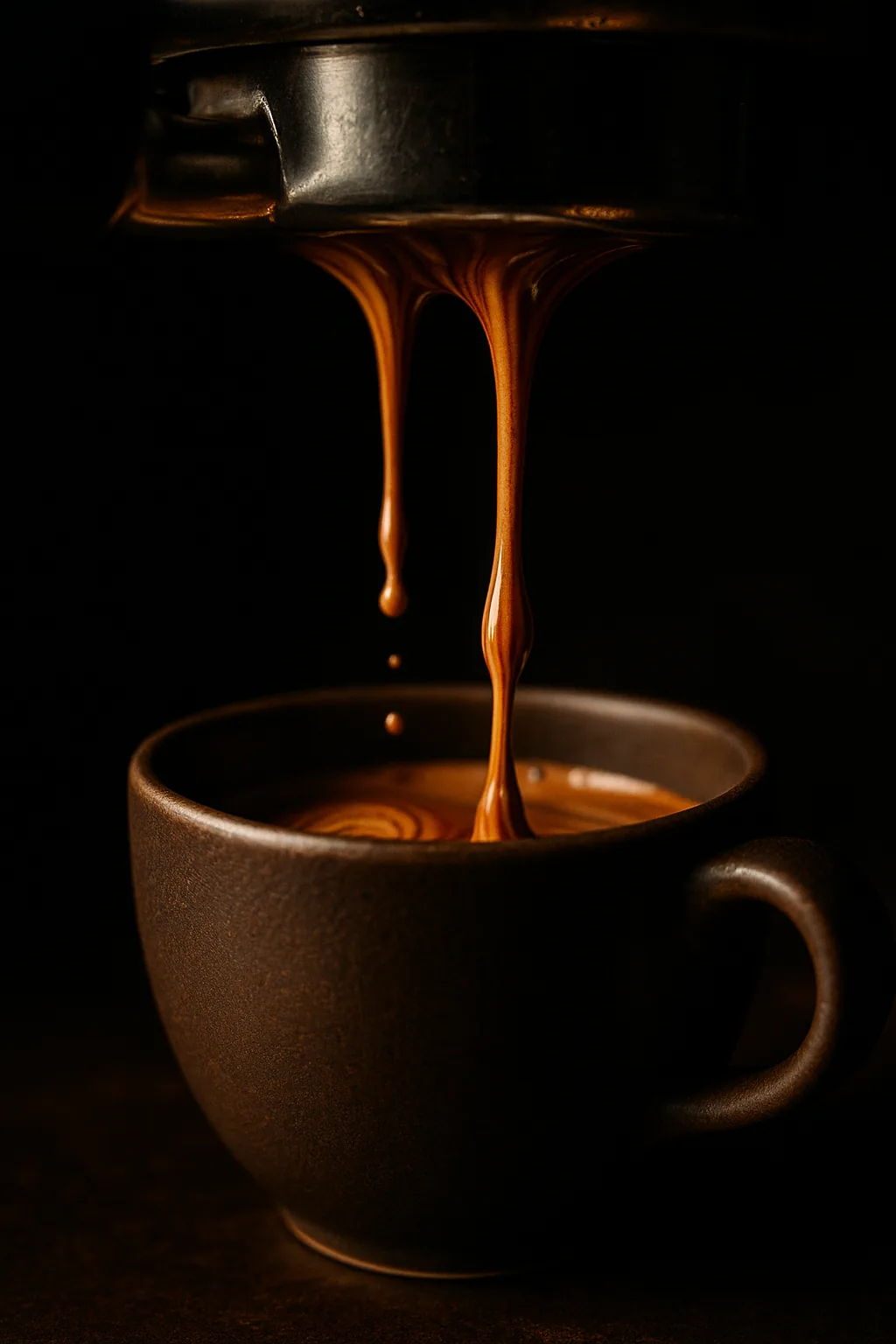
A shot that finishes in fifteen seconds and a shot that drags on for a minute are both telling you the same thing: the puck let water through at the wrong rate. Timing is the single easiest number to check on an espresso shot, a stopwatch or the timer built into most machines is all it takes, and it is also one of the most reliable early warnings that something upstream, grind, dose, or tamp, is off before you even taste the coffee. Two independently written troubleshooting guides land close to each other on the target window, close but not identical, and agree closely on which two variables actually move the needle most.
The target window, reconciled
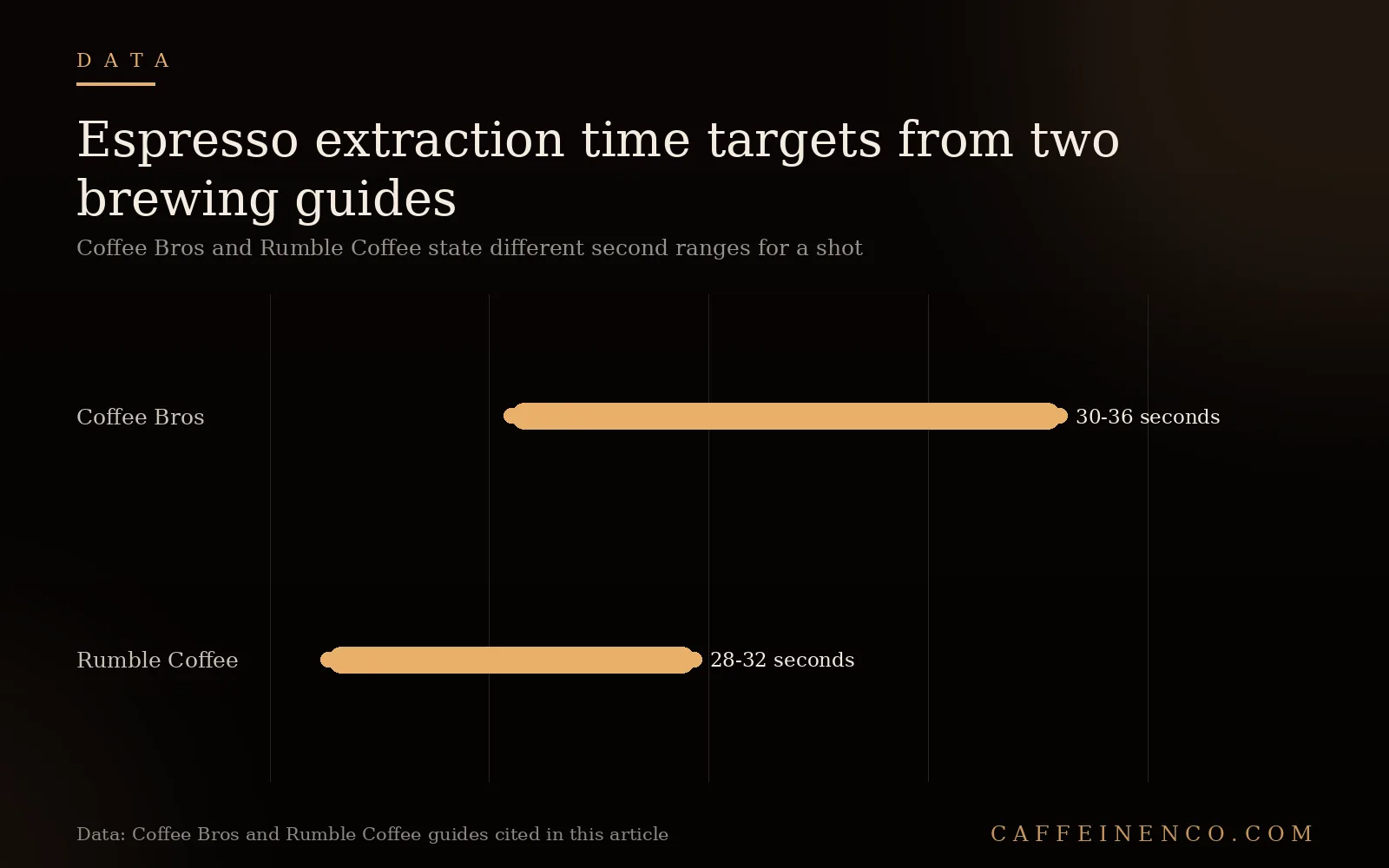
Coffee Bros frames a standard recipe as a typical 1:2 brew recipe of 18 grams of espresso grounds to 36 grams of espresso liquid, extracted in 30 to 36 seconds. Rumble Coffee states its own target more tightly: “We recommend an optimal extraction time of about 30 seconds, (or between 28 and 32 seconds).” Lay the two windows side by side and they only overlap between 30 and 32 seconds, Coffee Bros’ floor sits where Rumble’s window is already closing out, though both use the same 1:2 coffee-to-water ratio as the baseline recipe and both center close to 30 seconds. A shot anywhere from 28 to 36 seconds falls inside at least one of the two guides’ stated ranges, but only 30 to 32 seconds is inside both. Outside 28 to 36 seconds in either direction, something specific and fixable is usually the reason, not random shot-to-shot variance.
Two directions, one underlying mechanism
A fast shot and a slow shot look like opposite problems, and in terms of taste they usually are, fast shots run thin and sour, slow shots run bitter and heavy, but they share a single underlying cause: how much resistance the puck offers to water moving through it. Too little resistance and water blasts through before it can dissolve enough soluble compounds, that is a fast, under-extracted shot. Too much resistance and water can barely move, extracting too much from the grounds it does reach before enough volume comes through, that is a slow, over-extracted shot. Every specific cause below, grind, dose, tamp, clumping, basket fit, changes puck resistance in one direction or the other. Diagnosing a timing problem is really diagnosing which of those levers moved.
Causes of a shot that runs too fast
Rumble Coffee narrows a fast shot down to two main culprits, and Coffee Bros’ longer list backs up the same two as the highest-leverage checks.
- Grind too coarse. Rumble Coffee is direct about the mechanism: coarser grounds create larger gaps between particles, so water moves through with less resistance and finishes extracting before it has pulled enough soluble compounds out of the coffee. This is usually the first thing to check, since it is also the fastest to test, a few clicks finer on the grinder and a re-pull tells you immediately whether grind was the issue.
- Underdosed basket. Coffee Bros lists incorrect basket sizing and underfilling as its top overall cause across the full fast-or-slow list. A basket with less coffee than it is rated for leaves a shallower, less dense puck, and water finds its way through a shallow bed faster than a properly filled one regardless of how fine the grind is.
- Grinder not dialed in, or not built for espresso. Coffee Bros flags both an uncalibrated grinder and a grinder that was never designed for espresso-fine settings in the first place, entry-level blade grinders and some lower-end burr grinders cannot produce a consistent enough fine grind, which shows up as an inconsistently fast shot even when the dial is set correctly.
- Clumpy, unbroken grounds. Static and moisture cause fresh-ground coffee to clump, and a clump behaves like a gap in the puck once it is tamped, since water routes around the dense clump rather than through it evenly, an effect that speeds up the overall shot even though the average particle size looks fine on paper.
Causes of a shot that runs too slow
The same variables run in reverse for a slow shot, plus a couple of additional causes specific to over-restriction.
- Grind too fine. The mirror image of the fast-shot cause: smaller particles pack more tightly, leaving less space for water to move through, and past a certain point the puck becomes so dense that a shot can drag well past 40 seconds or stall out entirely.
- Overdosed or over-tamped puck. Coffee Bros’ top overall cause cuts both ways. A basket packed with more coffee than it is rated for, or a puck compressed harder than necessary on top of a full dose, leaves too little headspace and too much density for water to move through at a normal rate.
- Dirty equipment. Built-up coffee oils in the shower screen, basket holes, or group head restrict water flow independent of anything happening in the puck itself, and a slow shot from an otherwise correctly dosed and ground setup is a common sign it is time for a backflush.
- Insufficient brew pressure, or a pump struggling to reach it. Coffee Bros lists inadequate machine pressure among its ten causes; a scaled-up boiler or an aging pump can leave a machine unable to push water through at the expected rate even with everything else dialed in correctly, which shows up as a shot that runs slow no matter how the grind or dose is adjusted.
Get the dose right before touching anything else
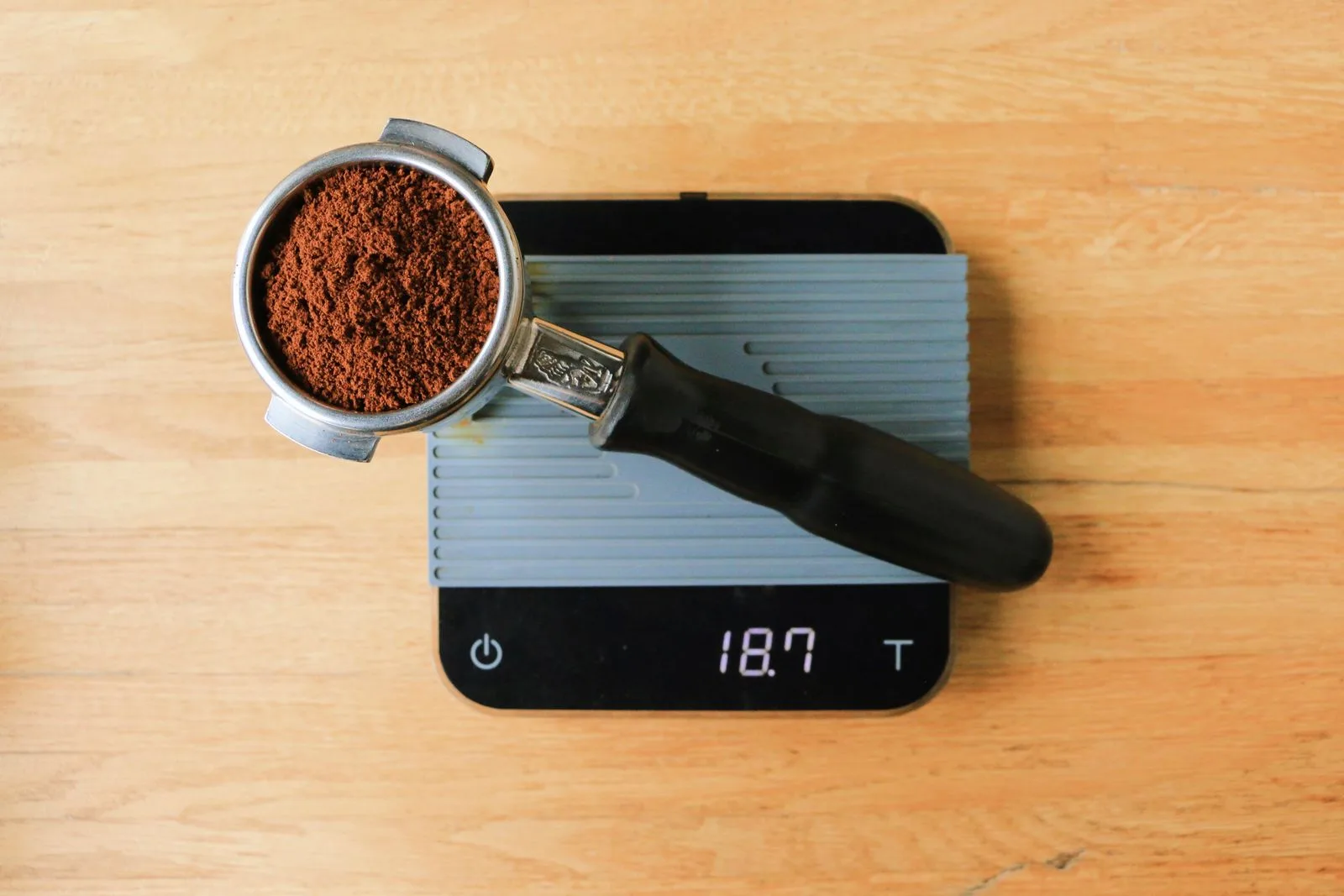
Coffee Bros ranks basket sizing and dosing as the single most common cause on the entire list, ahead of grind, tamping, or anything mechanical, and Mikael Jasin’s dosing guide explains why with a specific number: the “plus or minus 1 gram rule.” An 18-gram basket wants 17 to 19 grams of coffee, a 20-gram basket wants 19 to 21 grams, and drifting outside that narrow window changes the shot’s timing before grind or tamp technique ever enters the picture.
| Dosing error | What Jasin’s guide says happens | How it shows up in the cup |
|---|---|---|
| Underdosed (more than 1g under basket rating) | Excessive headspace, poor extraction | Fast extraction, sour taste, watery texture |
| Correctly dosed (within 1g of basket rating) | Even headspace, slight impression from the shower screen visible on the puck | Extraction lands inside the 28 to 36 second window |
| Overdosed (more than 1g over basket rating) | No headspace, puck presses against the shower screen | Slow or choking extraction, bitter taste |
A diagram in the guide also flags headspace itself as a useful visual check, captioning the target as roughly 2 to 3mm between the tamped puck and the shower screen, and you can confirm it indirectly by looking at the puck after a shot: even, light screen marks mean the spacing was right, while deep grooves or no marks at all point back to an overdosed or underdosed basket. A scale accurate to 0.1 grams removes the guesswork here, since a gram of drift is exactly the margin these numbers are built around, and eyeballing a dose by scoop is the single easiest way to land outside it without realizing it.
Worked example: diagnosing a shot in five steps
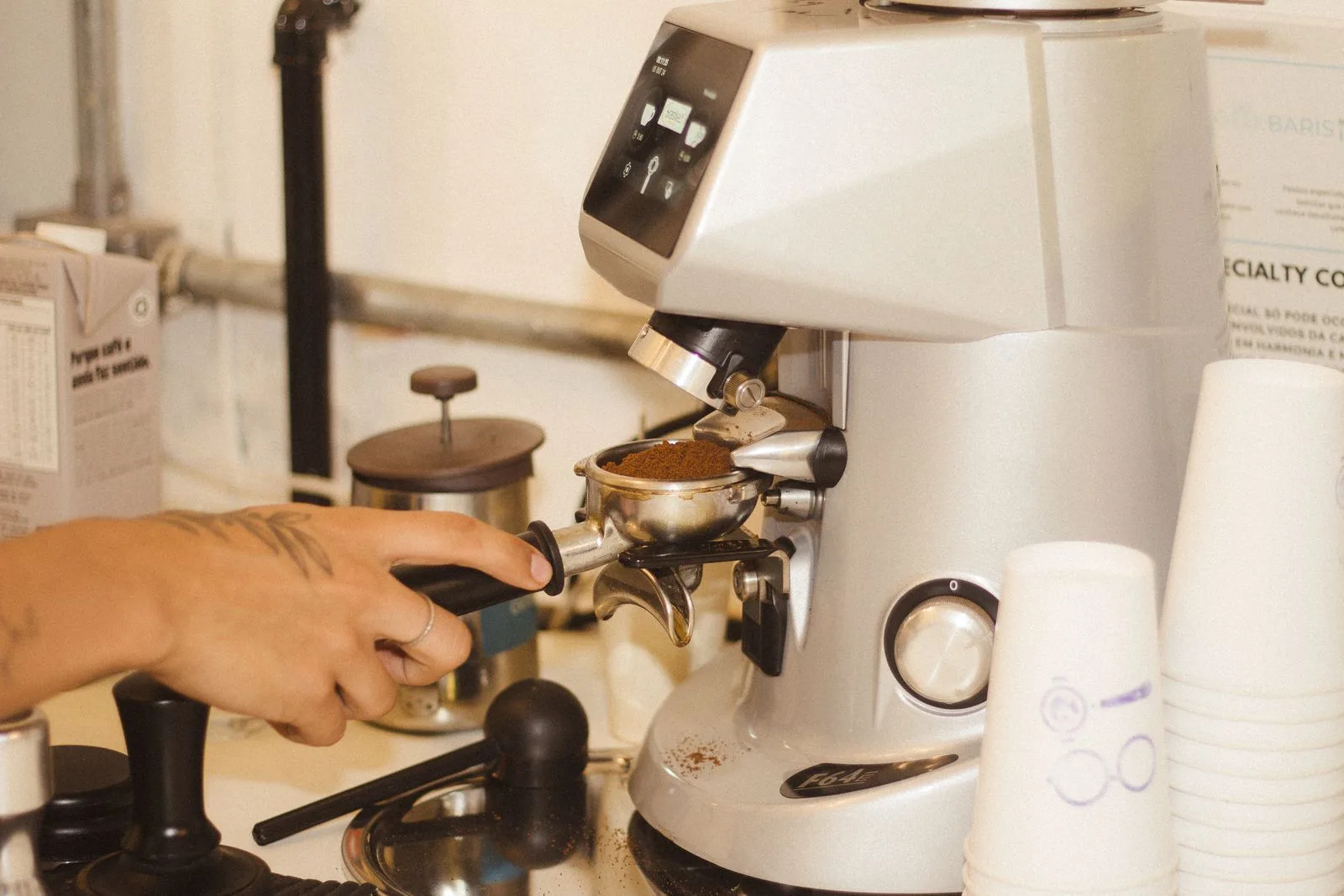
Work through these in order. Each step isolates one variable before moving to the next, so you are not changing grind and dose at the same time and losing track of which fix actually worked.
- Weigh your dose against your basket’s rating. Confirm you are within 1 gram of what the basket is stamped for before touching the grinder. If the dose is off, fix that first and re-pull before diagnosing anything else.
- Time the shot from the moment it starts flowing, not from when you hit the button. Pre-infusion time does not count toward the 28 to 36 second window on most home machines, so starting the stopwatch at first drip rather than at first button press avoids a false slow reading.
- If the shot ran fast, grind finer in small steps. Move the grinder one or two clicks finer, keep the dose identical, and re-pull. A fast shot that moves into the target window after one grind adjustment confirms grind was the cause; if it does not move much, check the basket size and dose again.
- If the shot ran slow, check the puck for over-tamping before grinding coarser. Look at the spent puck. A hard, glassy, compressed disc that resists breaking apart with a finger suggests over-tamping rather than an overly fine grind, back off tamp pressure slightly before touching the grinder setting.
- Backflush if grind and dose both check out. If the dose is within a gram of the basket rating and the grind has been adjusted without moving the timing much, dirty equipment is the next most likely cause. A quick backflush and group head wipe rules it out in a couple of minutes.
A bottomless portafilter makes step 4 easier to judge, since you can watch the shot flow directly instead of reading it from timing alone, a shot that runs slow because of an evenly dense, over-tamped puck looks different at the spout than one running slow because of a single blocked shower-screen hole.
When it is not a timing problem
Not every bad shot shows up as a timing problem first. A shot that finishes inside the 28 to 36 second window but tastes sour and bitter at the same time is more likely channeling, water finding an uneven path through the puck rather than the puck being uniformly too loose or too tight. A shot with normal timing but thin or missing crema points toward stale beans or low machine pressure rather than a dose or grind issue, covered in our espresso crema breakdown, which leans on a tighter, rounded 25 to 30 second window as a quick rule of thumb for spotting a fast pull rather than a hard boundary, the 28 to 36 second range sourced above is the more precise reference for diagnosing timing on its own. And a shot that runs at a normal pace but still tastes flat or watery once it hits the cup is worth checking against our broader piece on why coffee tastes watery or weak, since ratio and water quality can dilute a technically well-timed shot. Timing is a fast, useful first check, but it is one signal among several, not the whole diagnosis.
Common mistakes
Starting the stopwatch at the button press rather than at first drip is the most common one, since pre-infusion time on many machines can add several seconds that have nothing to do with the puck’s actual extraction rate. Changing grind and dose in the same round of adjustments is the second, it collapses two variables into one test and makes it impossible to tell which change actually fixed the shot. Assuming every slow shot needs a coarser grind is the third: Coffee Bros’ own top cause is dosing and basket sizing, not grind, so checking the dose against the basket’s rated capacity before touching the grinder saves a lot of wasted beans.
Common questions
What is the ideal espresso extraction time? Somewhere between 28 and 36 seconds for a standard double shot at a 1:2 coffee-to-water ratio, per two independently published guides, Coffee Bros states 30 to 36 seconds and Rumble Coffee states 28 to 32 seconds, both centered close to 30 seconds even though only the 30 to 32 second stretch is inside both.
Why does my espresso shot pull too fast even though my grind looks fine? Dosing is the more common culprit. An underdosed basket, more than a gram under its rated capacity, leaves too little coffee and too much headspace for water to build resistance against, producing a fast shot regardless of how fine the grind is set.
Why does my espresso shot choke or barely drip out? Usually an overly fine grind combined with an overdosed or over-tamped puck. Both push in the same direction, more resistance, so a shot that is both dense and packed too full can stall out well past a minute even on a machine with healthy pump pressure.
Does pre-infusion count toward the 28 to 36 second target? No, on most home machines. Start timing from when espresso actually begins flowing out of the spouts, not from when the pump activates, since counting pre-infusion time toward the target can make a normally timed shot look artificially slow.
Should I adjust grind or dose first when a shot is off? Dose first. Coffee Bros ranks basket sizing and dosing as the single most common cause of a shot running too fast or too slow, ahead of grind, so confirming the dose sits within a gram of the basket’s rated capacity before adjusting the grinder avoids chasing the wrong variable.
For the puck-prep steps that keep a correctly timed shot from tasting uneven anyway, our guide to espresso channeling covers the distribution and tamping routine in depth. For more sourced brewing fixes like this one, delivered weekly, subscribe to The Sunday Pour.