
A shot that tastes sour and bitter at the same time looks like a contradiction. Sour usually means under-extracted, bitter usually means over-extracted, and a single shot cannot be both of those things everywhere at once. Except it can, because it does not have to be uniform. Channeling is what happens when water finds a low-resistance path through part of the coffee puck and blasts through it while the rest of the puck barely gets wet, so you end up drinking two different extractions poured into the same cup. It is one of the most common reasons a home espresso setup produces an inconsistent, muddy-tasting shot even when the recipe, grind, and machine are otherwise dialed in.
What channeling actually is
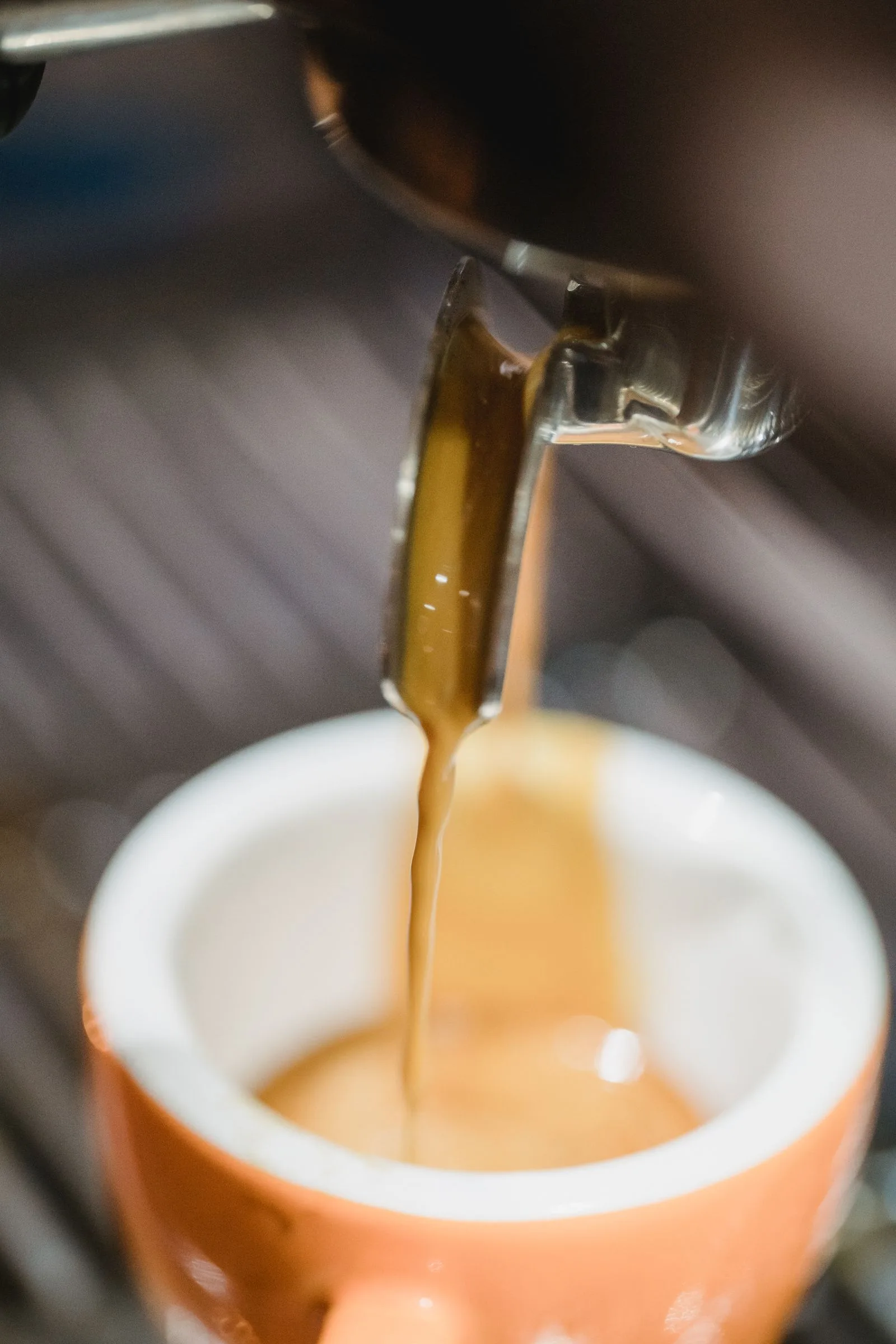
A well-packed espresso puck is supposed to behave like a single, evenly resistant filter bed: water pushed in under 9 bars of pressure should spread through it more or less uniformly, extracting soluble compounds at roughly the same rate everywhere. Channeling breaks that assumption. According to Perfect Daily Grind, citing barista Jill Hoff, channeling occurs when there are weak spots in the coffee bed, gaps or lower-density pockets where water meets less resistance than it does everywhere else. Water is not patient. Given any path that is easier than pushing through dense, evenly packed grounds, it will take that path, carving a channel that gets wider and faster as more water follows the same route for the rest of the shot.
The result is not a puck that extracts a little unevenly. It is a puck that extracts in two, sometimes wildly different regimes at once. My Coffee Explorer cites research showing extraction yield can vary by 8 to 12 percentage points across different regions of the same puck when channeling is present, happening simultaneously in one shot. The channel itself over-extracts fast, pulling out the harsher, bitter, astringent compounds that come with pushing past 22 percent. The rest of the puck, starved of flow, under-extracts and stays sour and thin. You taste both, at the same time, described by that same source as “the flavor equivalent of static on a radio.”
The three real causes
Every explanation of channeling comes back to the same underlying idea: uneven density in the puck. But uneven density has a few distinct, addressable sources, and it helps to separate them because the fix is different for each.
Grind size, in both directions. Grind too fine and the puck becomes so dense it is nearly impermeable, which sounds like it should stop water rather than channel it, but in practice it does the opposite: water still has to go somewhere under 9 bars of pressure, and the path of least resistance through an overly fine, over-packed bed is still a channel, just a more violent one. Grind too coarse and you get the more intuitive version, actual gaps in the bed that let water flow through quickly with too little resistance anywhere. Both directions fail for the same underlying reason, an inconsistent grind that leaves inconsistent resistance across the puck. Our grind size chart has the espresso-range reference if you are troubleshooting where your current setting actually sits.
Clumping and poor distribution. Fresh-ground coffee clumps, especially in smaller home grinders, and a clump of stuck-together grounds behaves like a single oversized particle sitting inside an otherwise fine bed, a dense pocket next to looser ground around it, the same weak-spot mechanism described above. Brew Coffee At Home recommends a WDT tool specifically for this: its thin needles are built to remove clumps from the grounds before tamping, breaking up those dense pockets before they can become a channel.
Uneven tamping. A tamp applied at an angle, or with uneven pressure across the basket, compresses one side of the puck more than the other. Water then runs preferentially through the lower-resistance side first, the same channeling mechanism triggered by a mechanical rather than a grind-related cause.
How to actually see it happening
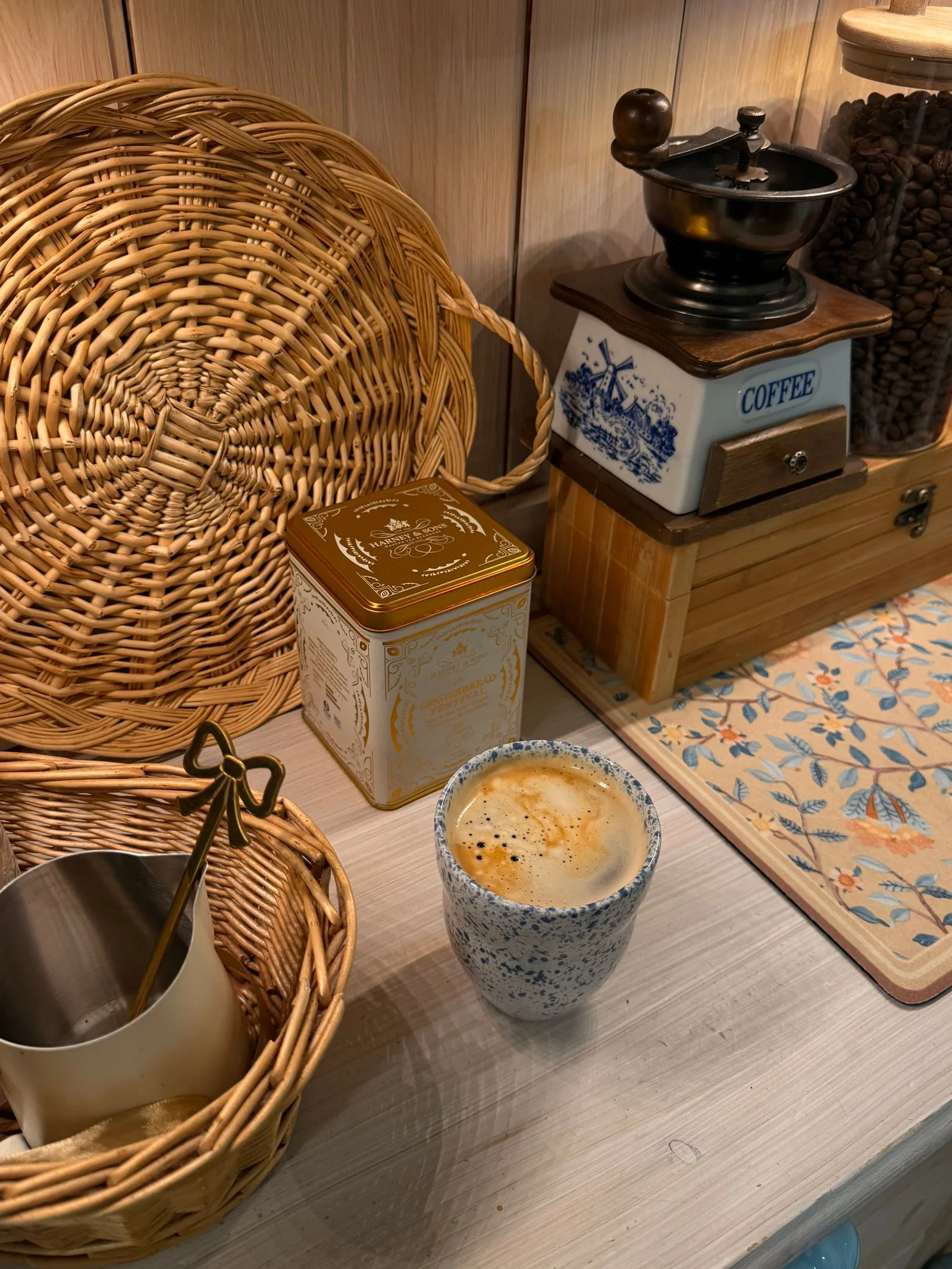
Channeling is easy to miss if you are only ever looking at a solid portafilter, because the spout hides what is happening inside the basket. A bottomless (naked) portafilter removes that cover and lets you watch the shot pull directly. A healthy extraction produces a steady, even curtain of espresso dropping off the entire basket at once. Channeling shows up as a visible jet, spray, or uneven stream coming from one side or spot before the rest of the puck has really started flowing, sometimes with a thin, fast, pale stream next to a slower, darker one. If your shot ever sprays sideways out of a bottomless portafilter rather than dropping straight down, that is channeling happening in real time, not a fluke pour.
The fix: a five-step puck prep chain
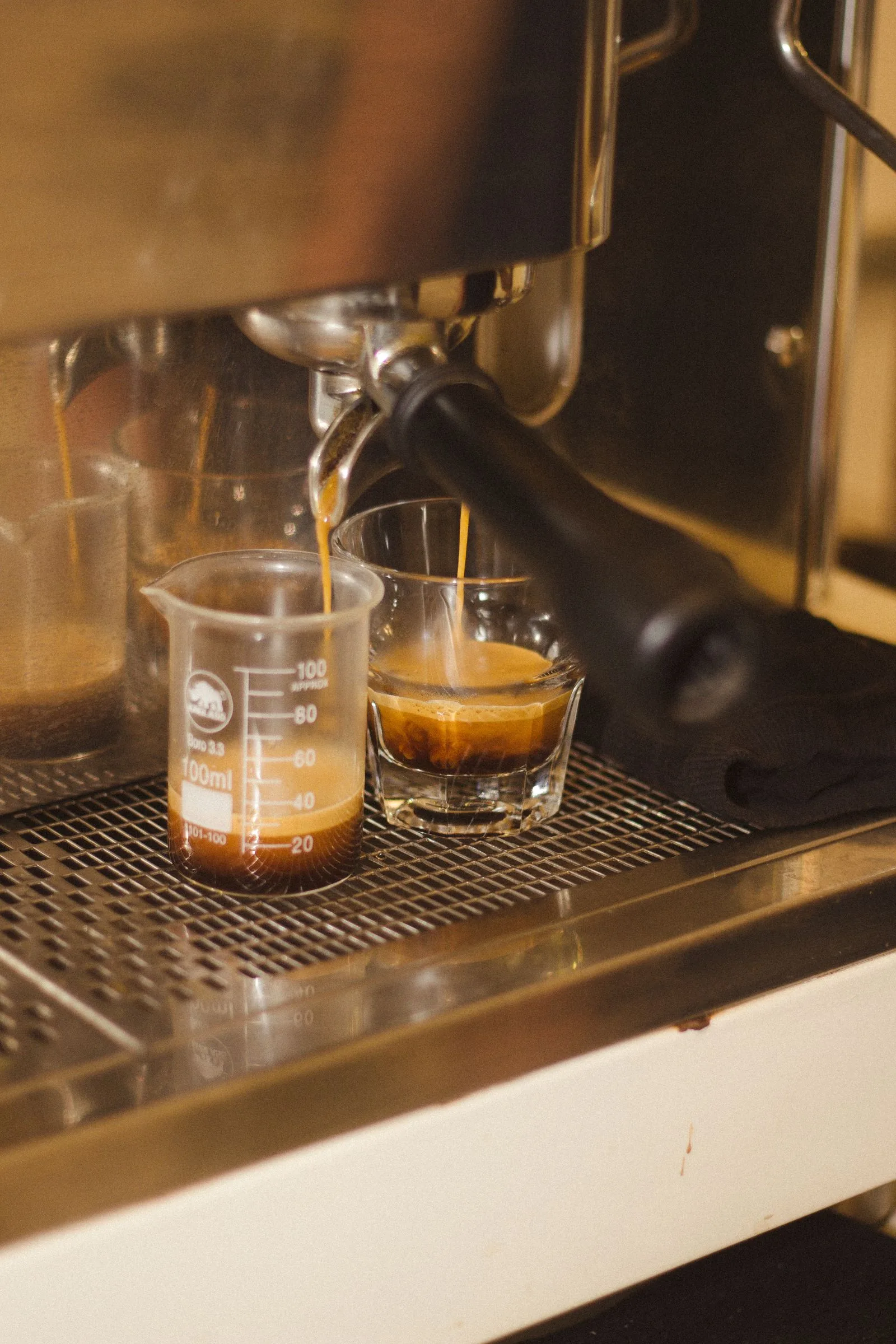
There is no single trick that eliminates channeling, because it has more than one cause. What actually works is a short, repeatable sequence that addresses grind clumping, distribution, and tamp evenness together, in order, every time.
- Dose consistently. Weigh your dose rather than eyeballing it. Underfilled baskets let water flow around the outside of a shallow, low puck; overfilled baskets can crack under tamping pressure and create their own channels. Hitting the same gram figure every time removes one variable before you even touch a tamper.
- Break up clumps with WDT. Weiss Distribution Technique, stirring the loose grounds in the basket with a thin needle tool before tamping, is the step most directly aimed at the clumping cause above. Working the needle through the full depth of the grounds, not just skimming the surface, breaks apart the static-bound clusters that would otherwise sit as dense pockets in the finished puck.
- Level the bed. After WDT breaks up clumps, the grounds sit unevenly piled rather than flat. A distribution tool, or a few light taps and a finger swept across the rim, settles them into a level surface before any pressure is applied, so the tamp that follows compresses a flat bed rather than a lopsided one.
- Tamp level, not necessarily hard. My Coffee Explorer cites research finding no measurable extraction difference between roughly 15 pounds and 50 pounds of tamping force, which reframes what actually matters here: tamp pressure barely moves the needle on extraction, but tamp levelness does, because an angled tamp is a direct, mechanical cause of the uneven density that produces channeling. A tamper sized to match your basket, pressed straight down with consistent, moderate force, matters far more than pressing hard.
- Wipe the rim and lock in cleanly. Loose grounds sitting on the basket’s rim get trapped between the portafilter and the group head gasket when you lock in, creating a small gap channeling can exploit right at the edge of the puck. A dry finger or a quick wipe before locking in closes that gap off.
If your machine supports pre-infusion, a low-pressure soak of the puck, roughly 2 to 4 bars for 5 to 8 seconds, before the pump ramps to full pressure, adds a real second layer of protection on top of good puck prep. Pre-infusion saturates the entire bed gently before high pressure arrives, which gives any remaining minor density inconsistencies a chance to even out before the water is moving fast enough to carve a channel through them.
When it is not channeling
Not every bad shot is a channeling problem, and it is worth ruling out the alternatives before you spend a bag of beans chasing a distribution fix. A shot that is uniformly weak and watery rather than simultaneously sour and bitter is more likely a dose or ratio issue than a channeling one; our piece on why coffee tastes watery or weak covers that failure mode specifically. A shot that is evenly, consistently bitter all the way through, with no sour or thin notes mixed in, points toward straightforward over-extraction from too fine a grind or too long a shot time rather than an uneven puck; our broader breakdown of why coffee turns out bitter covers that distinction in more depth. Channeling’s specific signature is the contradiction: sour and bitter, thin and harsh, in the same shot, which is what points back to an uneven puck rather than a single, uniformly wrong parameter.
Common questions
What does a channeling shot actually taste like? Sour and bitter at once, sometimes described as muddy or unbalanced in a way that does not resolve by adjusting grind finer or coarser. That combination, rather than a single clean flavor problem, is the tell, because it means part of the puck under-extracted while another part over-extracted in the same shot.
Can channeling happen even with a good, consistent grinder? Yes. A quality grinder reduces clumping but does not eliminate the tamping and distribution steps that also cause channeling. Even a perfectly even grind can channel if it is tamped at an angle or left with a loose rim of grounds around the basket edge before locking in.
Do I need a bottomless portafilter to fix channeling? No, but it helps enormously for diagnosis. You can apply the full five-step puck prep chain without ever seeing inside the basket, and it will still fix the underlying causes. A bottomless portafilter just makes it possible to watch which step is actually failing rather than guessing.
Does a finer grind always cause channeling? Not by itself, an evenly fine grind can pull a great shot. The problem is a fine grind combined with any of the mechanical causes above, clumping, uneven leveling, or an angled tamp, all of which get less forgiving as the grind gets finer and the puck gets denser overall.
Is more tamping pressure the fix for channeling? No. Research on tamping pressure has found no measurable extraction difference between roughly 15 and 50 pounds of force, so pressing harder is not the lever that matters. Tamping level and consistent, not tamping hard, is what actually addresses the mechanical side of channeling.
For the ratio numbers behind the shot itself, our caffeine in a shot of espresso breakdown covers what you are actually extracting into the cup. For more sourced brewing breakdowns like this one, delivered weekly, subscribe to The Sunday Pour.