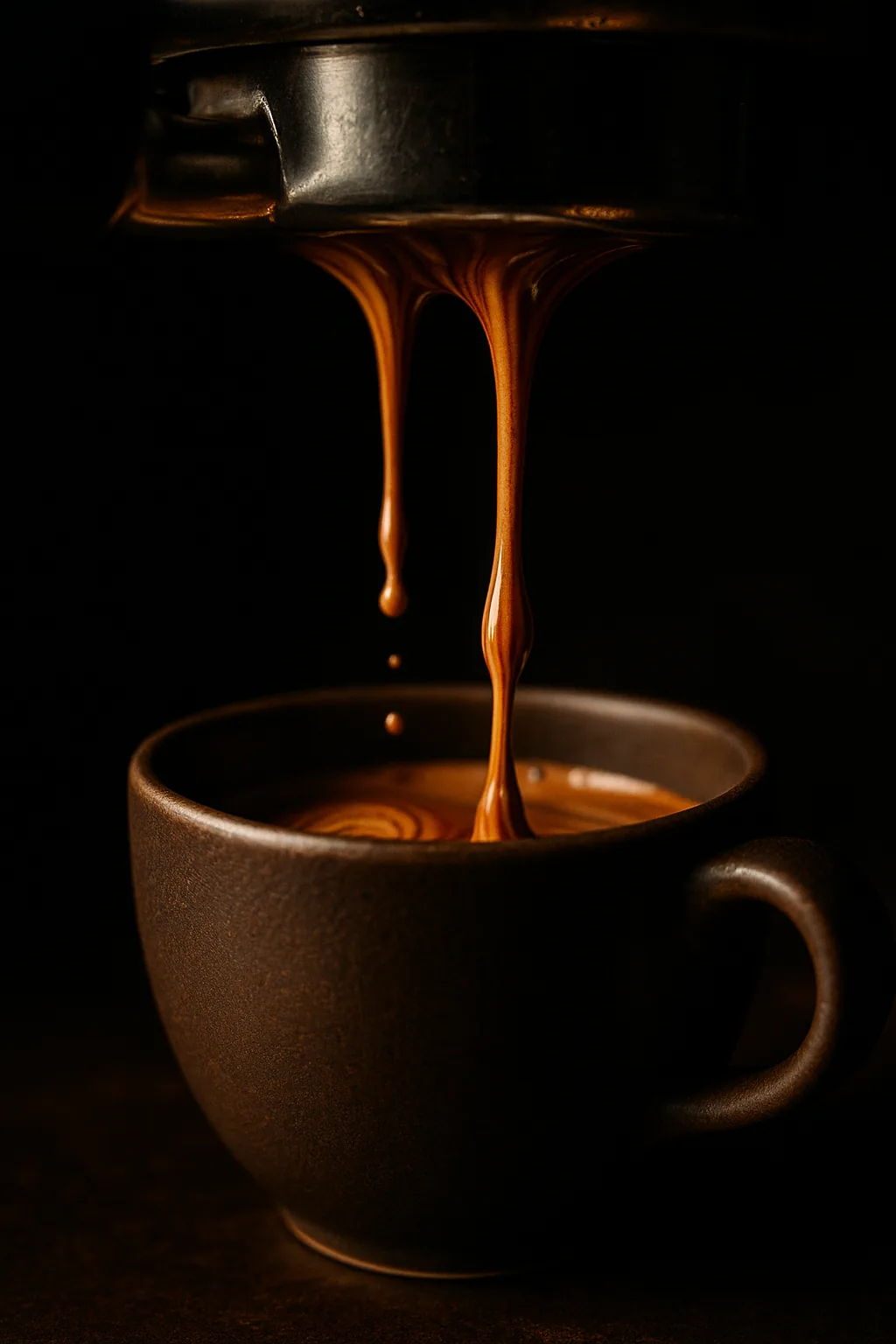
Most moka pot brewers never weigh anything. Fill the basket, fill the boiler to the valve, put it on the stove, done. That works, more or less, because the pot’s basket is a fixed volume and doing the same fill every time gets you a repeatable cup. But “repeatable” is not the same as “on ratio,” and if you have ever wondered what number that basket-fill habit is actually landing you on, or wanted to scale a moka pot recipe up or down by weight the way this site’s other brew guides do, the answer is more specific than most pages let on. Two independently published guides, from Barista Life and Farm & Forest Organic Coffee Roasters, converge on the same narrow window once you convert their numbers to a ratio, and this site’s own moka pot bitterness guide already covers what goes wrong when that ratio and grind drift off target. This page covers the ratio and grind themselves, by the numbers.
Basket fill versus a weighed ratio
A moka pot measures coffee by volume, not weight, by design. The basket is a fixed metal cup that holds roughly the same mass of a given grind every time you fill it level, which is why generations of home brewers have gotten consistent, repeatable moka coffee without ever touching a scale. This site’s own coffee to water ratio chart already flags this as the exception among brew methods it covers: moka pot dosing is basket fill rather than scale measured for most home brewers, with 1:7 given as a rough guide rather than a precise target.
That rough guide turns out to hold up well against real recipes once you actually weigh a filled basket and a filled boiler side by side, which is exactly what the two guides sourced for this page did.
The ratio: 1:7 to 1:8, reconciled
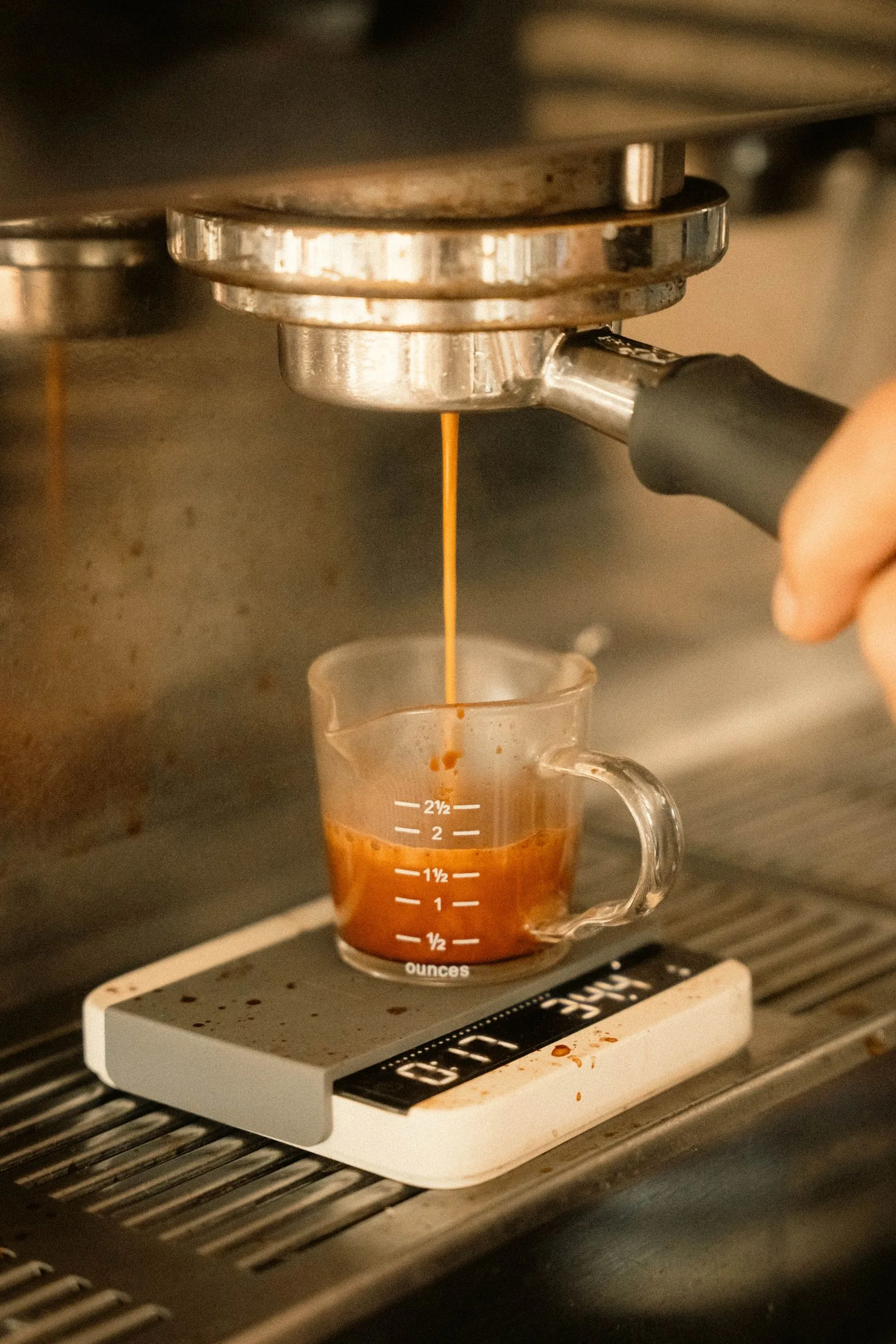
Barista Life states the workable range directly: a “1:7 to 1:10 ratio, meaning one part coffee to seven to ten parts water,” with a recommended default starting point of “1 gram of coffee for every 8 grams of water” for a balanced cup. It then breaks that range into named strength levels: “1:7 ratio for bold, intense flavor,” “1:8 ratio for balanced taste,” and “1:10 ratio for lighter extraction.”
Farm & Forest Organic Coffee Roasters lands on a tighter, more specific window: “1:7 and 1:8 (coffee : water),” for every 1 gram of coffee, 7 to 8 grams of water. That is not a contradiction of Barista Life’s wider range, it is the same range’s strong end, and the two guides agree closely on exactly the part that matters most: 1:7 as the concentrated, traditional-strength moka pot cup, and 1:8 as the more balanced everyday version. Barista Life’s 1:10 option exists as a lighter variant for anyone who wants it, but it is the outlier of the two sources, not the center.
Read together, the honest number for this page is 1:7 to 1:8 by weight, coffee to water, which also lines up with the 1:7 figure this site’s own ratio chart already uses as its moka pot basket-fill estimate. If your basket-fill cup has always tasted a little strong, that is basket fill doing its job: it defaults you toward the bold end of the range these two sourced guides describe, not away from it.
Ratio by pot size, in grams
Farm & Forest publishes gram figures across the common Bialetti-style pot sizes, which turns the abstract ratio into an actual shopping and dosing reference:
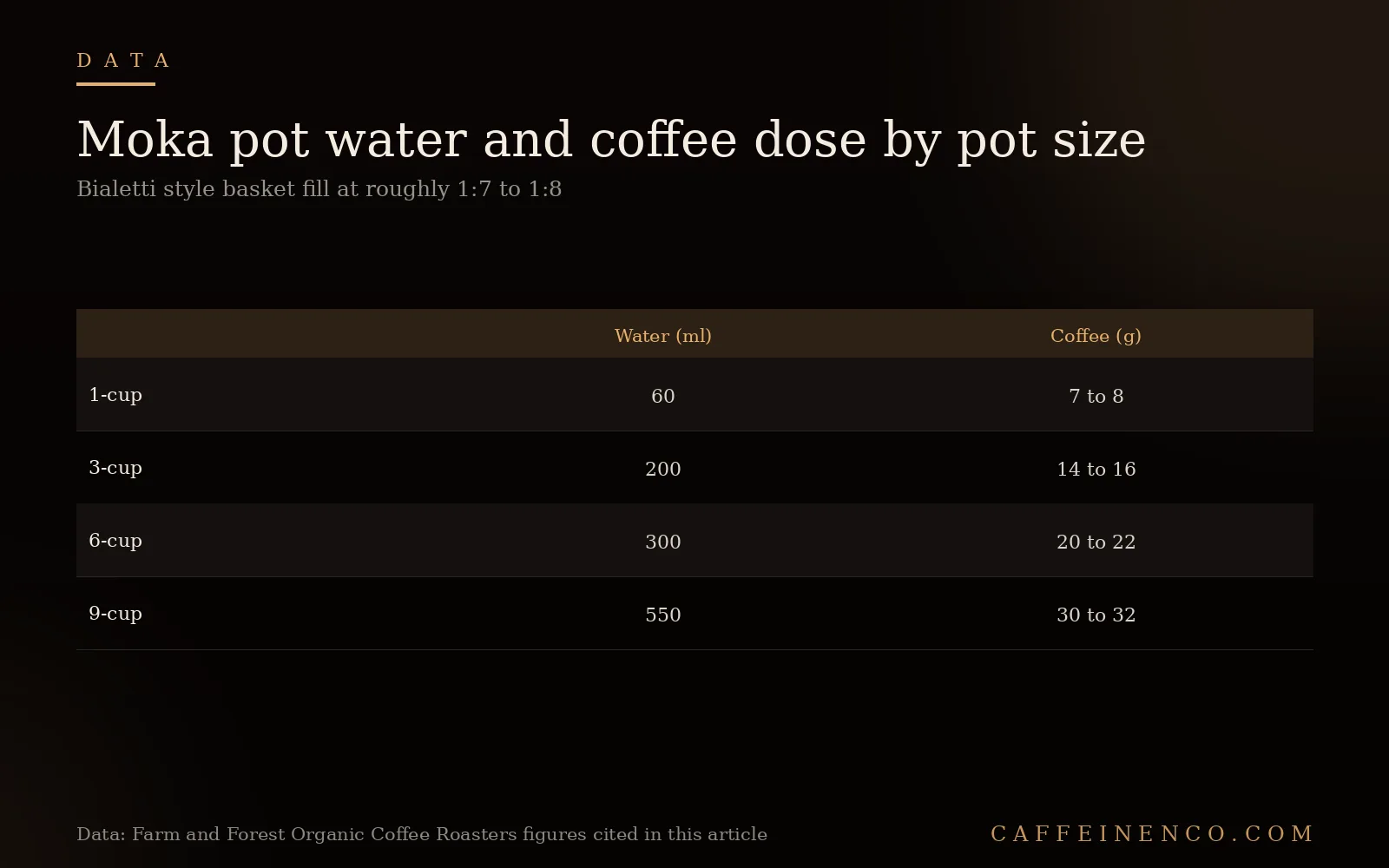
| Pot size | Water | Coffee (at roughly 1:7 to 1:8) |
|---|---|---|
| 1-cup | About 60ml | 7 to 8g |
| 3-cup | About 200ml | 14 to 16g |
| 6-cup | About 300ml | 20 to 22g |
| 9-cup | About 550ml | 30 to 32g |
Every row in that table divides out to roughly the same 1:7 to 1:8 window regardless of pot size, which is the whole point of thinking in ratio rather than in “one basket’s worth.” If you own a size not listed here, multiply your boiler’s water capacity by 1 divided by 7, or 1 divided by 8 for a lighter cup, and you get the matching coffee dose without needing to guess. A compact digital coffee scale makes this a fifteen-second step rather than an estimate, and it is the single easiest way to find out whether your current basket-fill habit is actually landing on 1:7, 1:8, or somewhere looser than either.
The grind: fine to medium-fine, the texture of table salt
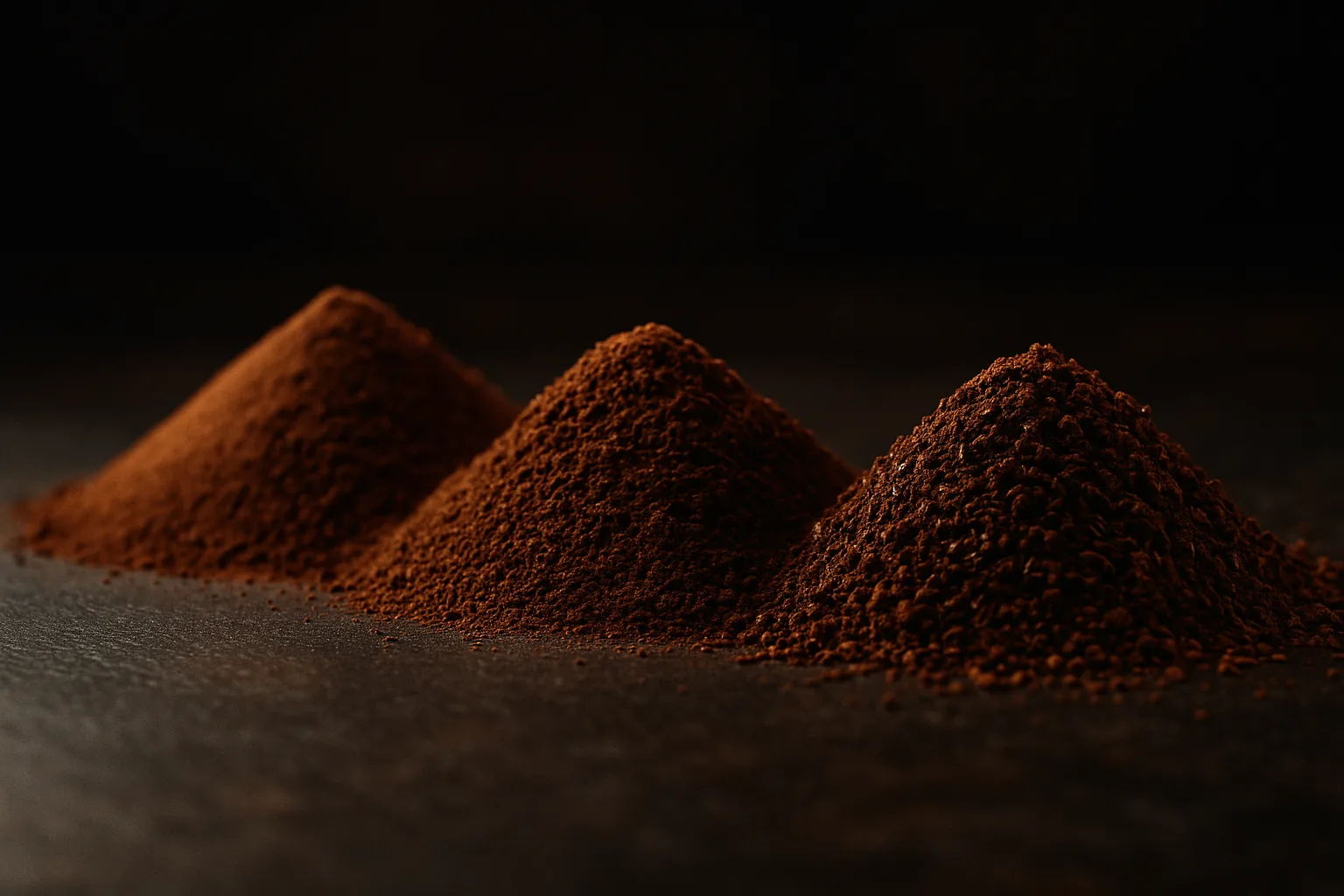
Both sourced guides describe the same grind in almost identical language. Barista Life calls for a “fine to medium-fine grind that’s slightly coarser than espresso but finer than drip coffee.” Farm & Forest independently describes “medium-fine grind, finer than drip coffee, but coarser than espresso,” with a texture that should resemble “fine table salt.”
That is a genuinely tight agreement between two independently written guides, and it matches what this site’s own grind size chart already places moka pot at, roughly 360 to 660 microns, distinctly finer than drip or pour-over’s 600-plus-micron range and distinctly coarser than espresso’s sub-300-micron powder. It also matches the language this site’s moka pot bitterness guide already uses to describe the same target: “roughly the texture of fine table salt or beach sand.”
If you are grinding at home, a burr grinder with a dedicated moka or stovetop setting gets you into that window consistently. A blade grinder can get close, but it produces a wider spread of particle sizes for the same run time, which matters more here than on a forgiving method like French press, because a moka pot’s mix of heat and mild pressure amplifies whatever unevenness the grind hands it.
Why tamping ruins the ratio, not just the taste
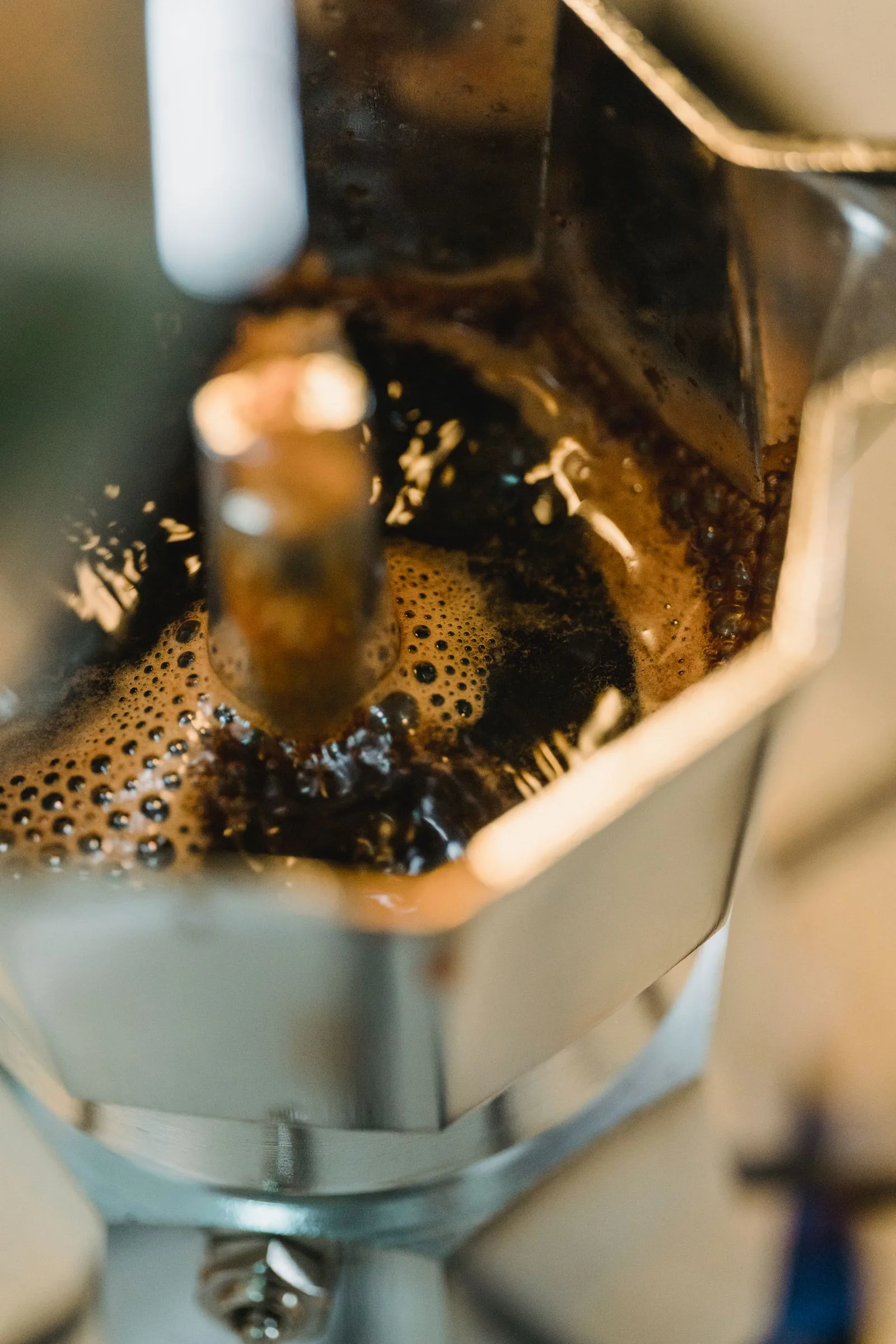
Both sources agree on one more point that is really about ratio as much as it is about flavor: do not tamp the basket. Barista Life’s instructions call for filling “the basket level with fine-but-not-espresso grind” rather than pressing it down. Farm & Forest is more direct: “Never tamp” grounds in a moka pot, “as this increases pressure and causes bitterness.”
There is a ratio reason this matters beyond taste. A moka basket is a fixed volume, which is exactly why basket-fill dosing works as a repeatable proxy for a weighed ratio in the first place. Tamping changes how much coffee mass fits into that same fixed volume, packing in more grounds than a level, untamped fill would hold. Do it once and your “basket fill” cup quietly drifts well past 1:7 toward a much stronger, more concentrated ratio than either sourced guide recommends, on top of the pressure and bitterness problems tamping causes mechanically. Filling level and giving the basket one gentle shake to settle, the same routine this site’s bitterness guide recommends, is what keeps a basket-fill cup honestly tracking the 1:7 to 1:8 window rather than sliding past it.
Worked example: measuring your first moka pot dose
Work through this once with a scale, and you will know exactly what your basket normally holds without needing to weigh it again.
- Pick your target ratio. Start at 1:8 for a balanced cup, or 1:7 if you want the bolder, more traditional Italian-style strength both sourced guides describe.
- Weigh your boiler’s water capacity. Fill the boiler to just below the safety valve, the level both sourced guides specify, then pour that water into a container on a scale to see its actual weight in grams.
- Divide by your target ratio. A boiler that holds 200 grams of water at 1:8 needs 25 grams of coffee; at 1:7 it needs about 28.5 grams.
- Grind to a fine to medium-fine texture, roughly the feel of fine table salt, finer than drip but visibly coarser than espresso powder.
- Fill the basket level and give it one gentle shake to settle. Do not tamp, and do not mound coffee above the rim.
- Brew on medium-low heat, watching for the flow to shift from dark amber to pale as the brew finishes, and pull it off the heat at that point rather than letting it sputter, per this site’s bitterness troubleshooting guide.
- Note the gram numbers that worked. Once you know your boiler’s actual water weight and the coffee dose that hit your preferred ratio, you can go back to eyeballing the basket fill with confidence that it is landing close to the number you dialed in.
How moka’s ratio compares to other methods on this site
At 1:7 to 1:8, moka pot sits far more concentrated than any gravity-fed drip or pour-over method on this site. Our Kalita Wave guide and Chemex guide both land in the 1:16 to 1:17 range, roughly twice as dilute as a moka pot cup gram for gram. French press, covered in our French press ratio guide, runs a 1:12 to 1:17 range depending on strength preference, still well short of moka’s concentration. The closest comparison on this site is actually Turkish coffee, which our Turkish coffee ratio and grind size guide puts at 1:8 to 1:12, an immersion method that shares moka’s small-cup, high-concentration character even though the brewing mechanism, pressure-driven for moka, simmered and unfiltered for Turkish, is completely different. Espresso remains the true outlier at roughly 1:2, but moka pot is the closest thing to espresso strength that most home kitchens can produce without a machine.
Common mistakes
Assuming basket fill and a weighed ratio are automatically the same thing is the most common one. They usually land close, which is exactly why the habit persists, but tamping, overfilling above the rim, or using a different grind than usual all quietly shift a basket-fill cup away from the 1:7 to 1:8 window without changing how full the basket looks. Guessing at pot size rather than checking your boiler’s actual water weight is the second, since the gram table above assumes standard Bialetti-style capacities, and off-brand or larger pots can hold noticeably more water at the same “cup” label. Chasing a stronger cup by grinding finer instead of adjusting ratio is the third: a finer grind changes extraction speed and risks the over-extraction this site’s bitterness guide covers in depth, while moving from 1:8 toward 1:7 changes strength directly and predictably without touching how the coffee actually extracts.
Common questions
What is the correct moka pot coffee to water ratio? 1:7 to 1:8 by weight, coffee to water. Barista Life gives a 1:7 to 1:10 range with 1:8 as its recommended default, and Farm & Forest Organic Coffee Roasters independently narrows it to 1:7 to 1:8, with the two guides agreeing closely at the stronger end of that range.
Do I need a scale to brew moka pot coffee correctly? Not strictly, since the basket’s fixed volume already approximates the right ratio when filled level and untamped. A scale helps most the first time you dial in a new pot or a new coffee, so you know the actual gram numbers your basket-fill habit is landing on rather than assuming.
What grind size should I use for a moka pot? Fine to medium-fine, roughly the texture of fine table salt, finer than drip coffee but coarser than espresso. Both sourced guides describe the same texture independently, and it matches the 360 to 660 micron range this site’s own grind size chart gives for moka pot.
Why shouldn’t I tamp the coffee in a moka pot basket? Tamping packs more coffee mass into the basket’s fixed volume than a level, untamped fill would hold, which pushes your actual ratio well past 1:7 while also increasing pressure and causing the over-extracted bitterness this site’s moka pot bitterness guide covers in detail.
How much coffee do I need for a 3-cup moka pot? About 14 to 16 grams of coffee to roughly 200ml of water, per Farm & Forest’s published figures, which works out to the same 1:7 to 1:8 range as every other pot size on the chart above.
Is moka pot coffee stronger than drip coffee? Yes, by a wide margin gram for gram. Moka pot’s 1:7 to 1:8 ratio is roughly twice as concentrated as the 1:15 to 1:18 range typical of drip and pour-over methods covered elsewhere on this site, which is part of why moka pot is often served in small cups rather than a full mug.
Once your ratio and grind are dialed in, the two most common moka pot problems left are heat control and timing, both covered in this site’s moka pot bitterness guide. For more sourced brewing breakdowns like this one, delivered weekly, subscribe to The Sunday Pour.