Every brew method on this site so far, AeroPress, French press, pour-over, moka pot, shares one thing in common: water passes through or over the grounds, then leaves them behind. Turkish coffee does not work that way. The grounds go into the cup with the coffee and stay there, which changes almost everything else about the method, starting with a ratio and grind combination unlike any other brewing style. Search for “Turkish coffee ratio” and you will find numbers ranging from a tight 1:8 up to a looser 1:12, which looks like disagreement until you realize both figures come from the same source describing a strength range, not two sources contradicting each other. Here is the real range, the gram amounts, the specific grind it demands, and the cezve method that ties both together.
Why Turkish coffee breaks the rules every other method follows
Every other brewing method on this site relies on some kind of separation, a mesh filter, a paper filter, or gravity pulling clear liquid away from spent grounds. Turkish coffee has none of that. The grounds are simmered directly in the water in a small pot, poured straight into the serving cup along with the liquid, and left to settle to the bottom while you drink from the top. That single structural difference explains nearly every other quirk of the method: why the grind has to be so much finer than anything else brewed at home, why the ratio numbers look tighter than an immersion method like French press, and why the brewing vessel itself, a cezve, is shaped the way it is.
The ratio: 1:8 to 1:12, reconciled
Two independently written brewing guides land on numbers that look different on the surface but describe the same range once you line them up. Peace Coffee states a working ratio of roughly 1 part coffee to 12 parts water, giving a specific example of 30 grams of coffee for 350 millilitres of water, close to a standard 12-ounce serving. The Coffee Ratio states a broader range of 1:8 to 1:12, translating to about 7 to 8 grams of extra-fine coffee per 60 to 80 millilitres of water per cup.
Put side by side, these are not competing figures. Peace Coffee’s 30g-to-350mL example works out to almost exactly 1:11.7, which sits inside The Coffee Ratio’s stated 1:8 to 1:12 range, at the lighter end of it. The honest read is that 1:12 is a reasonable, slightly lighter default, and 1:8 is the strong end of the same method for drinkers who want a noticeably more intense cup, the same way French press covers 1:12 to 1:17 as a strength range rather than a single fixed number. Nobody is wrong here; they are describing different points on the same dial.
Ratio by cup size, in grams
Turkish coffee is traditionally brewed in small servings, so the gram amounts below are scaled per individual demitasse-style cup rather than per large batch, using both ends of the reconciled 1:8 to 1:12 range.

| Water per cup | Coffee at 1:8 (strong) | Coffee at 1:10 (standard) | Coffee at 1:12 (light) |
|---|---|---|---|
| 60mL (2 oz) | 7.5g | 6g | 5g |
| 70mL (2.4 oz) | 8.75g | 7g | 5.8g |
| 80mL (2.7 oz) | 10g | 8g | 6.7g |
| 350mL (12 oz, multi-serving cezve) | 44g | 35g | 29g |
A single rounded teaspoon of extra-fine Turkish grind, per The Coffee Ratio’s own guidance, works out to roughly 7 to 8 grams, which lines up closely enough with the 60-80mL single-cup row above that “one heaping teaspoon per cup” is a reasonable field measurement if you do not have a scale on hand, with the same caveat every other brew guide on this site makes: a scale removes the guesswork a spoon cannot.
The grind: finer than espresso, and it is not optional
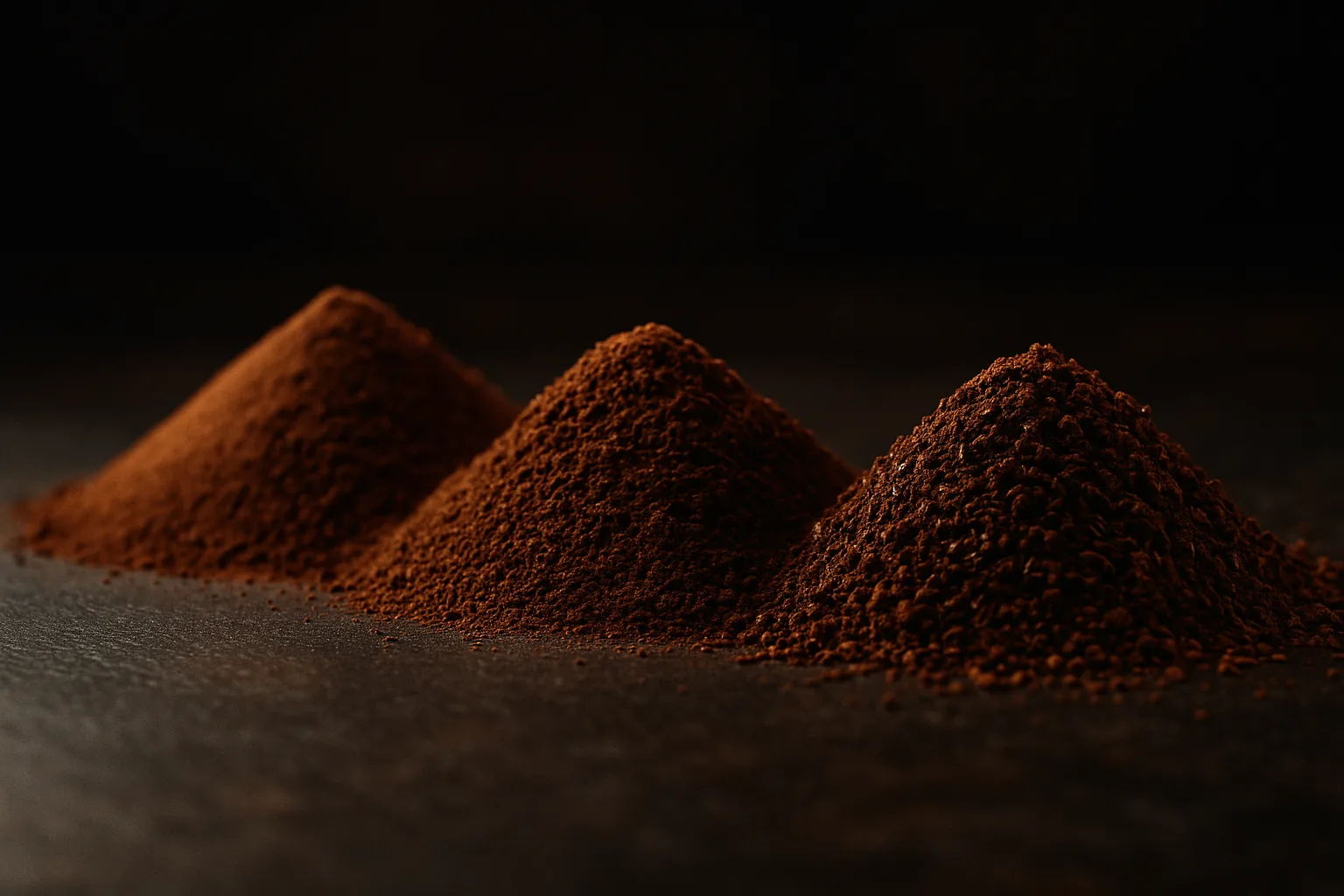
Every other method on this site treats grind size as a dial you can nudge for taste. Turkish coffee treats it as a hard requirement. The Coffee Ratio describes the necessary texture as finer than espresso, close to powdered sugar or fine flour, and calls it non-negotiable for the method to work at all. Peace Coffee’s brewing instructions echo the same target, describing the grind as an espresso-fine consistency resembling powdered sugar. Our own grind size chart puts espresso in the roughly 180 to 400 micron range; Turkish coffee sits meaningfully below even the fine end of that, into a genuine powder.
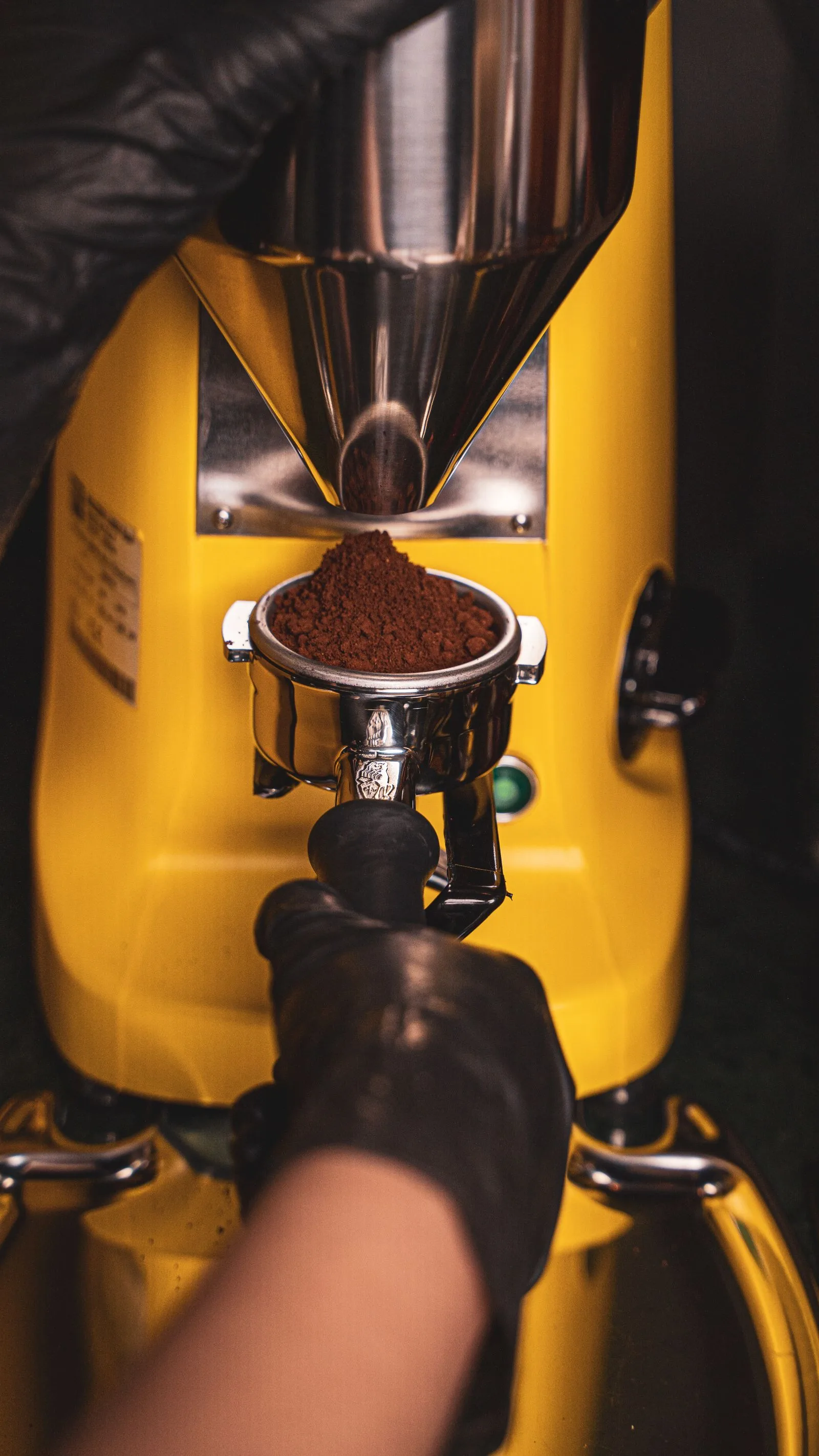
The reason is structural, not aesthetic. With no filter separating grounds from liquid, a coarser grind leaves gritty, unpleasant particles suspended through the whole cup rather than settling cleanly to the bottom. A true powder-fine grind, close in texture to flour, produces particles small and light enough to form a distinct sediment layer at the bottom of the cup while you drink the clear coffee above it, the same way fine silt settles out of still water given enough time. Most standard home burr grinders do not go fine enough for this; a dedicated Turkish-coffee-capable grinder, or a specialty setting on a high-end burr grinder, is usually necessary to hit the texture both sources describe as non-negotiable.
The cezve, and where the method comes from
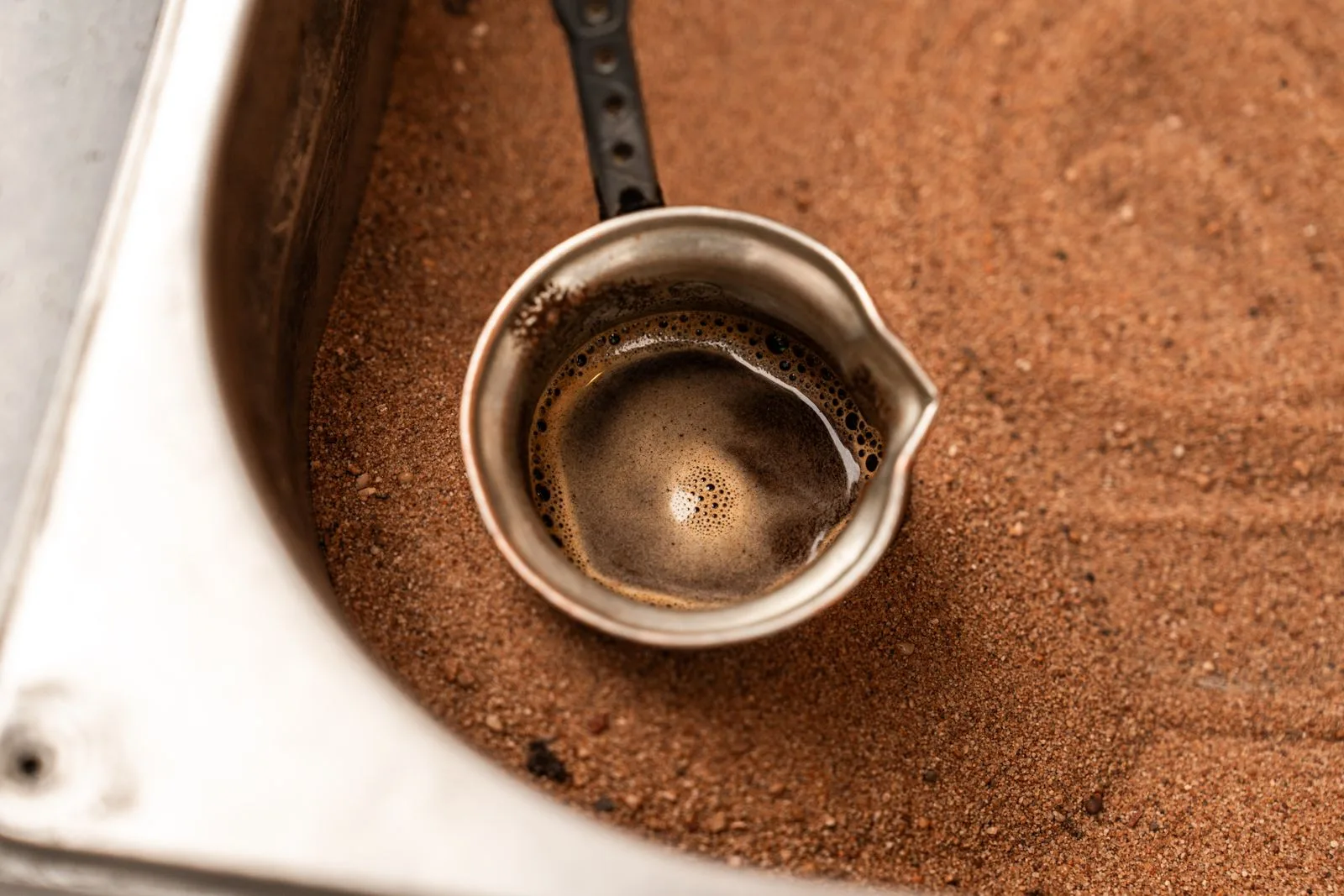
The pot itself, called a cezve in Turkish and an ibrik elsewhere in the region, is a small, long-handled metal pot with a wide base narrowing to a tapered neck. That shape is not decorative. The narrow neck slows the rate at which foam can escape as the coffee approaches a boil, giving you a window to catch and control the rise rather than having it boil over immediately, and the wide base maximizes contact between the grounds and heat for the slow, even warming the method depends on.
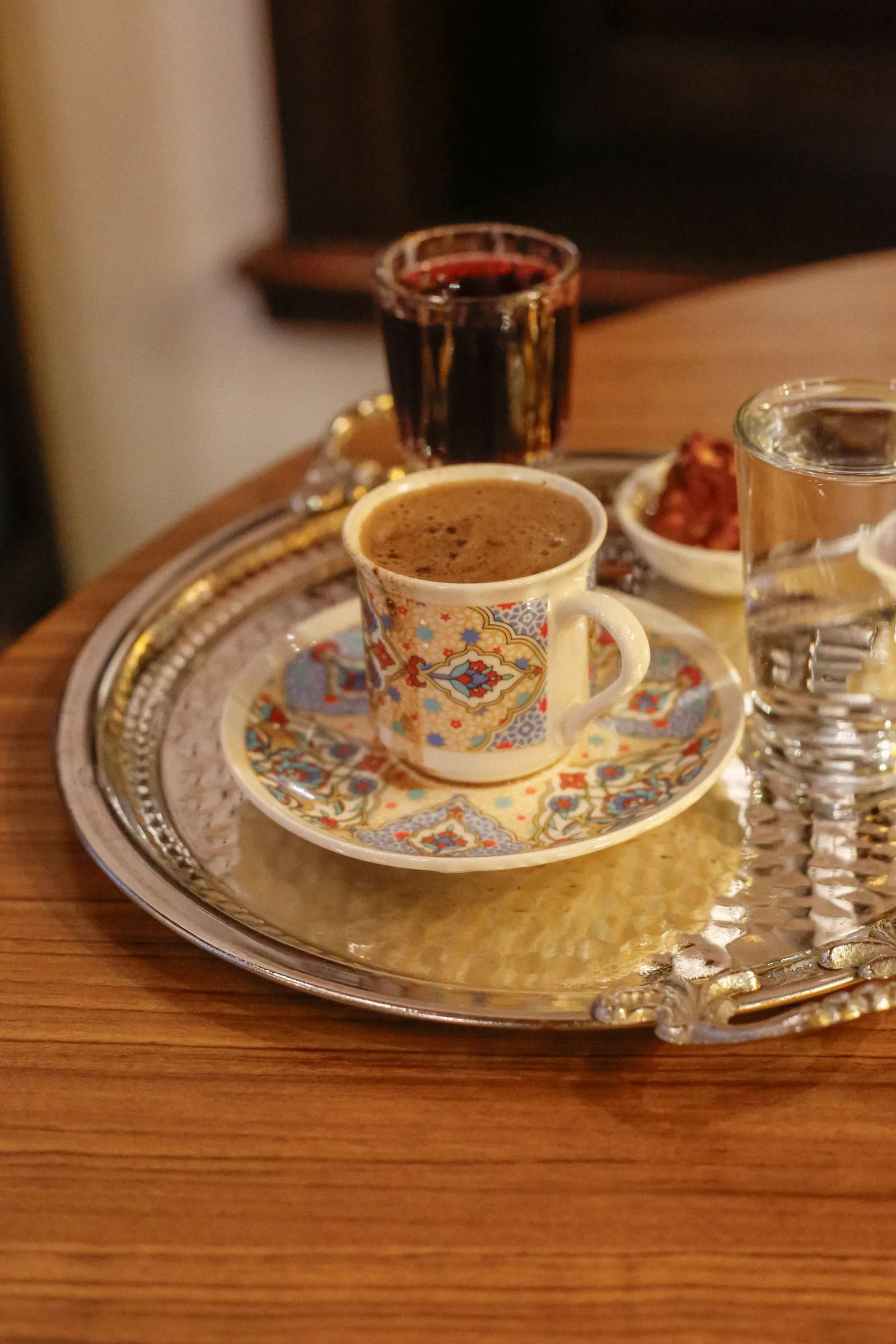
According to UNESCO, which inscribed Turkish coffee culture and tradition on its Representative List of the Intangible Cultural Heritage of Humanity in 2013, the method combines finely ground roasted coffee with cold water and sugar, brewed slowly on a stove to produce the characteristic foam, then served in small cups alongside a glass of water. UNESCO’s listing frames the tradition as inseparable from its social role, describing it as central to hospitality and conversation across households and coffeehouses, which is part of why the method has stayed essentially unchanged for centuries even as faster brewing equipment became available everywhere else.
The twice-heated method, step by step
Both sourced guides describe the same core technique, sometimes called the twice-heated method, built around controlling foam rather than just bringing water to a boil.
- Combine cold water, coffee, and sugar (if using) in the cezve from the start. Unlike most other methods, Turkish coffee does not add grounds to already-hot water; everything goes in cold and heats together. Use the gram amounts from the table above for your chosen strength.
- Heat slowly over low heat. The Coffee Ratio is specific that high heat prevents proper foam formation and produces bitterness, so patience here matters more than in almost any other brew method on this site.
- Watch for the foam to rise toward the rim. As the mixture approaches a simmer, a foam cap builds and climbs the inside of the cezve. The moment it nears the top, before any rolling boil, pull the pot off the heat.
- Spoon a little foam into each serving cup. This step, common across cezve brewing guides, ensures every cup gets some of the prized foam rather than it all ending up in whichever cup is poured first.
- Return the cezve to low heat for a second rise. Let the foam build and climb a second time, then remove from heat again just before it would boil over. This second heating is what gives the method its “twice-heated” description and is what most home attempts skip, usually producing a thinner, less traditional result.
- Pour slowly, holding the cezve at roughly a 45-degree angle. Peace Coffee specifies this angle and a slow pour as the technique for keeping the heaviest grounds in the pot rather than the cup, though some fine sediment always transfers along with the coffee itself.
- Let the cup rest for a minute before drinking. This is the step that actually does the filtering work no mesh or paper does here: given a minute of stillness, the powder-fine grounds settle to the bottom of the cup, leaving clear coffee on top.
Common mistakes
Rushing the heat is the single most common failure. Turkish coffee brewed over high heat to save time skips the slow foam development both sourced guides treat as central to the method, and tends to boil over messily while still tasting under-developed and bitter rather than the balanced, foam-topped result a slow simmer produces. Skipping the second heating is the next most common shortcut, and it is the reason a home attempt often comes out thinner and less aromatic than a cup from a cezve brewed the traditional twice-heated way. The last common mistake is grinding too coarse because a home grinder cannot go fine enough; if your grinder will not produce a true powder texture, the cup will taste gritty rather than smooth no matter how carefully you manage the ratio and heat, since the grind size is doing real filtering work that no other part of the method can substitute for.
How Turkish coffee compares to ratios elsewhere on this site
Turkish coffee’s 1:8 to 1:12 range sits considerably tighter than most other immersion-adjacent methods covered here. French press, the closest comparison as another method that keeps grounds in contact with water for an extended period, runs 1:12 to 1:17, meaning even Turkish coffee’s lighter end uses more coffee per unit of water than French press’s strongest setting. Our coffee to water ratio chart covers where every major method lands on the same scale, including the SCA’s Golden Cup standard that most drip and pour-over guidance is built around, and Turkish coffee is the clear outlier at the concentrated end of that whole comparison.
Common questions
What is the correct Turkish coffee ratio? Between 1:8 and 1:12, coffee to water, depending on how strong you want the cup. 1:12, close to 30 grams of coffee per 350 millilitres of water, is a reasonable lighter default; 1:8 is the strong end of the same normal range, not a different method.
Can I use my regular burr grinder for Turkish coffee? Most standard home burr grinders do not grind fine enough. Turkish coffee needs a texture close to powdered sugar or fine flour, finer than a typical espresso setting, which usually requires a dedicated Turkish grind mill or a specialty fine setting on a high-end burr grinder.
Do I have to drink the grounds at the bottom? No. Traditional serving lets the coffee rest for about a minute so the powder-fine grounds settle to the bottom of the cup, and you drink the clear coffee above that sediment layer, stopping before you reach the grounds themselves.
Why does the recipe say to start with cold water instead of hot? Because the method relies on a slow, controlled rise in temperature to build and manage the foam cap properly. Starting hot skips that gradual buildup and tends to produce a flatter, less foam-topped result even if the final temperature ends up the same.
Is Turkish coffee stronger than espresso? Not by ratio. Espresso’s roughly 1:2 coffee-to-water ratio uses far more coffee per unit of water than Turkish coffee’s 1:8 to 1:12 range, our own coffee to water ratio chart has the full breakdown. What makes Turkish coffee taste and feel strong is a different mix of factors: a very fine grind, grounds that stay in the cup instead of being filtered out, and a small serving size concentrating that intensity into a couple of ounces rather than a full shot glass and beyond. Our breakdown of caffeine in a shot of espresso covers how espresso’s own numbers get measured for comparison.
For more sourced brewing breakdowns like this one, delivered weekly, subscribe to The Sunday Pour.