Type “french press ratio” into a search bar and most pages will hand you a single number, usually 1:15, and move on. That number is a reasonable starting point, but it is a starting point for one specific strength preference, not a rule, and it says nothing about what to do once your press is a 12oz single-serving model instead of the 34oz size the recipe assumed. French press has one of the widest genuinely correct ratio ranges of any brew method, because unlike a paper filter that drains the moment you stop pouring, an immersion brewer holds coffee and water together until you physically separate them, which means the ratio itself is doing more of the strength-setting work than it does in almost any other method. This page covers the full range, gram amounts by press size, and a complete worked recipe so you are never estimating with a tablespoon again.
Why french press wants a different ratio than pour-over

A pour-over drains continuously: water passes through the grounds once, mostly, and gravity pulls it into the cup below almost as fast as you pour it. A french press does the opposite. Every gram of water sits in full contact with every gram of coffee for the entire brew, with nowhere to drain to until you push the plunger down. That full, sustained contact extracts more efficiently per gram of coffee than a quick pass-through does, which is part of why immersion methods can run a noticeably tighter ratio, more coffee for the same water, without tipping into bitterness the way an over-strong pour-over often does.
The Specialty Coffee Association’s own Golden Cup Standard, the reference point behind most “golden ratio” claims, centers on 55 grams of coffee per litre of water for batch drip brewing, which converts to roughly 1:18. French press sits meaningfully tighter than that, typically 1:12 to 1:17 depending on how strong you like it, with 1:15 as the most commonly cited middle. That is not french press ignoring the standard; batch drip and immersion are different brewing regimes, and the SCA’s own published standard is explicit that its numbers describe filtered batch brewing specifically, not every method that uses hot water and ground coffee.
The strength dial: 1:12, 1:15, 1:17
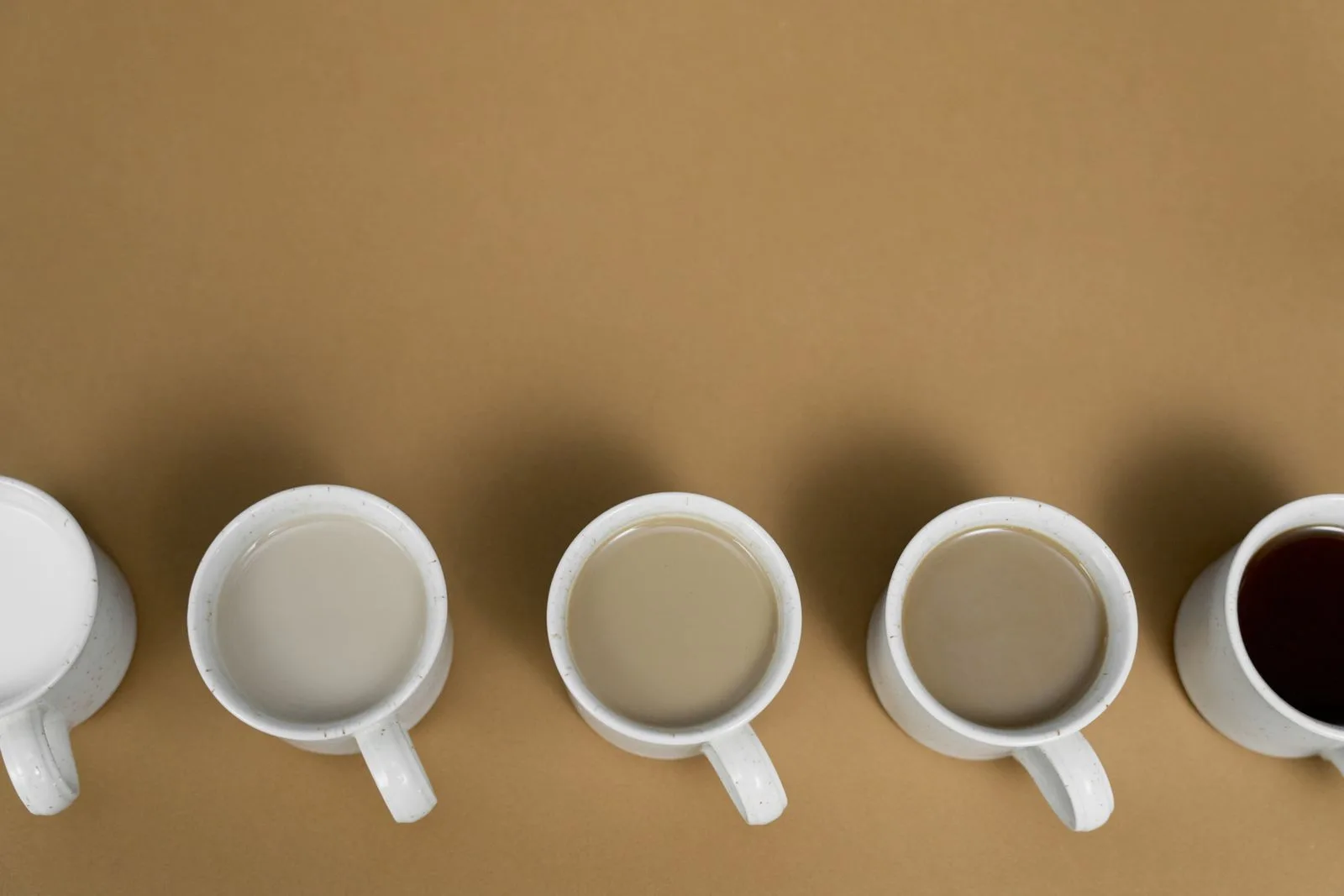
Because ratio does more of the work in an immersion brew, picking a ratio for french press is closer to picking a strength setting than it is for a pour-over, where grind and pour technique carry more of the flavor variation. Three ratios cover the realistic range most people actually want:
- 1:12, strong. Intense and full-bodied, close to the boundary where french press starts to feel espresso-adjacent in weight. Best for anyone who drinks coffee with milk, or who wants a smaller cup that still delivers real intensity.
- 1:15, standard. Full-bodied and balanced, the most commonly cited middle ground for the method across brewing guides. This is the ratio to default to if you have no strong preference yet.
- 1:17, light. Clean and comparatively delicate for an immersion brew, closer in texture to a well-made drip coffee than to a classic heavy french press cup.
None of the three is more “correct” than the others. They are three different, equally legitimate answers to “how strong do you want your coffee,” the same way a recipe’s “season to taste” line does not mean the cook who used less salt did it wrong.
Ratio by batch size, in grams
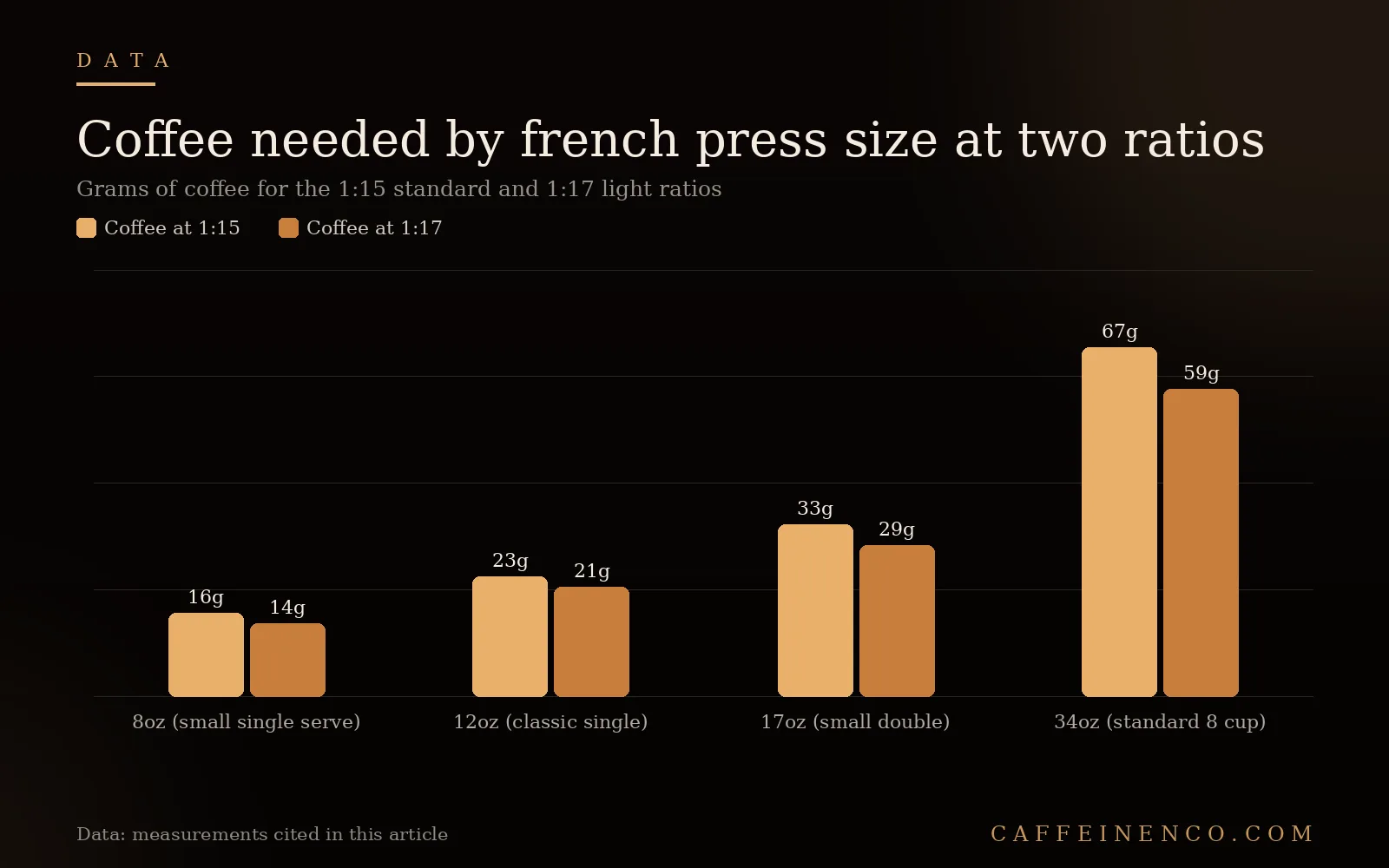
Tablespoon measurements fail here for the same reason they fail everywhere else in coffee: a scoop’s actual weight shifts with grind coarseness and roast density, so two “level tablespoons” from two different bags can differ by several grams without either person doing anything wrong. Weighing coffee and water removes that variable entirely. Here is the gram breakdown across common french press sizes at the two ends of the practical range, standard (1:15) and light (1:17), so you can scale to whatever press is actually on your counter.
| Press size | Water | Coffee at 1:15 | Coffee at 1:17 |
|---|---|---|---|
| 8 oz (small single-serve) | 240g | 16g | 14g |
| 12 oz (classic single) | 350g | 23g | 21g |
| 17 oz (small double) | 500g | 33g | 29g |
| 34 oz (standard 8-cup) | 1,000g | 67g | 59g |
For 1:12 strong coffee, take the 1:15 coffee figure in the table and multiply by 1.25: a 12oz press wanting a strong cup takes about 29g against the same 350g of water, and a 34oz press takes about 84g. Moving between any two ratios on this page is always the same operation, more or less coffee against the same fixed water weight, which is worth understanding once so you never need to look up a fourth ratio you don’t already have a column for.
Grind size is not optional at this ratio
A tighter ratio and a long, static steep are exactly the combination that punishes a grind that is too fine. French press wants a grind close to coarse sea salt, visibly larger and chunkier than the fine table-salt texture a pour-over wants, and our grind size chart has the full texture reference if you want to check yours against a target. Grind finer than that at a 1:12 to 1:17 ratio with a four-minute-plus steep, and two things go wrong at once: the coffee over-extracts because fine particles have far more surface area exposed to water for the same amount of time, and a meaningful share of those fine particles slip past the mesh filter into your cup, which is the single biggest cause of the muddy, gritty texture covered in our piece on why french press turns muddy. That guide focuses on the technique fixes for sediment specifically; this page is about getting the dose and ratio right in the first place, and the two problems compound each other if you get both wrong at once.
James Hoffmann’s recipe, timed out step by step
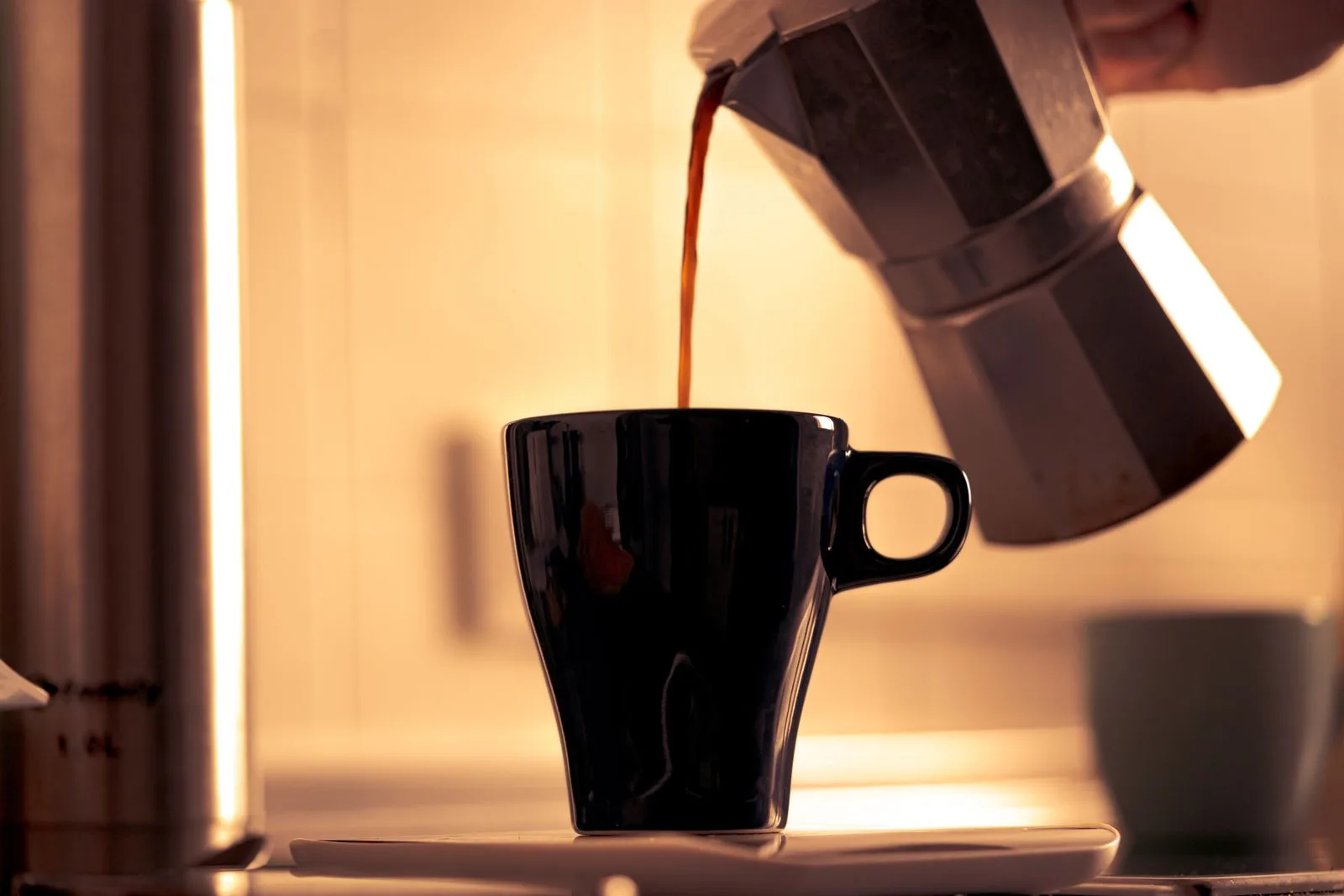
For a concrete worked example rather than just a ratio number, here is the widely referenced recipe from coffee writer and YouTuber James Hoffmann, which lands close to a 1:16.7 ratio, between the standard and light settings above, and is built around one specific technique change that makes the biggest difference in cup clarity: skimming the crust before you ever lower the plunger.
- Weigh 30g of coffee, ground to a medium-coarse, sea-salt-like texture, into an empty french press.
- Pour 500g of water just off the boil, around 100°C (212°F), over the grounds in about 10 seconds, saturating all of them evenly.
- Wait 3 minutes 50 seconds (230 seconds) without stirring. A crust of grounds and foam will form on the surface during this time; leave it alone.
- Break the crust with a spoon, stirring gently, then use two spoons to lift out the foam and floating grounds that rise to the top. This step removes a disproportionate share of the fine particles and bitter compounds that would otherwise end up in your cup.
- Wait 5 to 8 more minutes, undisturbed, so the remaining fine particles have time to settle to the bottom rather than staying suspended in the brew.
- Lower the plunger just until the mesh touches the surface of the liquid. Do not press down through the coffee bed; the plunger’s job here is separating settled grounds from clear coffee above them, not forcing anything through.
- Pour and serve immediately. Coffee left sitting on the grounds, even after plunging, keeps extracting and will taste progressively more bitter the longer it sits in the press.
The long rest in steps 3 and 5 is doing more work than the four-minute steep most recipes stop at; skimming the crust and letting fines settle before you ever plunge is the specific move that produces a noticeably cleaner cup at the same ratio and grind you were already using.
Adjusting ratio to taste, without guessing twice
Once you’ve brewed one batch at a known ratio and grams, adjusting from there is a short, deliberate process rather than trial and error:
- Taste the batch and decide what’s actually wrong. A cup that is simply too weak or too strong, but otherwise clean, is a ratio problem. A cup that tastes sour and thin, or bitter and harsh, regardless of intensity, is an extraction problem, not a ratio one; our coffee to water ratio chart breaks down that distinction in more depth if you’re unsure which one you’re tasting.
- If it’s a ratio problem, move to the next ratio column on the table above rather than adjusting by a random handful of grounds. Going from 1:17 to 1:15 to 1:12 in defined steps means you always know exactly what changed.
- If it’s an extraction problem, leave the ratio alone. Grind coarser and shorten the settling wait if the cup tastes bitter or harsh; grind slightly finer or extend the steep if it tastes sour or thin. Our piece on why coffee turns out bitter covers the over-extraction side of that in more detail.
- Change one variable per batch. Moving ratio and grind together in the same brew makes it impossible to know which change actually fixed, or broke, the cup.
Common questions
What is the best french press ratio? There isn’t a single best ratio, only a best ratio for your taste. 1:15 is the most commonly cited starting point and a reasonable default if you have no preference yet, but 1:12 for a stronger cup and 1:17 for a lighter one are equally legitimate choices inside the method’s normal range.
Can I use a tablespoon instead of a scale for french press? You can, but expect drift. A level tablespoon’s actual weight changes with grind coarseness and roast density, so “two tablespoons” from a coarsely ground light roast and the same two tablespoons from a finely ground dark roast are not the same dose. A kitchen scale removes that inconsistency entirely and costs less than a bag of specialty beans.
Why does my french press coffee taste bitter even at a normal ratio? Bitterness at a correct ratio almost always points to over-extraction rather than too much coffee: too fine a grind, water that was too hot, or a steep that ran long. Check grind size first, since it’s the most common culprit, and see our full breakdown of why coffee tastes bitter for the rest of the troubleshooting list.
Does steeping longer than 4 minutes make french press stronger? Only slightly, and mostly for the worse. Most of the extraction that is going to happen has already happened by 4 minutes; steeping well past that mainly continues pulling out the later, harsher compounds that make coffee taste bitter rather than meaningfully increasing strength. James Hoffmann’s recipe above deliberately extends past 4 minutes for a different reason, letting fine particles settle for clarity, not to extract more.
How much coffee do I need for a full 34oz french press? At the standard 1:15 ratio, a full 34oz (1,000g water) press takes about 67 grams of coffee. At a lighter 1:17, that drops to about 59 grams, and at a stronger 1:12, it rises to roughly 84 grams. All three are covered in the batch size table above.
For the condensed, at-a-glance version of this method, see our french press brew guide. If the ratio is right but your cup still comes out cloudy or gritty, why french press turns muddy covers the technique fixes this page doesn’t. For more sourced brewing breakdowns like this one, delivered weekly, subscribe to The Sunday Pour.