Every other pour-over guide on this site has been built around a V60 style cone: a single hole at the bottom, a steep taper, and a brew that lives or dies on how carefully you pour. The Kalita Wave looks similar at first glance, a paper filter sitting inside a plastic, ceramic, or steel dripper, but the shape underneath is a completely different piece of engineering, and it changes both the ratio conversation and how forgiving the method is of an imperfect pour. Two independently written brewing guides land on the exact same ratio for it, 1:16, using two different dose sizes, which is a cleaner reconciliation than most brew methods on this site get. Here is that ratio, the grind it wants, the flat-bottom design behind both, and a full step-by-step brew.
The flat-bottom, three-hole design
A V60 concentrates its grounds into a narrow point at the bottom, which means water passes through more coffee in the center of the bed than at the edges unless your pour is genuinely precise. The Kalita Wave solves that differently. According to Frothy Monkey, the dripper uses a flat bottom with three small extraction holes rather than a single large one, paired with a corrugated, wavy filter that keeps the paper from clinging to the dripper’s walls. Frothy Monkey describes the effect directly: “Its flat bottom with three extraction holes allows for a very even brew,” and the wavy filter’s reduced contact with the dripper wall lets coffee “quickly drip through before bitter flavors develop.”
Podium Coffee Club explains why that geometry matters more than it sounds like it should: “A cone concentrates grounds in the middle, which means water passes through more coffee in the center than at the edges, a recipe for uneven extraction unless your pour is very controlled. A flat bottom spreads the bed out so water meets the grounds more uniformly.” The three holes do the rest of the work on the way out. Unlike a V60’s single large hole, where the flow rate is mostly set by your pour and grind, Podium Coffee Club notes that “three small holes set a natural rate” that a wobbly pour or a slightly off grind cannot easily overwhelm.
The ratio: 1:16, reconciled
Search for a Kalita Wave ratio and you will not find the wide 1:8 to 1:12 spread that Turkish coffee needs or the 1:12 to 1:17 strength dial French press covers. Both sourced guides here land on the same single number using two different dose sizes, which is a genuine reconciliation rather than two sources describing different points on a range. Frothy Monkey states a ratio of 25 grams of coffee to 400 grams of water. Common Man Coffee Roasters states 15 grams of coffee to 240 grams of water. Run the math on both: 400 divided by 25 is 16, and 240 divided by 15 is also 16. Two brewers, writing independently, describing two different cup sizes, arrived at the identical 1:16 ratio.
That makes the Kalita Wave one of the more settled ratio questions on this site. Our coffee to water ratio chart puts most drip and pour-over methods somewhere between 1:15 and 1:18, and 1:16 sits comfortably in the middle of that band, on the stronger side of the SCA’s roughly 1:18 Golden Cup reference for batch drip.
Ratio by cup size, in grams
Scaling 1:16 to whatever mug, carafe, or batch you are actually brewing is a single division: divide your water weight by 16 to get the coffee dose.
| Water | Coffee at 1:16 |
|---|---|
| 200g (single small cup) | 12.5g |
| 240g (Common Man’s stated dose) | 15g |
| 300g (standard mug) | 18.75g |
| 400g (Frothy Monkey’s stated dose) | 25g |
| 500g (large mug or small carafe) | 31.25g |
If you want a slightly stronger or lighter cup than the sourced 1:16 default, treat it the same way this site’s other ratio guides treat a strength dial: move toward 1:15 for a fuller cup or 1:17 for a lighter one, and change only that one number between brews so you know exactly what shifted the result.
The grind: medium to medium-fine
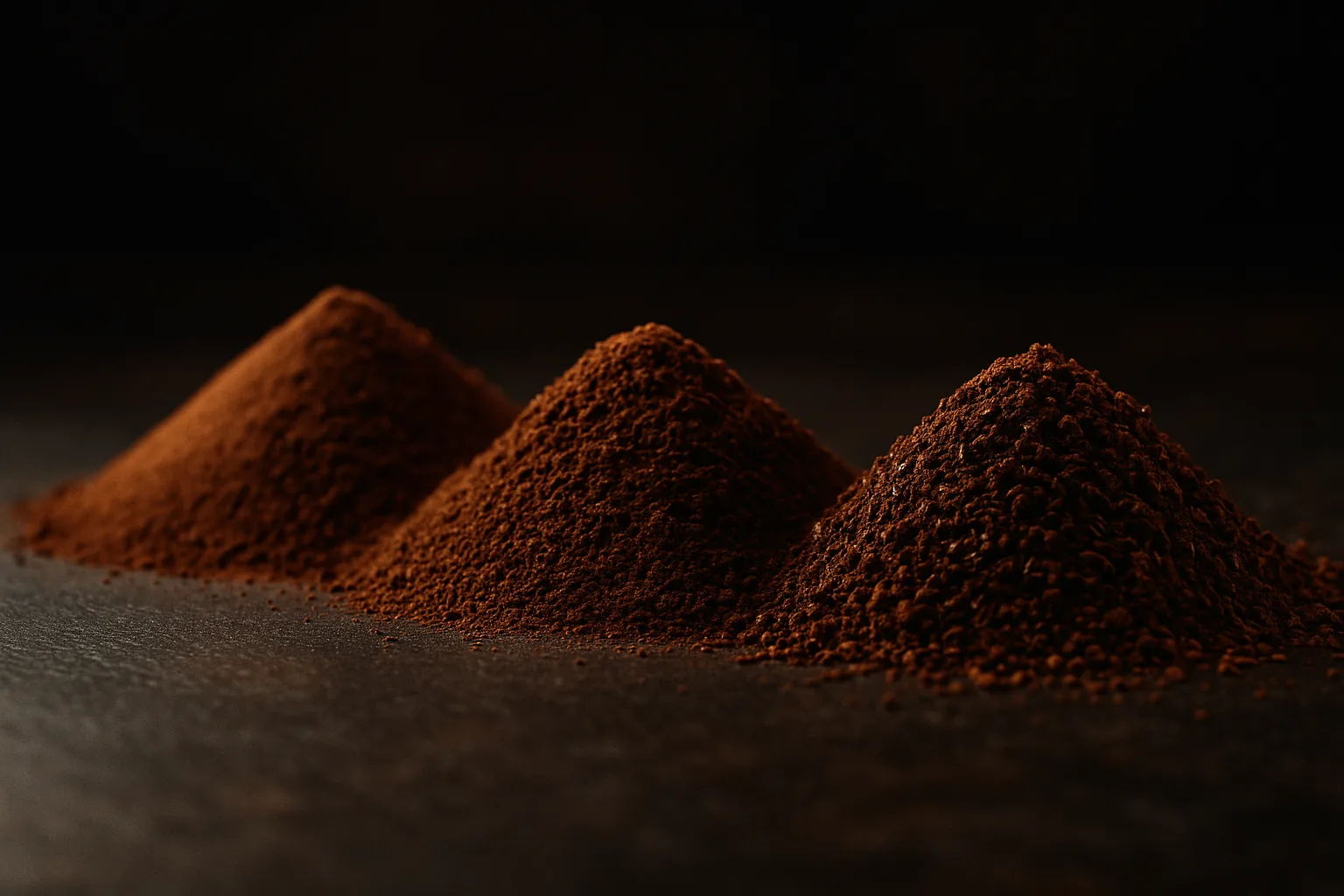
The two sourced guides describe the grind slightly differently, which is worth naming honestly rather than picking one and ignoring the other. Frothy Monkey calls for “Medium-Fine,” specifying that it should be “finer than drip brewer.” Common Man Coffee Roasters simply says “medium grind size.” Read together, the honest range is medium to medium-fine, distinctly coarser than a V60 pour-over grind. Frothy Monkey’s own copy describes it as finer than a standard drip machine, though our grind size chart places Kalita Wave and standard drip in the same 600 to 900 micron band, so treat “finer than drip” as a subtle shift within that band rather than a jump to a different one.
If your cup is coming out weak or fast-draining, nudge toward the fine end of that range first. If it is coming out muddy, bitter, or draining slowly enough to worry you, coarsen slightly, the same diagnostic logic covered in our piece on why pour-over drainage stalls, which applies to the Kalita’s grind sensitivity too, just with more tolerance for error thanks to the three-hole design above.
How to brew it, step by step
Common Man Coffee Roasters lays out a specific, timed routine built around their 15g to 240g dose. Here it is in full, since it is a genuinely useful worked example rather than a vague ratio statement.
- Grind 15 grams of coffee to a medium grind, and rinse your wavy filter with hot water first to remove any papery taste and seat it against the dripper.
- Bloom at 0:00. Pour 50 grams of water evenly over the grounds, saturating the whole bed, and let it sit.
- Second pour at 0:30. Pour up to 160 grams total, working in slow concentric circles over about 15 seconds.
- Third pour at 1:00. Continue pouring up to the full 240 grams, again in a slow circular motion, over roughly 15 seconds.
- Let it drain from 1:15 onward. Total brew time should land around 2 minutes 30 seconds from the first pour to the last drip.
- Swirl the carafe before serving to even out any stratification between the earlier and later extraction.
Scale the same three-pour rhythm, bloom, then two pours to your target weight, to any dose using the ratio table above; the structure of the pour matters more than the exact gram checkpoints once you understand what each stage is doing.
Why this makes it more forgiving than a V60
This is the part that actually matters for a home setup that is not chasing competition-level precision. Podium Coffee Club puts it plainly: “Pour technique still matters, but small mistakes don’t blow up the cup. If your pour wobbles, the bed self-corrects. If your grind is slightly off, the three-hole exit absorbs the error.” That is a meaningfully different proposition than a V60, where an off-center pour or a slightly wrong grind can produce a genuinely bad cup, or the stalled, water-pooling mess covered in our pour-over stalling guide. The Kalita’s shallow, flat bed and three restricted exits both work against the same failure modes that make a V60 punishing for a rushed morning pour.
That does not mean technique stops mattering entirely. A genuinely careless pour, dumping water in one spot instead of a slow spiral, or ignoring the bloom, will still show up in the cup. What changes is the size of the penalty for a small mistake, not whether good technique helps at all.
How Kalita’s ratio compares to other methods on this site
At 1:16, the Kalita Wave sits close to AeroPress’s full-immersion mode, which our AeroPress ratio and grind size guide puts at roughly 1:13 to 1:18, and noticeably lighter than French press’s 1:12 to 1:17 range covered in our French press ratio guide. Turkish coffee’s 1:8 to 1:12, detailed in our Turkish coffee ratio and grind size guide, is a different method entirely, an immersion brew with the grounds left in the cup, and sits far more concentrated than any drip or pour-over method. The Kalita’s single, tightly reconciled number, rather than a wide strength range, is itself a sign of how standardized this particular method has become across specialty coffee shops.
Common mistakes
Treating it like a V60 is the most common one. Aggressive pulse pouring or stirring the bed, techniques some V60 recipes lean on to control channeling in a cone, work against the Kalita’s flat-bed design rather than with it; a slow, steady spiral pour is enough. Skipping the bloom is the second most common mistake, and it matters here for the same reason it matters everywhere else: trapped carbon dioxide tastes sour and physically blocks even saturation if you pour straight through it. The third is grinding too fine in an attempt to slow down what feels like a fast drain; the three holes are already regulating flow, and an overly fine grind mostly adds bitterness rather than meaningfully changing brew time.
Common questions
What is the correct Kalita Wave ratio? 1:16, coffee to water. Two independently written brewing guides confirm this using different dose sizes, 25 grams to 400 grams and 15 grams to 240 grams, both of which reduce to the same 1:16.
Is Kalita Wave grind the same as V60 grind? Close, but slightly coarser. Kalita Wave wants a medium to medium-fine grind, a touch finer than standard drip but not as fine as many V60 recipes push toward. If you already have a pour-over setting dialed in, start there and adjust to taste rather than assuming an identical number.
Why is the Kalita Wave considered more forgiving than a V60? Its flat bottom creates a shallower, more even bed than a V60’s cone, and its three small holes cap the flow rate regardless of pour technique. A wobbly pour or a slightly off grind gets absorbed by the design rather than producing a dramatically different cup.
Do I need a scale to brew Kalita Wave properly? It helps far more here than with methods like Turkish coffee that use small, forgiving amounts. Because the ratio is a single reconciled number rather than a wide range, weighing both coffee and water is what actually lets you hit it consistently, rather than eyeballing your way somewhere in the neighborhood.
Can I use paper filters from other pour-over drippers in a Kalita Wave? No. The wavy, corrugated Kalita filter is specific to the flat-bottom, three-hole design; a flat V60 filter or a different dripper’s filter will not seat correctly and can collapse or leak grounds through gaps at the base.
For more sourced brewing breakdowns like this one, delivered weekly, subscribe to The Sunday Pour.