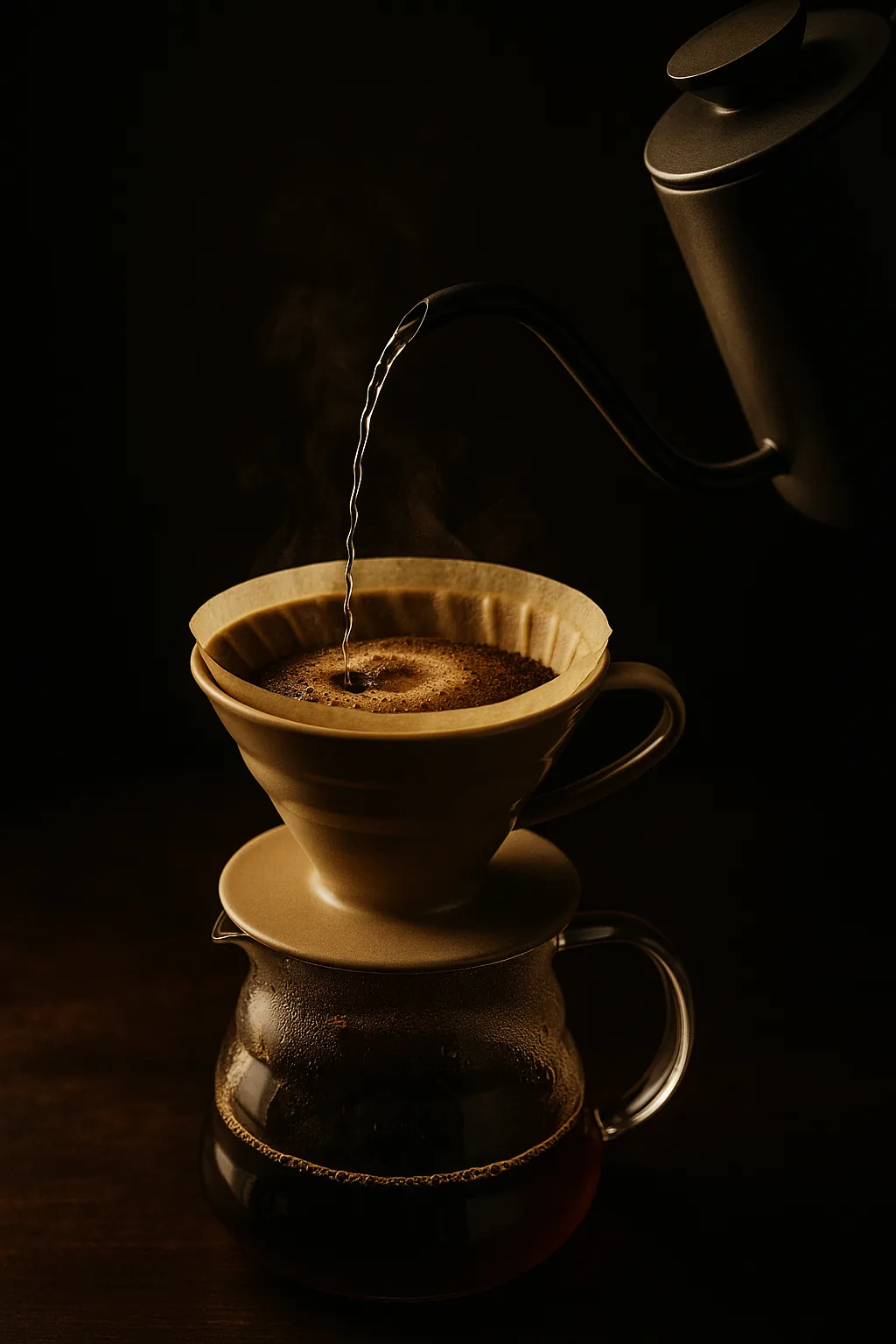
You pour, the water sits on top of the bed like it’s hit a lid, and the timer keeps climbing past three minutes, then four, then five. By the time it finally drips through, the cup is lukewarm, muddy looking, and tastes either bitter and heavy or strangely hollow. That’s a stall, and it’s one of the most common problems we see reported from home V60 setups.
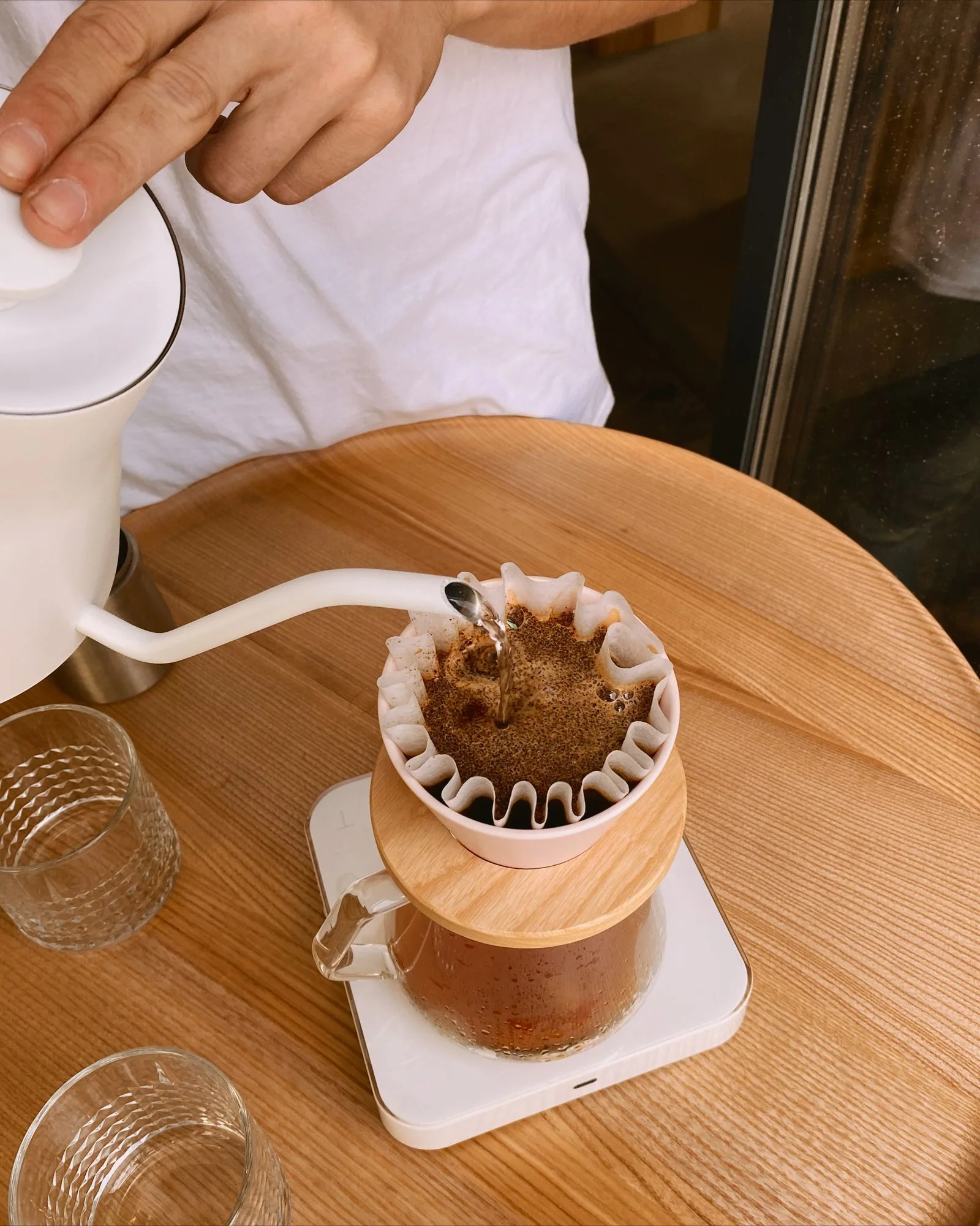
For context on what “normal” looks like: a standard 30g coffee to 500g water pour-over, sitting around a 1:17 ratio, should finish, bloom included, somewhere between 2:30 and 3:30. If you’re regularly blowing past four minutes without a clear intentional reason (a very fine grind on purpose, for example), something in your setup is choking the flow. The good news is that a stall almost always traces back to one of five specific causes, and each one has a distinct fingerprint once you know what to look for. We’ll go through them one at a time, in the order we’d actually check them in our own kitchen.
Grind too fine
This is the single most common cause, and it’s the first thing to rule out. Fine coffee particles pack together tightly, closing off the tiny gaps water needs to pass through the bed. Instead of flowing around the grounds, water has to fight its way through what’s effectively a layer of compacted dust, and it loses.
The fix is blunt: go coarser. Two to three clicks up on most hand or electric grinders is a reasonable starting adjustment if your pour-over is stalling badly. As a rough texture check, pour-over grind should feel closer to coarse table salt than to fine sand. If you rub a pinch between your fingers and it feels powdery rather than gritty, that’s your answer. Adjust one step at a time and re-brew rather than jumping several settings at once. It’s much easier to nudge finer again on the next cup than to guess your way back from an overcorrection.
Fines migration
Even at the correct grind setting, every burr grinder produces some amount of “fines”: the ultra-fine dust particles that come off any grind, more so from entry-level grinders with wider burr tolerances. On their own, a small amount of fines isn’t a problem. The issue is what happens to them during the pour. Aggressive pulse pouring or stirring the bed agitates those fine particles and pushes them down toward the filter, where they settle into the paper’s pores and clog them, the same way flour clogs a sieve faster than coarse breadcrumbs.
This is why two people using the same beans and the same grind setting can get completely different drain times: one is pouring gently in a slow spiral, the other is blasting water in from height and stirring with a spoon.
The fix has two parts. First, technique: agitate the bed only during the bloom, in the first 30 to 45 seconds, and once the main pour starts, avoid stirring or aggressive high pulse pours that churn the grounds. Pour in a steady, gentle spiral instead. Second, hardware: if you’re using a basic blade or entry-level burr grinder, it’s worth sifting out the finest dust with a handheld coffee sifter before brewing, or budgeting for a grinder with tighter burr tolerances if pour-over is your main method. Fines migration is the reason grinder quality tends to matter more for pour-over than for immersion methods like French press, where the fines just settle to the bottom of the carafe instead of clogging a filter.
Paper filter collapse or clogging
Filters aren’t interchangeable, and the wrong one for your dripper can stall a brew even with perfect grind and technique. Two specific failure modes show up here. The first is a genuine paper clog: cheaper or unrinsed filters can resist water flow more than a properly wetted one. The second, more dramatic failure is filter collapse, where the paper folds in on itself and blocks the drain holes at the bottom of the dripper, particularly common with stainless steel Kalita Wave filters, which have shallower indentations than the ceramic or glass versions and are more prone to folding under the weight of a wet bed.
Rinsing solves more of this than most people expect. Running hot water through the filter before adding grounds does two useful things at once: it flushes out the papery compounds that give unrinsed filters their cardboard taste, and it pre-wets and seats the paper against the dripper wall, which helps prevent it from folding or shifting once the wet coffee bed sits on top of it.
There’s a third, unrelated failure that gets mistaken for a filter clog: vacuum lock. Ceramic V60s in particular have a flat bottom that can create a suction seal against the mug or carafe underneath, especially if the gap between dripper and vessel is small. If your pour-over goes from flowing normally to dead stopped, with water sitting completely still rather than slowly seeping through, that’s more likely a vacuum lock than a fines clog. The fix is immediate and physical: lift the dripper slightly to break the seal, or rest it on something that keeps a small air gap underneath, such as a chopstick laid across the rim of the mug.
Bloom skipped
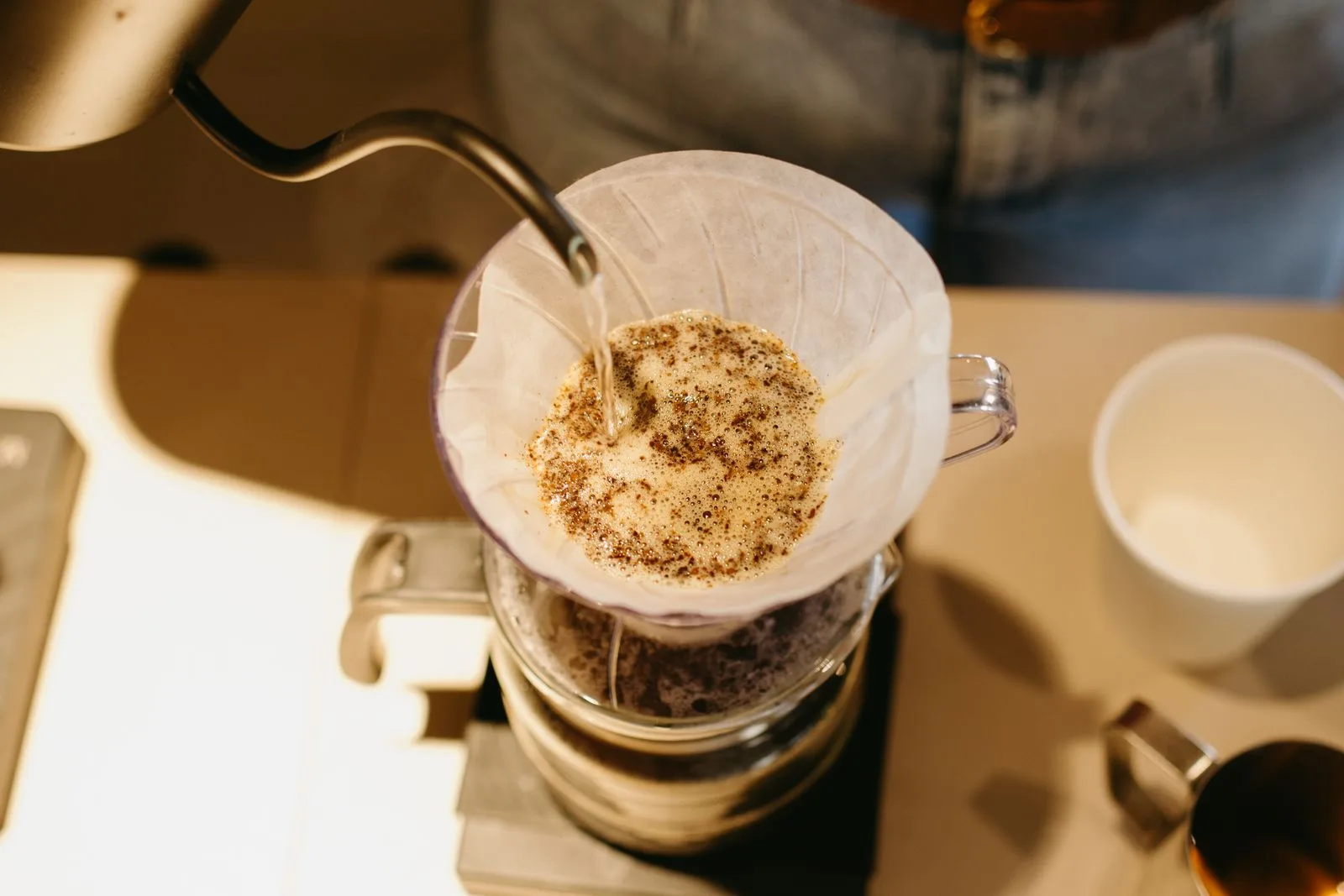
Freshly roasted coffee keeps releasing carbon dioxide for roughly two weeks after roasting, a process that speeds up dramatically the moment the beans are ground, since grinding massively increases the surface area exposed to air. When hot water hits those grounds, the trapped CO2 rushes out, which is the bubbling and doming you see in the first 30 to 45 seconds of a proper bloom.
Skip that step, or rush straight into the main pour before the gas has escaped, and you get two problems at once. Carbon dioxide itself carries a sour taste, so any that’s still trapped when extraction properly begins ends up souring the cup. More relevant to drainage, trapped CO2 physically repels water: gas pockets inside the bed block water from evenly saturating the grounds, forcing it to find its way around the blockages instead of straight through. That uneven path is a direct contributor to channeling and can slow the overall drain even when your grind and filter are both fine.
The fix is simple and doesn’t need a stopwatch obsession: wet the grounds with roughly double the coffee’s weight in water, then wait until the bed stops actively bubbling and domes down, typically 30 to 45 seconds for coffee under three weeks off-roast, before starting the main pour.
Water chemistry
This one is more often blamed for a flat or muted cup than for a literal stall, so it’s worth ruling out last, after grind, fines, filter, and bloom are all sorted. Still, if everything else checks out and the pour is still sluggish and the coffee tastes off at the same time, water is worth a look.
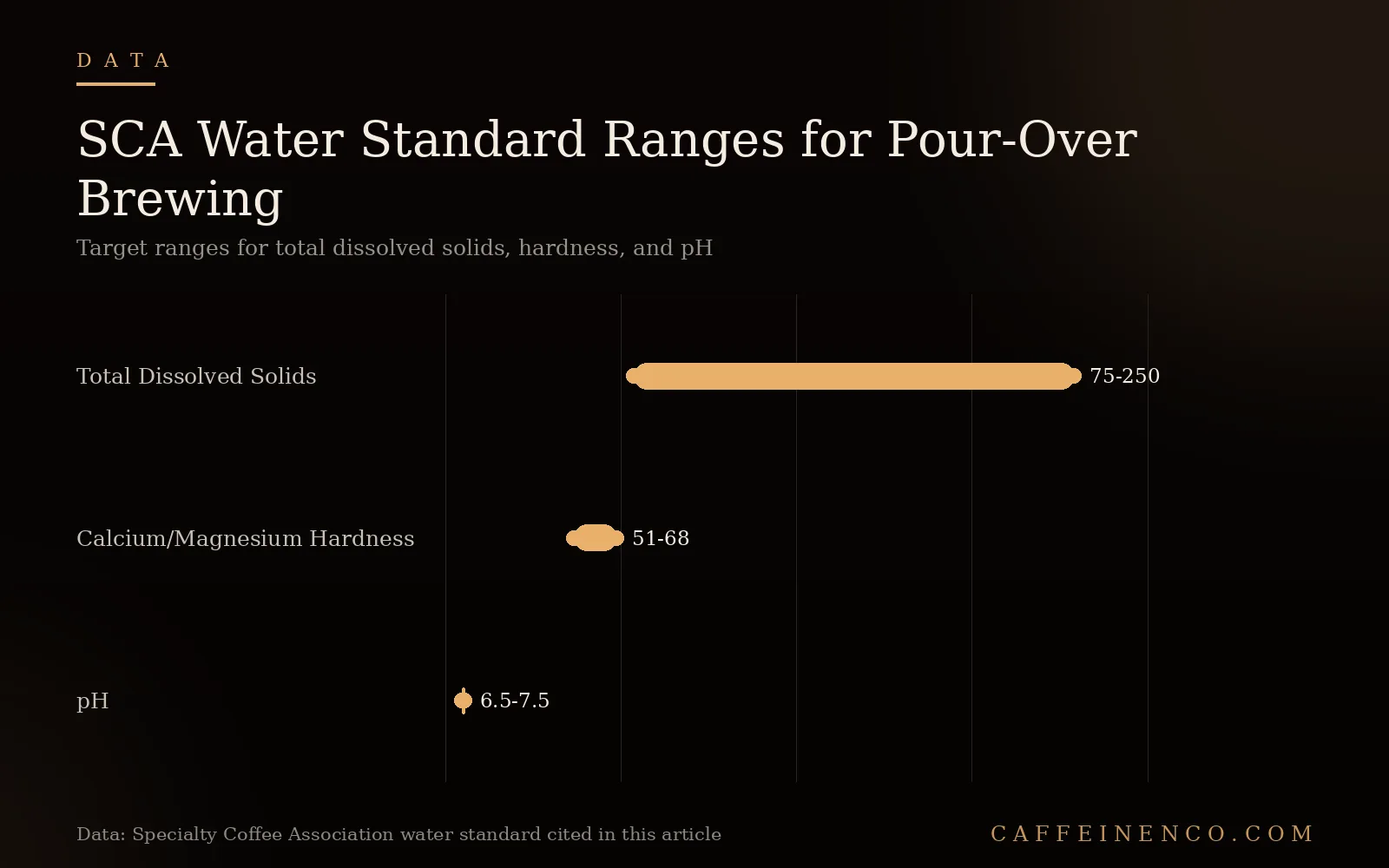
The Specialty Coffee Association’s water standard targets total dissolved solids of 75 to 250 mg/L, with roughly 150 mg/L as the optimum, calcium and magnesium hardness around 51 to 68 mg/L, alkalinity near 40 mg/L, and a pH between 6.5 and 7.5. Water well outside that range in either direction changes how extraction behaves: water with too little mineral content, such as straight distilled or reverse-osmosis water, has very little for the coffee’s soluble compounds to bind to, which tends to produce a thin, sour, underwhelming cup. Water that’s too hard, high in calcium especially, can produce a muted or bitter result and, over time, leaves scale buildup in kettles that affects how evenly your kettle actually heats. Neither extreme is the primary cause of a genuine stall the way grind or fines are, but if your setup is otherwise dialled in and the cup still isn’t right, swapping straight tap or distilled water for a filtered, mineral-balanced water is a cheap, easy variable to eliminate.
Quick diagnosis
| Symptom | Likely cause | Fix |
|---|---|---|
| Water pools on the surface almost immediately and barely drops | Grind too fine | Go 2 to 3 clicks coarser and re-brew |
| Flows normally at first, then slows or clogs mid-pour | Fines migration into the filter | Pour gently, stop stirring after the bloom, sift fines or upgrade the grinder |
| Drainage stops completely, water sits dead still | Vacuum lock or filter collapse | Lift the dripper to break the seal, or switch to a filter matched to your dripper |
| Bed doesn’t dome or bubble when first wetted, cup tastes sour | Bloom skipped or too short | Bloom with 2x the coffee’s weight in water for 30 to 45 seconds |
| Grind, filter, and bloom are all correct, but the cup tastes muted, bitter, or thin | Water chemistry too hard or too soft | Use filtered water inside the SCA range rather than distilled or straight tap |
Common questions
How long should a pour-over actually take to drain? For a standard 30g to 500g brew, around a 1:17 ratio, total time including the bloom should land between 2:30 and 3:30. Consistently running past four minutes, without deliberately choosing a very fine grind, is the first sign a stall is developing.
Is a slightly slow pour-over always a bad thing? Not necessarily. There’s a difference between a brew that’s a touch more leisurely than ideal and a genuine stall. A stall means water is visibly pooling and refusing to move, sometimes for a minute or more at a time. If your coffee is just running 20 to 30 seconds longer than usual but still flowing steadily, that’s a minor variation, not the problem this guide is about.
Why did my pour-over suddenly start stalling when it used to work fine? The most common explanation is something changed without you clocking it: grinder burrs dull gradually and start producing more fines over months of use, a new bag of beans might be denser or fresher than your last one and produce a different fines profile when ground, or you switched filter brands or a batch of filters without realising it. Walk back through what’s actually different since the last time it worked properly, rather than assuming your technique suddenly got worse.
If you want the fixes above turned into a repeatable routine, our full pour-over brew guide walks through grind, ratio, and pour technique from scratch. For more troubleshooting like this straight to your inbox, join The Sunday Pour.