Sharp, sour, almost lemony coffee is one of the most common complaints in home brewing, and it is also one of the most misdiagnosed. Most people who taste it assume something is wrong with the beans, when three independently published brewing guides agree the far more likely culprit is what happened in the kettle or the grinder, not what happened at the farm. Coffee Bros, ESPRO, and Trade Coffee each walk through their own list of causes, and while all three land on the same root mechanism, under-extraction, they diverge on which specific variable deserves the most attention, and one of the three does not think water temperature belongs on the list at all.
What under-extraction actually does to the cup
Coffee releases its flavor compounds in a rough order as water moves through the grounds: acids first, then sugars, then the heavier, bitter compounds last. Coffee Bros states the mechanism directly: “Sour coffee is usually under-extracted coffee.” Stop the brewing process before enough of that second and third wave comes out, and the acids that arrived early are left with nothing to balance them, so the cup tastes sharp and thin rather than rounded. ESPRO frames the same idea from the other direction: “The first things to be extracted are the acids. So when you start brewing, your coffee is very sour.” Every cause below changes some part of how much time, heat, or surface area the water gets to pull that second and third wave out of the grounds.
Sour or bitter? A thirty-second check before you start
If you are not sure which one you actually have, this site’s full breakdown of bitter coffee includes the complete taste test, but the short version: sourness lands on the sides and front of the tongue and makes you salivate, sharp and fast like a lemon, while bitterness sits at the back of the throat, dry and lingering. Get that distinction wrong and you will grind finer for a problem that actually needed less contact time, or the reverse, so it is worth the ten seconds before working through the list below.
The real causes of sour coffee, ranked
1. Your grind is too coarse for the method
All three sources point here first. ESPRO puts it plainly: “Finer grinds… can extract flavor compounds quicker than coarse grinds.” Coffee Bros explains why: “Fine grounds extract quickly, but large ones take longer” because water needs more time to fully penetrate a bigger particle, and if your brew method’s timer runs out before that happens, the grounds simply never release their sugars and heavier compounds. Trade Coffee’s fix matches: grind finer, and avoid coarse grounds that resist water penetration in the first place. This is the fastest thing to test and, on a burr grinder, the cheapest to adjust without buying anything.
2. Your water is too cool
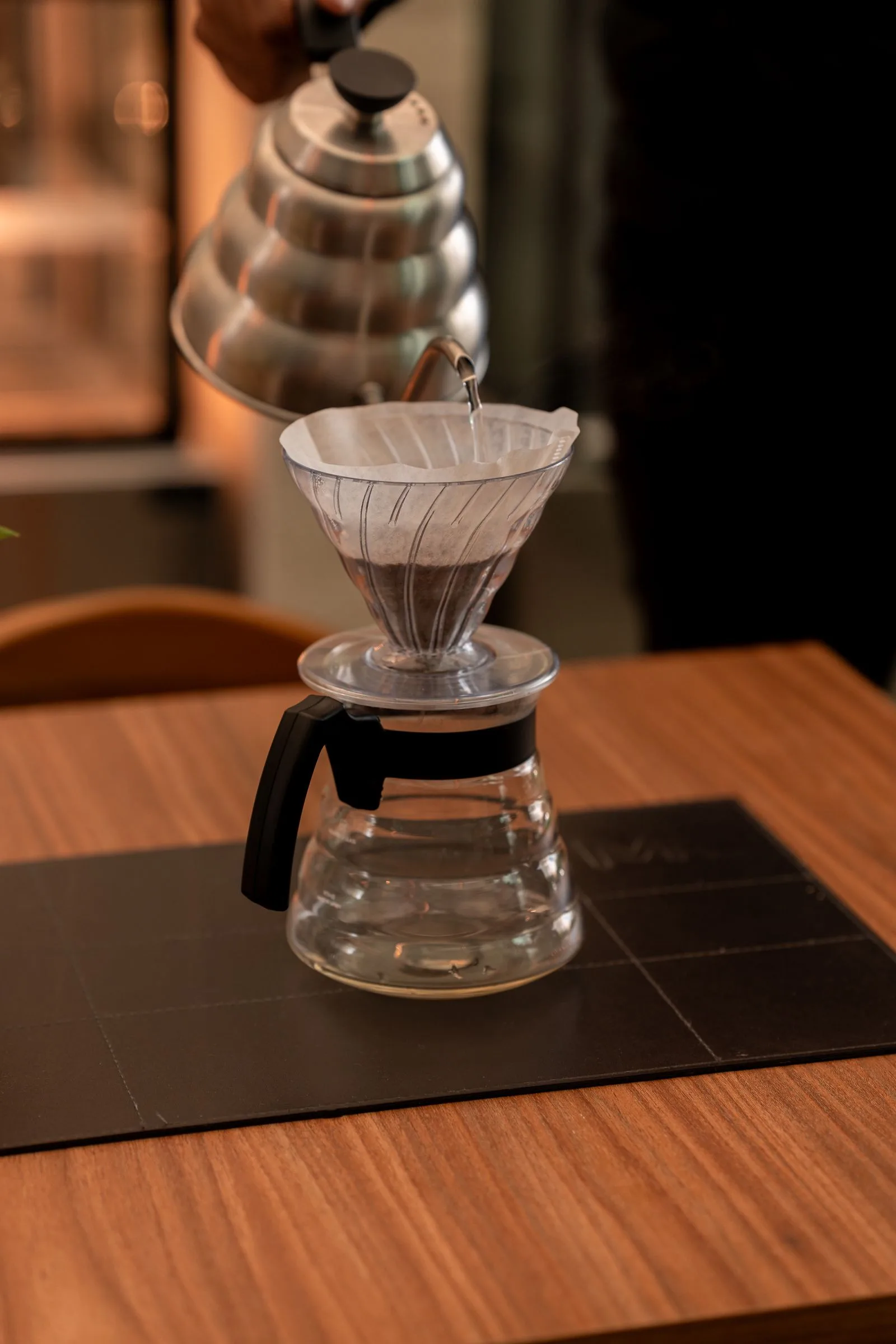
Coffee Bros and Trade Coffee both give the same number for this one: “the best water for coffee is between 195 and 205 degrees,” per Coffee Bros, and Trade Coffee’s guide states the identical range, adding “any lower and you risk not dissolving everything you want to taste in the cup.” Water below that window has less energy to pull the sugars and heavier compounds out of the grounds, so the fast-dissolving acids end up dominating by default, not because there is anything wrong with the beans. Notably, ESPRO’s guide to the same problem does not mention water temperature as a cause at all, focusing instead on grind, roast level, and bean age, a real gap between the three sources rather than a numbers disagreement. That does not mean temperature is not a factor, Coffee Bros and Trade Coffee both name it explicitly, but it is a reminder that no single guide covers every lever, and checking your kettle’s temperature costs nothing even if one source you read skipped it.
3. Your brew time is too short
ESPRO calls this the easiest fix for a bag of pre-ground coffee: “the easiest solution is to increase your brew time.” Coffee Bros gives concrete examples of what cutting it short looks like in practice: plunging a French press too early, or pouring pour-over water too fast through the bed. Their reasoning is the same one driving grind size and temperature: “you want to brew long enough to bring out the flavors that will calm down the acids.” A French press pulled at three minutes instead of four, or a pour-over finished in under two minutes when the method calls for closer to three, is giving the water less time to reach past the acids into the compounds that round the cup out.
4. Your ratio is not matched to the method
Coffee Bros and ESPRO both point to ratio here, and on closer reading they describe the same underlying mechanism. Coffee Bros frames a wrong ratio as an extraction problem: “if you don’t give each ground the right amount of water it needs to extract a balanced brew, you’ll naturally end up with under-extracted coffee.” ESPRO agrees that more water is the fix, and is explicit about why: “Adding more water directly increases the brew time, which results in a more even extraction to produce a cup of coffee with a softer acidity and sweet tasting notes.” That is an extraction argument, not a dilution one, since ESPRO also notes that too little water concentrates the brew and makes sourness more pronounced. This site’s own coffee to water ratio chart, sourced to the SCA’s Golden Cup Standard and Barista Hustle’s brewing control chart research, treats grind size, water temperature, contact time, and agitation as the primary levers on extraction, with ratio mostly setting strength rather than yield. Read alongside ESPRO’s framing, the two are not in conflict: more water can lengthen contact time enough to pull a genuinely under-extracted cup further along, but grind, temperature, and time remain the more direct fixes, and a badly diluted or over-concentrated cup can still taste unbalanced in ways that mimic true sourness, so it is worth checking your ratio against that chart either way.
5. Your beans are under-roasted
Trade Coffee notes that light roasts, brewed incorrectly, need “a finer grind” and longer time to extract fully, but the beans themselves can also be the issue. ESPRO is more direct about it: “if your coffee beans are roasted too light and don’t experience the Maillard Reaction, they’ll have a noticeably sour and almost hay-like flavor.” The Maillard Reaction is the browning process that develops sweetness and body during roasting, and a bean pulled off the roaster too early never gets far enough into it, leaving the bright, unbalanced acidity that a fuller roast would have tempered. This site’s roast level guide covers what actually happens inside the drum at each stage if you want to see where your bag’s roast level sits on that curve.
6. Your beans are stale
ESPRO gives a specific window for this one: “Within just 3 to 4 weeks of being roasted, your coffee beans will start to taste less balanced.” Coffee Bros’ language for the same effect is more visceral: old or stale beans produce a “sharp lemony flavor” as the aromatic compounds that once balanced the acidity break down through oxidation. This is not the same failure mode as under-extraction, no amount of grind or temperature adjustment fixes a bag of beans that has already passed its peak window, which is why this site’s shelf life breakdown is worth checking before you start fiddling with your grinder over a bag that is simply past its best few weeks.
7. Your beans are just naturally bright
Not every sour note is a mistake. Trade Coffee points out that “certain coffees have very tart, punchy fruit flavors that can be overpowering to certain palates,” and in general, high-grown origins tend to run brighter and more citrus-like than a milder, lower-grown cup, so a drinker used to the latter might read the former as a flaw. If you have worked through the six causes above, dialed in grind, temperature, time, and ratio, and confirmed the beans are fresh and fully roasted, a genuinely tart cup may just be what that origin tastes like brewed correctly.
Ranked causes at a glance
| Cause | What it does | Fix | Source(s) |
|---|---|---|---|
| Grind too coarse | Water cannot fully penetrate larger particles in time | Grind finer for your method | Coffee Bros, ESPRO, Trade Coffee |
| Water too cool | Below 195 to 205F, less energy to dissolve sugars and heavier compounds | Heat water to 195 to 205F | Coffee Bros, Trade Coffee |
| Brew time too short | Acids extract first, second and third wave never arrives | Extend contact time | Coffee Bros, ESPRO |
| Ratio mismatched | Mostly changes strength, though more water can extend contact time too | Adjust in small increments, recheck each time | Coffee Bros, ESPRO |
| Under-roasted beans | Skipped enough of the Maillard Reaction | Choose a fuller roast, or expect the light-roast profile | ESPRO, Trade Coffee |
| Stale beans | Aromatic compounds that balanced acidity have broken down | Buy less, more often, within the peak window | ESPRO, Coffee Bros |
| Naturally bright origin | Some coffees are meant to taste tart | Not a defect, adjust roast/origin choice if unwanted | Trade Coffee |
Worked example: diagnosing a sour cup in five steps
Work through these in order, changing one variable at a time so you know which adjustment actually fixed it.
- Confirm it is actually sour, not bitter. Run the front-of-tongue, back-of-throat check from the bitter coffee guide before changing anything. A cup that is both sour and bitter at once is more likely a channeling or unevenness problem than a straightforward under-extraction issue.
- Check your water temperature with an actual thermometer, not a guess. “Steaming” is not a temperature. A gooseneck kettle with a built-in temperature display removes the guesswork Coffee Bros and Trade Coffee both point to, and lets you hit the 195 to 205F window consistently instead of eyeballing it off the first wisps of steam.
- Grind one setting finer and re-brew before touching anything else. Keep your ratio and brew time exactly the same as your last cup so grind is the only variable that moved. If the sourness drops noticeably, grind was the primary cause.
- If grind alone did not fix it, extend your brew time. Add fifteen to thirty seconds of contact time for pour-over or French press, or let an automatic drip machine’s full cycle finish rather than pulling the carafe early.
- If the first four checks all come back normal, check the bag’s roast date. A bag more than a month old, per ESPRO’s 3 to 4 week window, or one labeled as a light roast from a naturally bright origin, may simply be doing what it was always going to do, and the fix at that point is a different bag rather than a different brewing routine.
When it is not a brewing problem
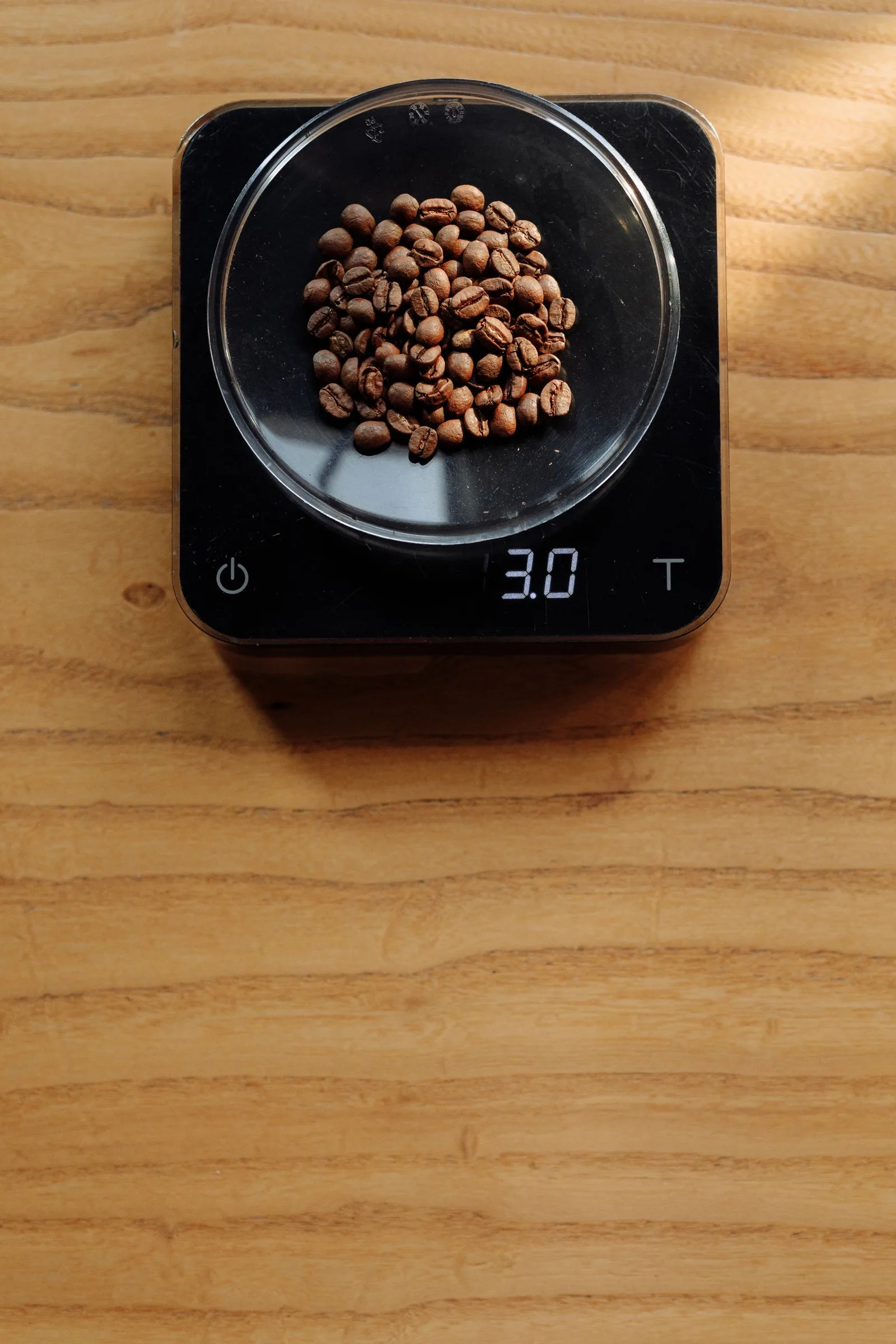
A sour shot that pulls in a normal 28 to 36 second window, per this site’s espresso extraction speed guide, points away from timing and toward the grind, dose, or bean-freshness causes above instead, since a normally timed shot that still tastes sour usually means the puck extracted unevenly rather than too quickly. And a cup that tastes sour despite a correct grind, temperature, and brew time is worth weighing against a scale rather than a scoop, since this site’s coffee grind size chart and ratio chart both assume you are measuring by weight; a basic kitchen scale removes one more variable from a diagnosis that already has several moving parts.
Common mistakes
Assuming a sour cup means bad beans before checking grind, water temperature, and brew time is the most common one, since all three sourced guides here treat under-extraction, a brewing variable, as the primary cause, with the beans themselves as a secondary factor. Reaching for grind or roast fixes before checking ratio is the second, since ESPRO notes that too little water concentrates a brew and makes sourness more pronounced, and more water can extend contact time enough to soften it. Judging water temperature by sight rather than with a thermometer is the third: water that looks like it is steaming enough can already be ten or more degrees below the 195 to 205F window both sourced guides name.
Common questions
What does under-extracted coffee actually taste like? Sharp, thin, and sour, sometimes described as lemony or vinegary, because the fast-dissolving acids extracted early in the brew have nothing from the later stages of extraction to balance them out.
What is the correct water temperature to avoid sour coffee? Between 195 and 205 degrees Fahrenheit, per both Coffee Bros and Trade Coffee. Water below that range has less energy to dissolve the sugars and heavier compounds that round out a cup’s acidity.
Can old or stale coffee taste sour? Yes. ESPRO’s guide puts the window at 3 to 4 weeks after roasting before beans “start to taste less balanced,” and Coffee Bros describes the same aging effect as a “sharp lemony flavor” once the beans’ aromatic compounds have broken down.
Should I grind finer or brew longer first to fix sour coffee? Grind finer first. It is the faster, cheaper test, and if it does not move the needle on its own, extending brew time is the next lever both Coffee Bros and ESPRO point to.
Does adding more water always fix sour coffee? Not always, but it can help more than you’d expect. ESPRO recommends adding water because it extends brew time, which pulls a more even extraction and softens acidity, not because it simply dilutes the cup. Coffee Bros frames a mismatched ratio as a cause of under-extraction itself for the same reason. That said, grind size, water temperature, and contact time are the more direct controls on how much dissolves out of the grounds, so if a cup is badly under-extracted, adjusting ratio alone may not be enough.
Is sour coffee always a mistake, or can beans just taste that way naturally? Not always a mistake. Trade Coffee notes that some coffees, particularly bright, high-grown origins, have “very tart, punchy fruit flavors” by design, and a correctly brewed cup from one of those beans can still read as sour to a palate used to milder, darker-roasted coffee.
For more sourced brewing fixes like this one, delivered weekly, subscribe to The Sunday Pour.