
Most advice about a caffeine headache stops at “drink some coffee, it’ll pass.” That is true but incomplete: caffeine withdrawal has a documented onset window, a peak, and a typical resolution point, and it is recognized as an actual clinical condition, not an informal complaint invented by people who like their coffee too much. StatPearls’ clinical reference puts the scale of the underlying habit in context first: 80 to 90% of adults in North America consume caffeine regularly, which is why a genuine, physiologically real withdrawal syndrome sitting underneath that habit affects a lot more people than the “just have some coffee” framing suggests. This site’s own coffee and anxiety breakdown and coffee and cortisol piece already cover what caffeine does while you are drinking it regularly; this page covers the other side, what happens on the way down, with the actual timeline and the real difference between tapering and quitting outright.
The real timeline: onset, peak, and how long it actually lasts

Three independent sources converge on almost the same numbers, which is a useful sign this timeline is not a single blog’s guess. StatPearls’ own clinical reference states that withdrawal symptoms begin “within 12 to 24 hours after cessation,” peak “between 20 and 51 hours,” and resolve within “2 to 9 days.” Wikipedia’s summary, citing the WHO’s ICD-11 diagnostic manual, gives a slightly wider onset window of 12 to 48 hours and a duration of up to 7 days. Healthline’s reporting lands in between: onset at 12 to 24 hours, peak at 24 to 51 hours, and a total duration of at least 2 to 9 days.
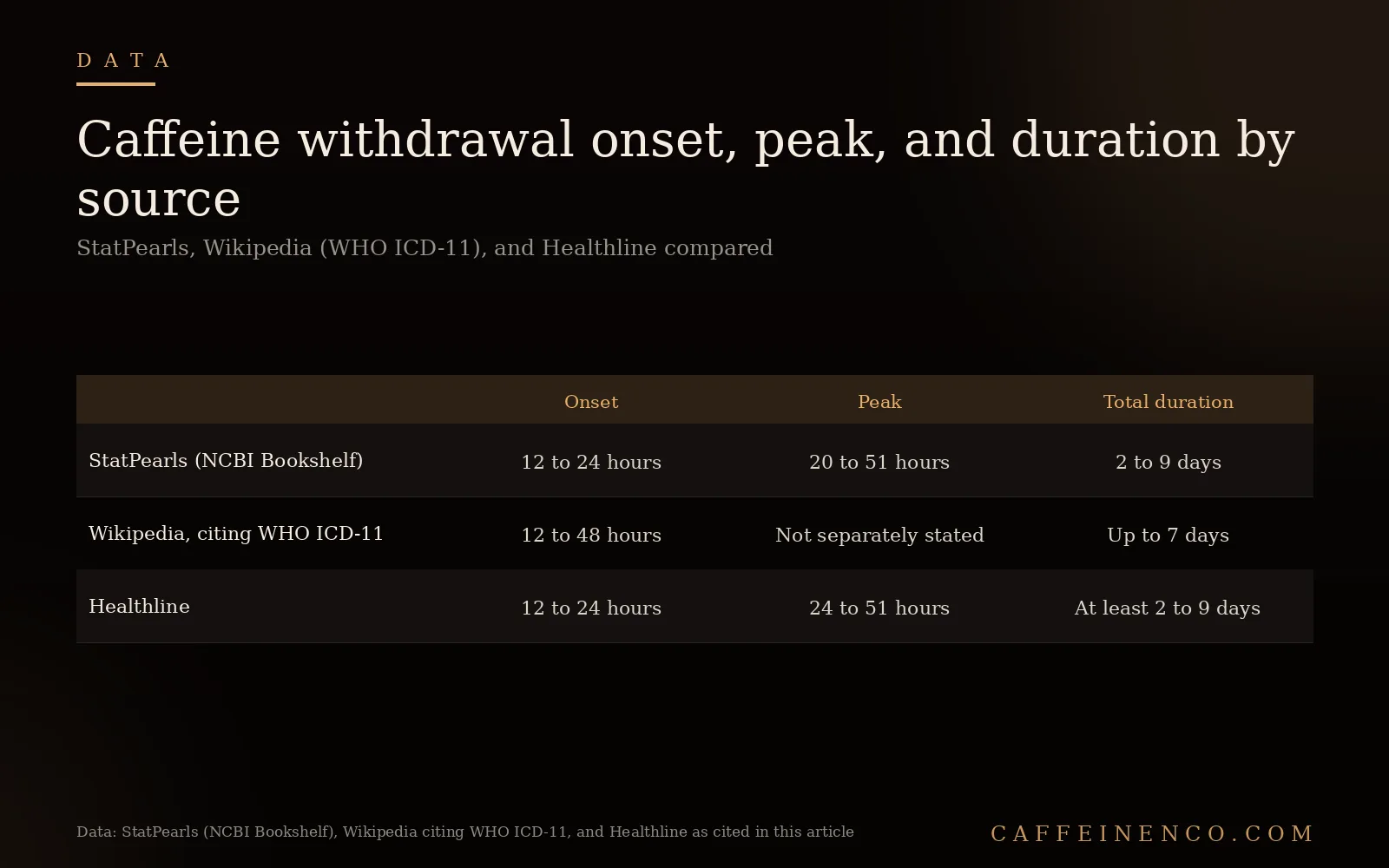
| Source | Onset | Peak | Total duration |
|---|---|---|---|
| StatPearls (NCBI Bookshelf) | 12 to 24 hours | 20 to 51 hours | 2 to 9 days |
| Wikipedia, citing WHO ICD-11 | 12 to 48 hours | Not separately stated | Up to 7 days |
| Healthline | 12 to 24 hours | 24 to 51 hours | At least 2 to 9 days |
The practical read: symptoms rarely show up on the same day you cut back, which is why people often blame the wrong thing, a bad night’s sleep, a stressful morning, before connecting the dots a full day later. StatPearls also puts a number on how bad it actually gets for most people: headache is the primary symptom and shows up in “up to 50%” of cases, while about 13% of people experience “clinically significant distress or functional impairment” from the full withdrawal syndrome, meaning most cases are noticeable but manageable, not disabling.
Why stopping causes a headache: the blood vessel mechanism
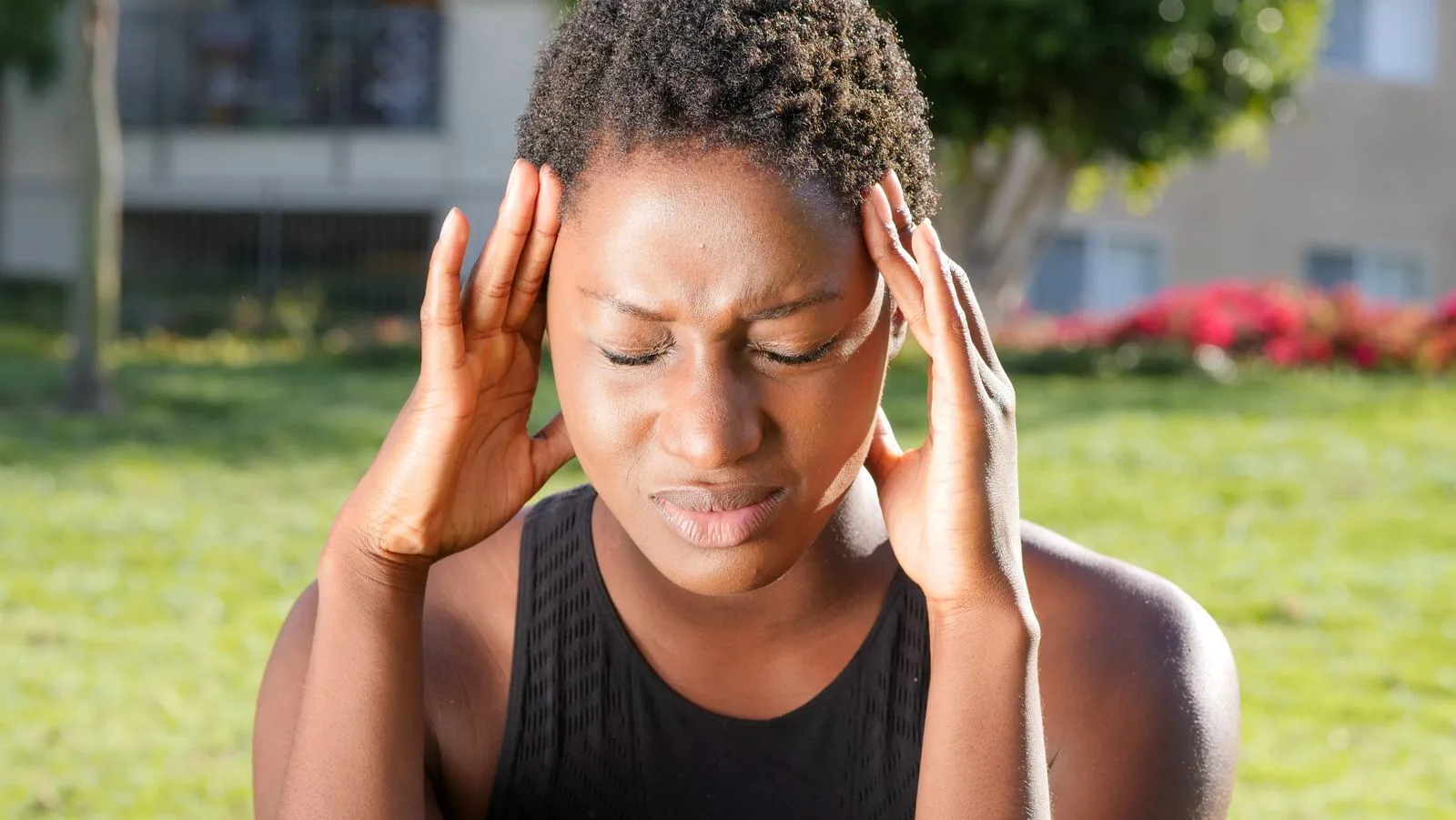
Caffeine’s day-to-day effect on the brain works by blocking adenosine receptors, the same mechanism this site’s coffee and anxiety piece covers for its effect on mood, and one measurable side effect of that blockade is that it narrows blood vessels in the brain. Healthline’s plain explanation of what happens when that blockade is removed is direct: caffeine “narrows the blood vessels in the brain,” and once it clears the system, “these blood vessels relax and widen, causing blood flow to increase,” which is the specific mechanical trigger behind the withdrawal headache rather than a vague sense of tiredness.
Wikipedia’s summary adds the dependence half of the picture: regular use produces genuine physical dependence, and “caffeine’s reinforcing effects are often linked to its ability to suppress mild withdrawal symptoms,” meaning a chunk of what a daily coffee habit feels like it is doing, waking someone up, sharpening focus, is partly just resolving a withdrawal state the previous night’s abstinence already created. That is not a reason to feel tricked by your own coffee habit; it is the same way regular meals resolve hunger without hunger being fake.
This is a real diagnosis, not an informal complaint
Caffeine withdrawal is formally recognized in three separate diagnostic manuals: the DSM-5-TR, the ICD-10, and the ICD-11, per Wikipedia. StatPearls independently confirms the diagnosis is in the DSM-5 specifically, though its reference text does not address the ICD-10 or ICD-11 classifications. Wikipedia notes that diagnosis depends on “the presence of characteristic symptoms following a reduction in caffeine intake,” and that in some cases those symptoms “can cause significant distress or impair daily activities,” which is the clinical bar StatPearls’ 13% figure above is describing.
The symptom list across both sources overlaps closely. Wikipedia lists headache, irritability, depressed or low mood, fatigue or drowsiness, nausea or vomiting, and difficulty concentrating. StatPearls’ clinical version adds a category the informal lists usually miss: flu-like symptoms, including nausea, vomiting, muscle pain, and stiffness, alongside headache, fatigue, decreased alertness, depressed or irritable mood, and difficulty concentrating. That flu-like framing is worth knowing on its own, since a lot of people who cut back on coffee during a cold or a busy week attribute the achiness to being sick rather than to the caffeine cut, when it can genuinely be either or both at once.
Who gets hit hardest: genetics and how much you were drinking
Not everyone who cuts back gets the same experience, and the gap traces partly to genetics. This site’s pre-workout caffeine breakdown already covers how a variation in the CYP1A2 gene changes how fast the body metabolizes a single dose of caffeine, and a 2026 review in Hereditas by Liu and Xu puts a number on how wide that variation actually runs: CYP1A2 enzyme activity varies “up to 15-fold” across the human population, meaning two people drinking an identical daily amount can be clearing it from their system at dramatically different rates, with a second gene, AHR, adding further variation on top of that. A slower metabolizer sits in a caffeinated state longer after each cup, which plausibly means a bigger drop, and a rockier withdrawal, once they stop, though the Hereditas review’s own focus is metabolic rate rather than a direct measurement of withdrawal severity, so that specific link is a reasonable inference from the metabolism data rather than a finding the study tested outright.
Dose matters at least as much as genetics, and it is easier to actually control. Using this site’s own per-serving figures, a daily habit built on 63mg espresso shots or 96mg cups of filter coffee adds up fast: four cups of filter coffee a day is already close to 400mg, and StatPearls’ own reference point for a heavier caffeine load is built around exactly that kind of daily total. The general pattern across the withdrawal literature is straightforward even without a single controlled dose-response study cited here specifically for withdrawal severity: a bigger, more consistent daily habit built up a steeper dependence to come back down from. That is a different measurement than this site’s cortisol research, which found a 600mg daily drinker builds more tolerance to caffeine’s acute stress-hormone effect than a 300mg drinker does, but the two findings point the same direction: a heavier regular dose produces more adaptation for the body to unwind, whether the withdrawal side effect being measured is dependence severity or blunted cortisol response.
Tapering vs quitting cold turkey: what the guidance actually recommends
StatPearls’ own treatment section is specific, and it comes down clearly on one side of the tapering-versus-cold-turkey question: gradual tapering, cutting intake by “25% to 50% every few days,” is the preferred approach over abrupt cessation. For someone already in the middle of a rough withdrawal, StatPearls also gives a concrete rescue dose: small amounts of caffeine, “50 to 100mg,” provide rapid relief, which lines up with roughly a single espresso shot or a bit less than a full cup of filter coffee, not a full return to a normal daily habit.
Healthline’s practical advice lines up with the same gradual approach and adds specific tactics: mixing half-decaf and half-regular coffee to step the dose down without dropping it to zero, staying hydrated, using an over-the-counter pain reliever for the headache itself, keeping to 7 to 9 hours of sleep, light exercise, and regular balanced meals. None of these tactics is exotic, but StatPearls frames why the gradual version specifically outperforms quitting outright: it minimizes the size and speed of the adenosine-receptor rebound described in the mechanism section above, rather than forcing the body through the full swing at once. Beyond the immediate symptoms, StatPearls also notes that supportive care during withdrawal, analgesics, hydration, rest, and simple reassurance that the syndrome is self-limited, is generally enough on its own, and that this supportive care matters most during the first 1 to 3 days, the acute window before symptoms begin to ease.
Worked example: tapering off caffeine without losing a week to it
- Calculate your current daily total using this site’s own per-serving figures: about 96mg per 8-ounce cup of filter coffee, about 63mg per espresso shot. Someone drinking three cups of filter coffee a day is sitting around 288mg.
- Cut by 25 to 50% for the first few days, per StatPearls’ own tapering guidance, rather than stopping outright. From a 288mg baseline, that means dropping to roughly 150 to 215mg a day, not zero.
- Use a half-decaf, half-regular mix to hit the new number, the specific tactic Healthline recommends, so the ritual and the cup size stay the same while the dose drops. This site’s own decaf coffee caffeine content breakdown puts a typical decaf cup at 2 to 15mg, low enough to blend freely without pushing the math back up.
- Repeat the 25 to 50% cut every few days rather than all at once, stepping down toward zero (or toward whatever lower daily total is the actual goal) over one to two weeks instead of one bad day.
- If a headache or fatigue hits anyway, use StatPearls’ own rescue dose, 50 to 100mg, roughly a single espresso shot, rather than a full return to the old daily total. That is enough to blunt the rebound without resetting the taper back to the start.
- Protect sleep, hydration, and meals during the taper window, per Healthline’s supportive-care list, since fatigue and low mood are two of the most common withdrawal symptoms and both get worse on their own from poor sleep or an empty stomach, independent of caffeine.
- If the goal is to keep the ritual while cutting the dose long-term rather than just during a taper, a decaf coffee selection from 1st in Coffee or the same category on Amazon gives a permanent lower-dose option once the taper itself is done.
Common mistakes
Quitting cold turkey and expecting no consequences is the most common mistake; StatPearls specifically recommends the opposite, a 25 to 50% cut every few days, precisely because abrupt cessation produces a bigger, faster adenosine-receptor rebound than a gradual step-down does. Blaming a withdrawal headache or the accompanying muscle aches on being sick is the second mistake, and an understandable one, since StatPearls’ own symptom list includes genuine flu-like symptoms alongside the more obvious headache and fatigue. Assuming the timeline is over after 24 hours is the third mistake; every source cited here puts the peak, not the resolution, somewhere between 20 and 51 hours, with the full syndrome typically running 2 to 9 days. Treating any post-coffee tiredness as withdrawal is the fourth mistake; StatPearls’ own 13% figure for clinically significant distress means most people who cut back have a noticeable but mild experience, not the more severe version that figure describes. Ignoring dose size while tapering is the fifth mistake; cutting from a 600mg-a-day habit down by the same fixed cup count as someone on 200mg a day produces a very different percentage drop, so basing the taper on StatPearls’ 25 to 50% figure, not a flat number of cups, keeps the step-down consistent regardless of where someone’s habit started.
Common questions
How long does caffeine withdrawal actually last? Most sources agree on a total window of roughly 2 to 9 days, per both StatPearls and Healthline, with Wikipedia’s ICD-11 citation putting the upper bound closer to 7 days. Symptoms typically begin 12 to 24 hours after the last dose and peak somewhere between 20 and 51 hours in.
What are the actual symptoms of caffeine withdrawal? Headache is the most common single symptom, affecting up to 50% of people according to StatPearls. The fuller list across sources includes fatigue, decreased alertness, depressed or irritable mood, difficulty concentrating, and flu-like symptoms such as nausea or muscle aches and stiffness.
Is caffeine withdrawal a real medical diagnosis? Yes. It is formally recognized in the DSM-5-TR, ICD-10, and ICD-11, and StatPearls estimates that about 13% of people who reduce their caffeine intake experience clinically significant distress or functional impairment from it, not just a mild inconvenience.
Should I taper off caffeine or quit cold turkey? Tapering is the better-supported approach. StatPearls specifically recommends reducing intake by 25 to 50% every few days rather than stopping all at once, since a gradual reduction produces a smaller, slower version of the same withdrawal rebound.
What actually gets rid of a caffeine withdrawal headache fast? A small dose of caffeine itself, 50 to 100mg per StatPearls, roughly a single espresso shot, provides rapid relief. Standard over-the-counter pain relievers, hydration, and rest also help, per Healthline’s supportive-care guidance, for anyone trying to avoid caffeine entirely rather than dose back in.
Why does caffeine withdrawal hit some people harder than others? Genetics play a real role. A 2026 review found that CYP1A2, the same liver enzyme gene this site’s pre-workout caffeine piece covers for single-dose effects, varies in activity by up to 15-fold across the population, meaning slower metabolizers stay caffeinated longer after each cup, which plausibly means a bigger drop once they stop. Total daily dose matters too: a heavier daily habit has more caffeine-driven adenosine adaptation to come back down from than a light one.
For more sourced breakdowns like this one, delivered weekly, subscribe to The Sunday Pour.