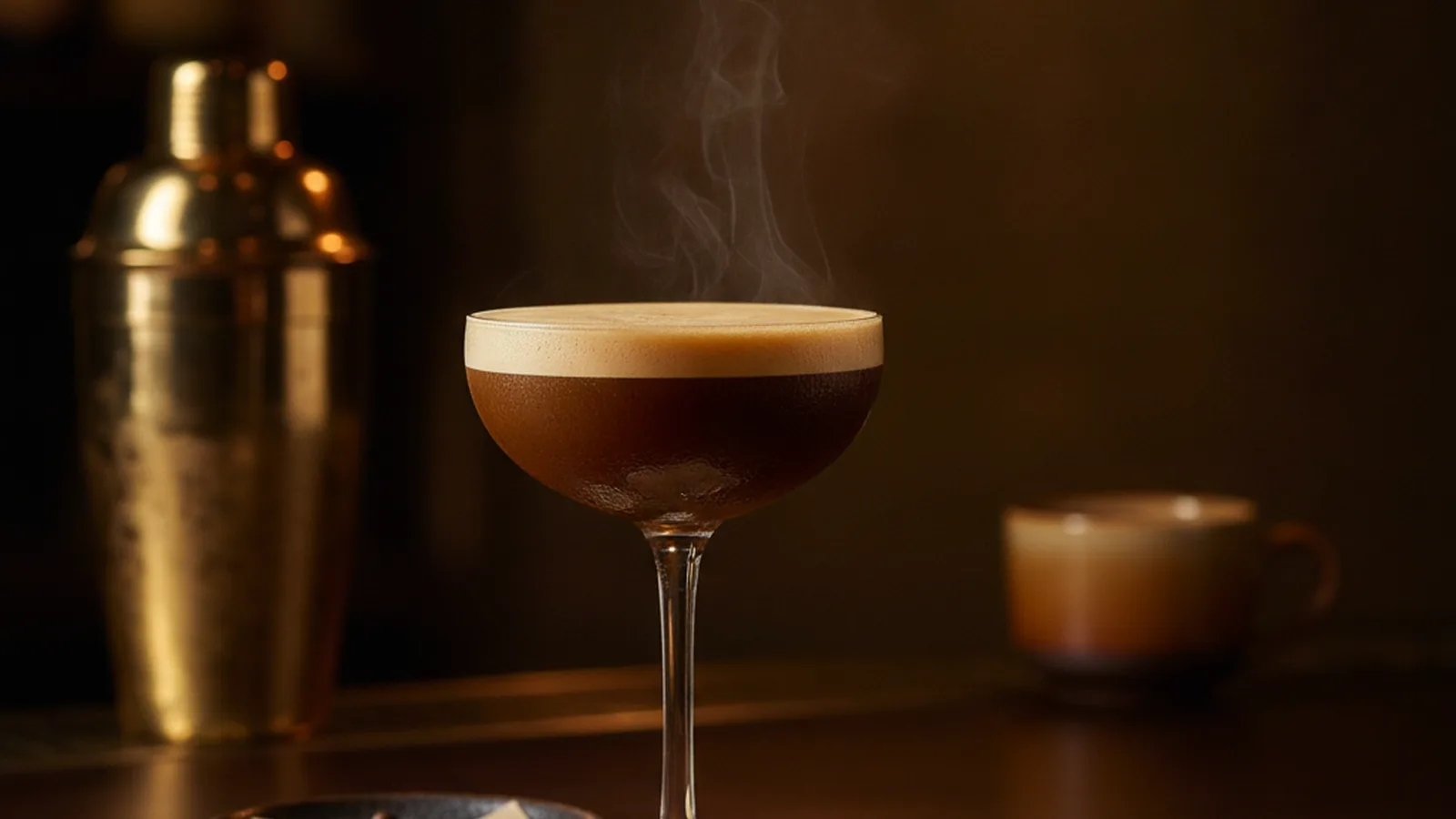
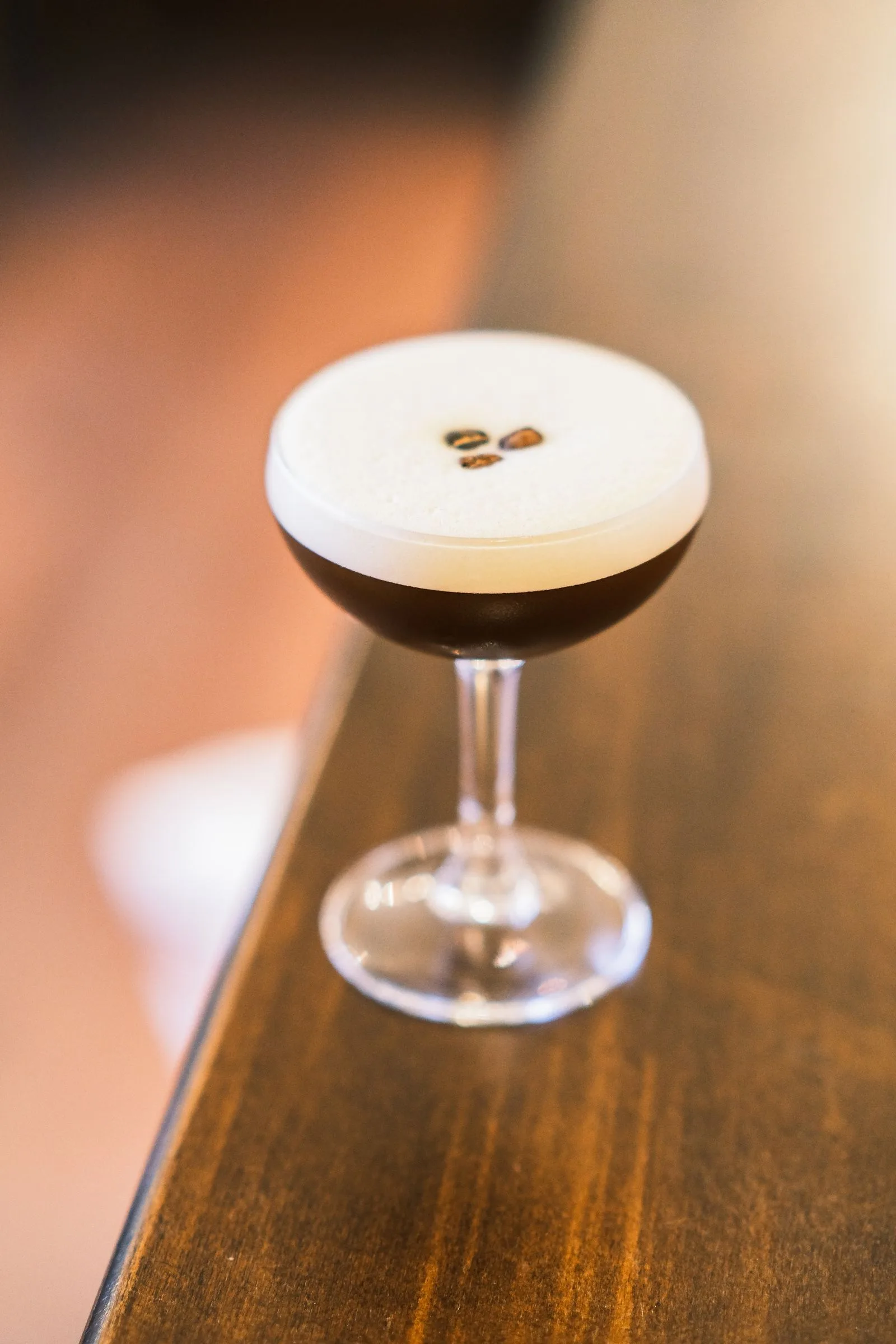
The espresso martini has a reputation as the cocktail that wakes you up while it gets you drunk, and that reputation makes people ask a fair question: how much caffeine is actually in one? The honest answer is that there is no single number, because the drink has no fixed recipe. Two bartenders can both be making a “classic” and pour caffeine totals that differ by a factor of two, mostly depending on whether the espresso comes out of the machine as one shot or two.
This guide does the arithmetic from published recipes and a published figure for coffee liqueur, shows which ingredient carries nearly all the caffeine, and then puts the result next to a daily budget. It is a caffeine-data explainer, not a drink review. For the espresso side of the sum in more depth, this site’s guide to caffeine in a shot of espresso explains why a single “per shot” figure is shakier than it looks.
A note on method before the numbers. Nobody publishes a lab-measured caffeine value for “an espresso martini” as a product. Everything below is built by adding up ingredients, so treat each total as an estimate with the assumptions stated, not as a measurement.
The short answer
| Recipe assumption | Espresso | Caffeine from espresso | Caffeine from liqueur | Estimated total |
|---|---|---|---|---|
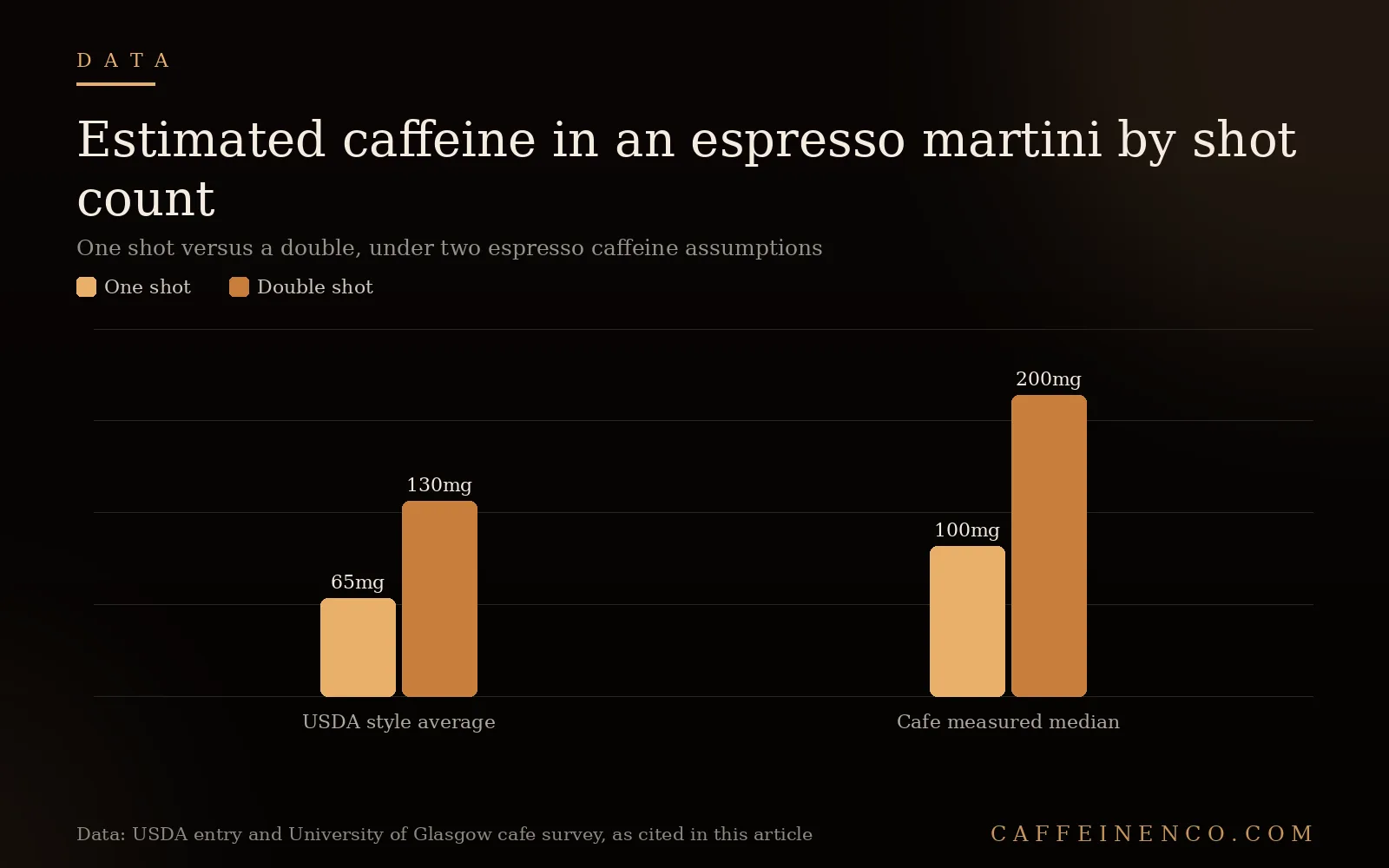
| One shot at the USDA-style average | 1 oz | about 64mg | about 1.5mg | about 65mg |
| One shot, cafe-measured median | about 1 oz | about 98mg | about 1.5mg | about 100mg |
| Double shot at the USDA-style average | 2 oz | about 127mg | about 3mg | about 130mg |
| Double shot, cafe-measured median | 2 oz | about 195mg | about 3mg | about 200mg |
The espresso figures come from this site’s espresso shot breakdown: the USDA entry of 212mg per 100g (about 63mg for a 1 fl oz shot) and a University of Glasgow survey of 20 cafes with a median of 140mg in a median 43ml serving. The “cafe-measured” row scales that median to 1 ounce, which is this site’s arithmetic, not a figure the study prints. The liqueur column is explained below.
The practical headline: a home-style martini with one shot of espresso sits around 65 to 100mg, similar to a small cup of coffee. A bar that builds it on a double shot is closer to 130 to 200mg, which is a strong large mug of coffee in a stemmed glass.
What goes in the glass
Two published recipes show how much the build varies.
- Punch gives 2 ounces vodka, 1 ounce fresh espresso, 1/2 ounce coffee liqueur and 1/4 ounce simple syrup. Its history note credits bartender Dick Bradsell at the Soho Brasserie in London, and says the original had no coffee liqueur at all: just vodka and espresso with simple syrup, served on the rocks.
- Food Republic gives 2 ounces vodka, 1 ounce coffee liqueur and one shot of espresso.
Both call for the same single espresso, but they disagree on the liqueur (1/2 ounce versus 1 ounce) and neither fixes the shot size beyond “1 ounce” or “a shot.” Other recipes round it up to a double. That is the first source of variation: the espresso volume.
The vodka contributes no caffeine. The simple syrup contributes none. Only two ingredients matter for this sum: the espresso and the coffee liqueur.
Ingredient one: the espresso
Espresso is the whole story. A single USDA-style shot works out to about 63 to 64mg, and cafe-measured shots run higher and much more variable, as the espresso shot guide lays out. Which number you use depends on who is making the drink.
At home
If you pull a shot with a measured dose of coffee, you control the variable that matters most. A recipe calling for 1 ounce of espresso is one shot’s worth of liquid. Use the lower half of the estimate: roughly 65 to 100mg.
At a bar
Bars are more likely to use a double shot as the base, because it holds up better against the vodka and the ice during shaking. If you cannot see the machine, assume the higher half of the range, 130 to 200mg, and ask. It is a perfectly normal thing to ask how many shots go into the drink.
Strong brewed coffee as a substitute
Many home recipes allow “espresso or strong brewed coffee.” That swap changes the math. Brewed coffee is less concentrated per ounce, so a 1 ounce pour of strong coffee has less caffeine than 1 ounce of espresso. Cold brew concentrate is a different product again, and published cold brew figures vary widely. If your recipe uses either, the table above no longer applies. See this site’s cold brew caffeine numbers for how widely those figures swing.
Ingredient two: the coffee liqueur
Coffee liqueur is made from coffee, so it is reasonable to wonder whether it adds meaningful caffeine. The figure usually quoted for Kahlua, the best-known brand, is about 100 ppm, which is roughly 100mg per litre. Wikipedia attributes this to the company and states that a standard 1.5 ounce drink would hold about 5mg.
Scale that to the recipes above:
- 1/2 ounce (Punch) is about 14.8ml, so roughly 1.5mg.
- 1 ounce (Food Republic) is about 29.6ml, so roughly 3mg.
- 1.5 ounces is about 44ml, which matches the quoted 5mg (4.4mg by this arithmetic).
Even a heavy pour of liqueur adds a few milligrams, which is round-off compared with the espresso. Other brands may differ, and I did not find published figures for them, so the safest summary is that coffee liqueur is a flavor ingredient first and a caffeine source a distant second. It matters far more for sugar and alcohol than for caffeine.
Worked example: three martinis, three totals
Here is the same drink built three ways, using the estimates above.
Version A: the Punch recipe at home. 1 ounce espresso (about 64mg) plus 1/2 ounce liqueur (about 1.5mg). Total: about 65mg.
Version B: the Food Republic recipe, with a double shot at a bar. 2 ounces espresso (about 127mg by the USDA-style average) plus 1 ounce liqueur (about 3mg). Total: about 130mg. If the bar’s shots are on the stronger side of the cafe-measured range, closer to 200mg.
Version C: a “bartender’s special” with a double shot and an extra splash of liqueur. About 130 to 200mg for the espresso and perhaps 3 to 5mg from the liqueur. Total: about 135 to 205mg.
The spread across A to C is more than threefold, from the same cocktail name. That is why “how much caffeine is in an espresso martini?” has a range for an answer instead of a figure.
Against the 400mg reference
MD Anderson Cancer Center, citing the FDA, says most adults can consume about 400mg of caffeine a day without negative effects. That is a reference for most healthy adults, not a target, and individual tolerance varies with body size, medications and health conditions.
Using the estimates above:
| Evening | Estimated caffeine | Share of 400mg |
|---|---|---|
| One home martini (Version A) | about 65mg | about 16% |
| One bar martini on a double (Version B) | about 130 to 200mg | about 33 to 50% |
| Two bar martinis | about 260 to 400mg | about 65 to 100% |
| Two bar martinis after a day with two coffees | well over 400mg | over 100% |
The rows to notice are the last two. A round of two doubles-based martinis can use up most or all of a day’s reference amount in an evening, and that comes on top of any coffee you already had. Because the caffeine in the espresso base arrives in the evening, it also lands at the time of day when it is most likely to interfere with sleep. This site’s pieces on coffee and anxiety and the caffeine withdrawal timeline cover what high totals can feel like.
Does the caffeine mask the alcohol?
This is the question underneath most espresso martini worry. The concern, raised in public health discussions, is that a stimulant could make you feel less drunk than you are. A 2014 systematic review and meta-analysis by Benson, Verster, Alford and Scholey, published in Neuroscience & Biobehavioral Reviews and summarized by NutraIngredients, looked at nine laboratory studies. It concluded that the stimulant effects of caffeine did not modify the subjective experience of the intoxicating effects of alcohol, and that participants were generally able to judge their own intoxication accurately. Only one study, which used notably higher caffeine doses, reported a significant masking effect.
Two honest caveats. These were controlled laboratory studies, and the summary I read describes the pooled result rather than every dose and setting. Also, the lack of a measured masking effect does not mean the combination is harmless: caffeine does not lower blood alcohol, and feeling alert is not the same as being fit to drive. Treat the caffeine as an addition to your daily total, and the alcohol as its own separate decision.
How to make a lower-caffeine martini
If you like the drink but not the total, you have a few levers. They are ordered from simplest to most different.
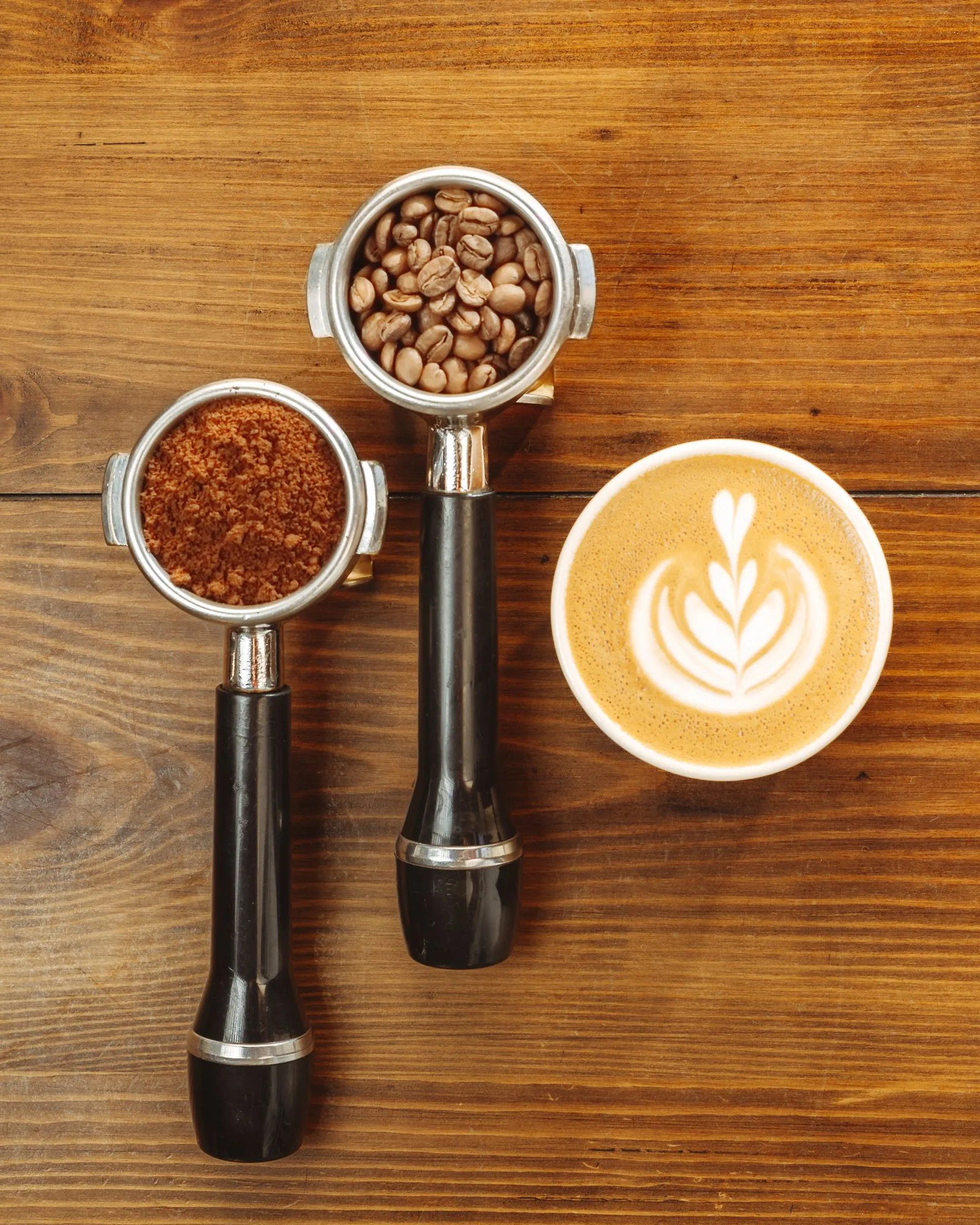
- Use one shot, not two. This alone roughly halves the caffeine, from about 130mg to about 65mg by the USDA-style estimate.
- Ask the bar. Say you want it built on a single shot. It is a simple request.
- Pull a shorter or smaller shot at home. Caffeine tracks the amount of coffee and extraction, so a smaller dose means less caffeine.
- Use decaf espresso. A decaf shot has a small fraction of the caffeine, though not zero. This site’s decaf caffeine guide has the numbers.
- Skip the espresso entirely and keep the liqueur. Coffee liqueur with vodka and cream has a few milligrams of caffeine at most, by the figure above. It is a different drink, but it keeps the flavor.
What not to rely on
Shaking, ice dilution and the glass do not remove caffeine. Ice melt during shaking dilutes the drink, which lowers the concentration per sip, but the total in the glass is set by what went into the shaker. And do not count on the vodka to “cancel” anything.
Common mistakes when counting
- Counting the liqueur as the main source. It is the smallest contributor; the espresso is the caffeine.
- Assuming one shot. Ask, or assume a double at a busy bar.
- Using the “63mg” figure for a bar-made shot. That is a USDA average, and measured cafe shots ran considerably higher in the Glasgow survey.
- Forgetting the rest of the day. The total that matters is the day’s, not the drink’s.
- Mixing up per drink and per round. A round for the table is not one drink.
Common questions
How much caffeine is in an espresso martini? About 65mg with one USDA-average shot of espresso and about 130mg with two, by this site’s ingredient math. Measured cafe shots run higher, which can push a double-shot version toward 200mg. There is no lab-measured figure for the drink itself.
Does an espresso martini have more caffeine than a cup of coffee? A one-shot version has less than a typical 8 ounce cup, and a double-shot version is comparable to or above a standard cup. The espresso is smaller in volume but more concentrated.
Does coffee liqueur have caffeine? Yes, but very little. Wikipedia attributes about 100 ppm to Kahlua, or about 5mg in a 1.5 ounce drink. In a 1/2 ounce pour that is roughly 1.5mg.
Can you get a caffeine-free espresso martini? You can get close. Swapping decaf espresso leaves a small amount of caffeine, and leaving out espresso leaves only the liqueur’s few milligrams.
Does caffeine hide how drunk you are? A 2014 meta-analysis of nine laboratory studies found that caffeine did not change how intoxicated people felt, with one high-dose exception. That does not make the pairing risk-free.
How many espresso martinis is too many for caffeine? Against the 400mg reference for most healthy adults, two bar-style martinis can use most of the allowance, depending on the shot size. Count your other coffee too.
Why do espresso martinis keep some people awake? The caffeine arrives in the evening. Even the one-shot version has about as much as a small coffee, and the double version has more. Sensitivity varies a lot between people.
Is brewed coffee a fair substitute for espresso in the recipe? It changes the total. Strong brewed coffee is less concentrated per ounce than espresso, so the same pour has less caffeine, while cold brew concentrate is a different product with widely varying figures.
For more sourced caffeine breakdowns like this one, delivered weekly, subscribe to The Sunday Pour.
Sources & data
- Punch: Espresso Martini recipe (1 oz fresh espresso, 2 oz vodka, 1/2 oz coffee liqueur)
- Food Republic: Espresso Martini recipe (1 shot espresso, 2 oz vodka, 1 oz coffee liqueur)
- Wikipedia: Kahlua (about 100 ppm caffeine, about 5mg per 1.5 oz)
- NutraIngredients: Review suggests alcohol-caffeine combo does not mask intoxication (Benson et al., Neuroscience & Biobehavioral Reviews, 2014)
- MD Anderson Cancer Center: How Much Caffeine Is Too Much?