Nespresso sells two entirely different capsule systems, OriginalLine and VertuoLine, and they are not interchangeable on caffeine any more than they are on hardware. A single Nespresso capsule can carry anywhere from under 2 milligrams of caffeine to 200 milligrams, a hundred-fold spread inside one brand’s own product line, and neither the intensity number printed on the capsule nor the “espresso” or “coffee” label tells you where a given pod actually falls. Two independently published rankings cover the ground in detail, and while they mostly agree, they diverge in two specific places worth naming honestly rather than smoothing over.
OriginalLine vs VertuoLine, reconciled
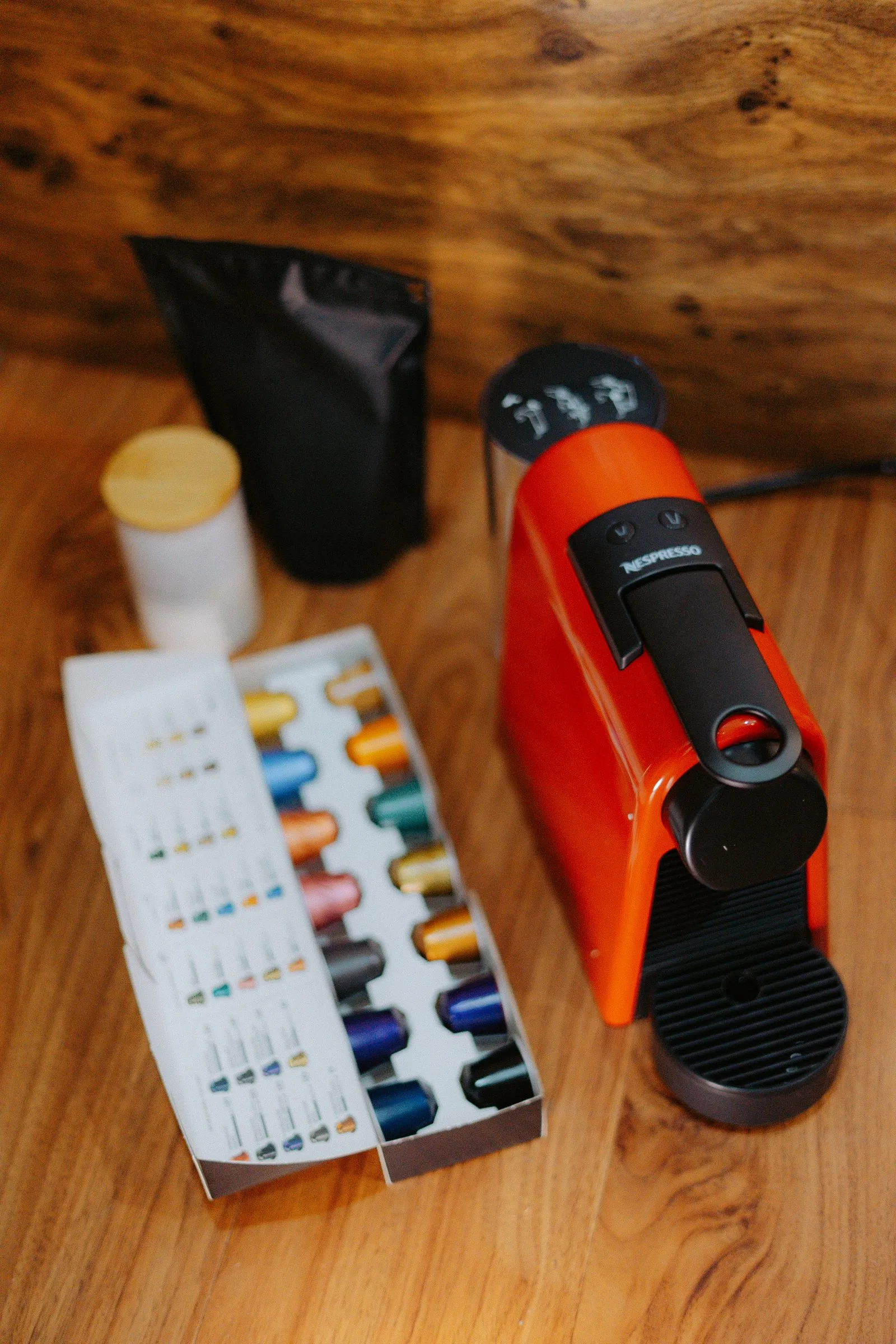
Caffeine Informer breaks Nespresso’s caffeine content down by system rather than by individual pod name, and the two systems land in genuinely different ranges. OriginalLine, the smaller capsule format used in machines like the Essenza and Pixie, runs a standard espresso capsule at 55 to 65mg, a Lungo capsule at 77 to 85mg, and its strongest named blend, Kazaar, at approximately 125mg. VertuoLine, the larger-capsule, barcode-read system built around bigger cup sizes, runs meaningfully higher across the board: espresso-format Vertuo capsules average 105mg but range from 60 to 150mg, while the larger coffee and Alto-format capsules average 165mg and range from 130 to 200mg. A half-caffeine Vertuo option sits at 90mg, and Vertuo decaf blends are capped, per this source, at no more than 12mg.
The pattern is consistent even before looking at a single named pod: VertuoLine’s larger serving sizes carry proportionally more caffeine than OriginalLine’s smaller ones, not because Vertuo coffee is brewed stronger cup for cup, but because a Vertuo capsule is putting more water, and correspondingly more extracted caffeine, into a bigger cup. Tasting Table independently confirms the same line-level pattern in its own words: “Virtuo pods often contain more caffeine per serving than Original pods since they’re larger. They top out at 170 to 200 milligrams, while the Original line’s strongest pod contains around 110mg to 140mg.” That is close enough to Caffeine Informer’s 125mg Kazaar figure and 130 to 200mg Vertuo coffee range to count as the same finding, arrived at independently by two separate outlets.
Every ranked pod, in milligrams
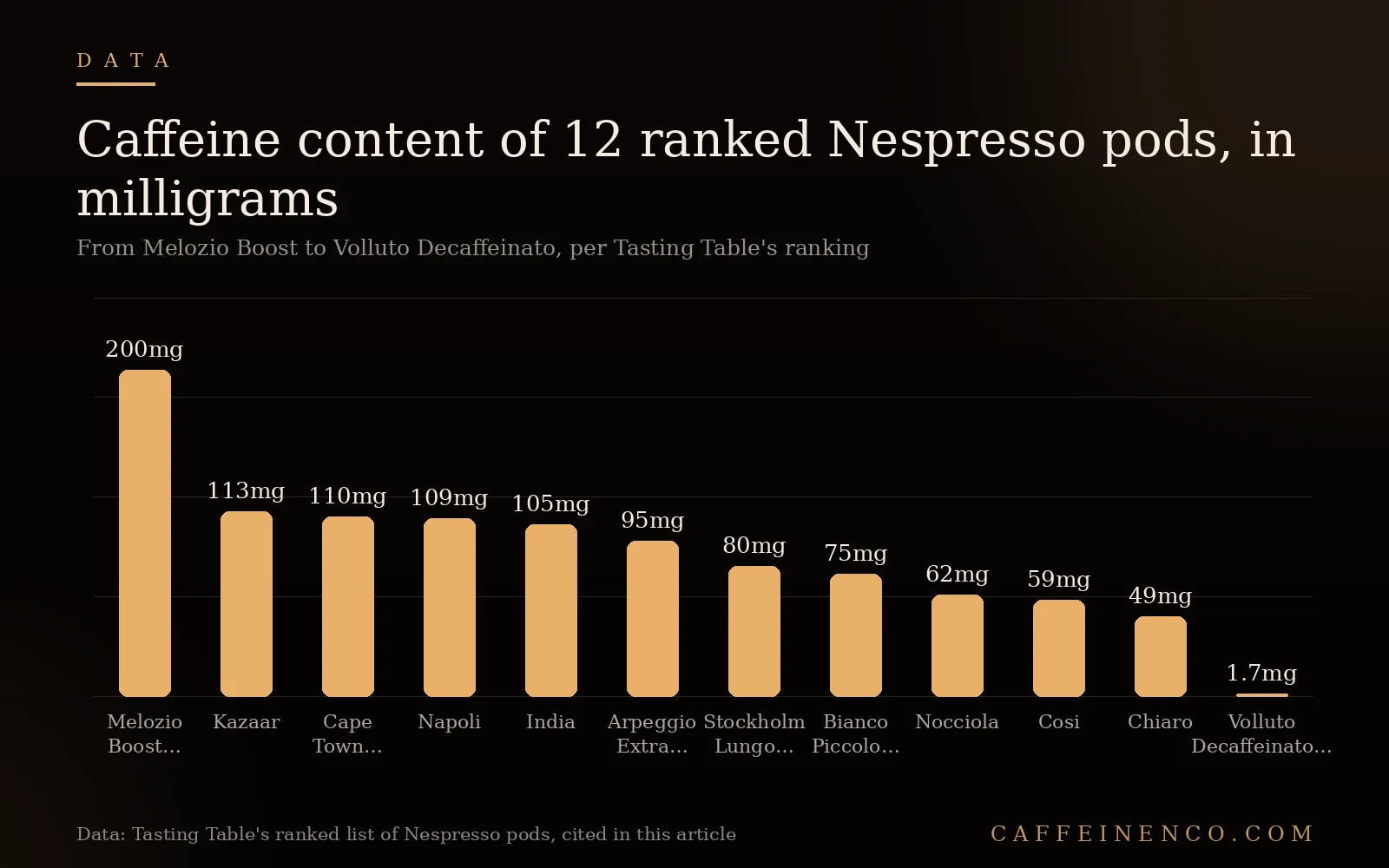
Tasting Table’s piece ranks twelve named pods from highest to lowest caffeine, giving the clearest single view of where individual blends actually land rather than just a line-level average.
| Pod | Caffeine |
|---|---|
| Melozio Boost | 200mg |
| Kazaar | 113mg |
| Cape Town Envivo Lungo | 110mg |
| Napoli | 109mg |
| India | 105mg |
| Arpeggio Extra | 95mg |
| Stockholm Lungo | 80mg |
| Bianco Piccolo | 75mg |
| Nocciola | 62mg |
| Cosi | 59mg |
| Chiaro | 49mg |
| Volluto Decaffeinato | 1.7mg |
That is a more than hundred-fold spread from top to bottom, and it makes a specific point worth remembering every time you reach for a random pod from a mixed sleeve: the intensity number Nespresso prints on its capsules describes roast and flavor strength, not caffeine. Caffeine Informer states this directly: “The intensity rating on capsules reflects flavor intensity only and has no connection to actual caffeine amounts.” A high-intensity, dark-tasting pod can carry less caffeine than a lighter-tasting one, the same disconnect between roast level and caffeine this site has covered for whole-bean roast levels generally.
Where the two sources actually disagree
Most of what these two sources report lines up closely, but two specific figures genuinely diverge, and the honest move is to flag both rather than pick whichever number sounds more authoritative.
Kazaar: Caffeine Informer states approximately 125mg. Tasting Table’s ranked list states 113mg. That is a real 12mg gap between two separately reported figures for the same named pod, not a rounding difference. Both numbers describe the same OriginalLine capsule and sit within roughly 10 percent of each other, close enough that either is a reasonable planning figure, but not close enough to call it a single settled number.
VertuoLine decaf: Caffeine Informer states Vertuo decaf blends run “no more than 12mg.” Tasting Table states Vertuo decaf pods “start around 3 milligrams and top out at 6 milligrams.” That is a meaningfully wider gap, roughly double at the top end, and unlike the Kazaar figures it is not close enough to treat as noise. Neither source names which specific decaf blend it measured, so it is possible the two figures describe different products within Nespresso’s decaf lineup rather than the same one twice. Until a single test names its exact capsule, the honest range for Vertuo decaf is 3 to 12mg, safely low either way relative to a caffeinated pod, but not a single precise figure.
The carafe format is a different animal
Nespresso’s VertuoLine also includes a Pour-Over Style Carafe option, brewing a larger multi-cup serving rather than a single capsule’s worth of coffee, and Caffeine Informer lists it separately from the rest of the VertuoLine range: below 200mg per serving. That puts a full carafe serving in roughly the same range as a single large Alto capsule rather than meaningfully above it, which is a useful data point if you assumed a multi-cup format would automatically mean multiples of a normal pod’s caffeine. It doesn’t, because the carafe format dilutes the same amount of ground coffee across more water rather than using proportionally more coffee for the larger volume.
What that means against your daily intake
The FDA’s general guidance, as summarized by MD Anderson Cancer Center, is that “most adults can consume about 400 milligrams of caffeine per day without negative effects.” Put Nespresso’s own numbers next to that ceiling and the range of how many pods it takes to get there is wide. Two Melozio Boost pods at 200mg each already hit 400mg on their own. At the other end, you could drink eight Chiaro pods at 49mg each, 392mg total, before approaching the same limit. A single Volluto Decaffeinato pod contributes essentially nothing, 1.7mg, toward that daily figure.
Worked example: estimating a two-pod morning
- Identify your pods. Say your usual routine is one VertuoLine Alto in the morning and one OriginalLine espresso capsule after lunch.
- Look up each pod’s range. The Alto-format capsule averages 165mg (range 130 to 200mg) per Caffeine Informer’s VertuoLine figures above. A standard OriginalLine espresso capsule runs 55 to 65mg.
- Add the midpoints. 165mg plus 60mg gives a working estimate of roughly 225mg for the day from Nespresso alone.
- Compare to the 400mg reference point. That leaves roughly 175mg of headroom before reaching the FDA’s general daily guidance, room for a cup of tea or a second smaller pod without exceeding it.
- Adjust for the pods you actually drink. Swap in the exact figures from the ranked table above if you know your specific blend by name, since the gap between a 49mg Chiaro and a 200mg Melozio Boost is too large to estimate from a line-level average alone.
How Nespresso compares to other caffeine sources on this site
Nespresso’s OriginalLine espresso range, 55 to 65mg per capsule, sits close to this site’s own figures for a standard shot of pulled espresso, while VertuoLine’s larger-format pods, averaging 165mg, land closer to a full mug of drip coffee than to a café espresso shot. Both are well below the far end of the caffeine spectrum this site has covered, Death Wish Coffee’s reconciled 59 to 61mg per fluid ounce, which would put a full 12oz cup at roughly 728mg on its own, nearly double the FDA’s daily reference point in a single serving. If you are choosing between a capsule machine and a cold brew setup on caffeine grounds specifically, our cold brew caffeine breakdown covers that method’s own wide range for comparison.
Common mistakes when estimating pod caffeine
Assuming intensity equals caffeine is the most common one, and Caffeine Informer’s own guide calls it out directly: the number on the capsule sleeve describes flavor strength, not milligrams. Treating VertuoLine and OriginalLine capsules as interchangeable is the second, since a Vertuo Alto pod can carry nearly three times an OriginalLine standard espresso capsule’s caffeine simply because it is brewed into a larger cup. Rounding a range to its lowest number is the third: both sourced rankings give ranges rather than fixed figures for most pod types, and planning around the low end of a 130 to 200mg range can leave you meaningfully under- or over-estimating your actual intake depending on which specific pod you grab.
Common questions
Do all Nespresso pods have the same amount of caffeine? No. Ranked figures from Tasting Table span from 1.7mg for Volluto Decaffeinato to 200mg for Melozio Boost, a spread of more than a hundred times between the lowest and highest named pods.
Does VertuoLine have more caffeine than OriginalLine? Generally, yes, per capsule. VertuoLine’s larger-format pods average 165mg against OriginalLine’s standard espresso capsule at 55 to 65mg, mainly because Vertuo pods brew into larger cup sizes rather than because the coffee itself is more concentrated.
Does a higher intensity number mean more caffeine? No. Caffeine Informer states directly that Nespresso’s intensity rating reflects flavor strength only and has no connection to actual caffeine content, which is why a dark, high-intensity pod can carry less caffeine than a lighter-tasting one.
How much caffeine is in Nespresso decaf? Low either way, but the two sourced rankings disagree on the exact figure for VertuoLine decaf: Caffeine Informer states up to 12mg, while Tasting Table states a 3 to 6mg range. OriginalLine decaf runs lower still, generally under 2mg per Tasting Table’s figures.
How many Nespresso pods would put me over the FDA’s daily caffeine guidance? It depends heavily on which pod. Two Melozio Boost pods at 200mg each reach the FDA’s general 400mg daily reference point on their own, while it would take roughly eight Chiaro pods at 49mg each to approach the same total.
For more sourced caffeine breakdowns like this one, delivered weekly, subscribe to The Sunday Pour.