Most people store coffee beans in whatever the bag came in, folded over and clipped shut, sitting next to the stove because that is where the coffee maker lives. Two independently published storage guides, from Bean Box and Stone Creek Coffee, agree that almost every part of that habit works against the coffee: the wrong container, the wrong seal, and often the wrong spot in the kitchen entirely. This site has already covered how long coffee lasts before it goes stale and what freezing does to beans that will sit around for months, but neither of those pieces spells out the actual container and daily-practice setup that determines how fast a bag declines in the first place. That is the gap this guide fills.
What actually degrades coffee freshness

Both sourced guides name the same four culprits, just in a slightly different order. Bean Box lists them as air first, then moisture, then heat, then light: “Air oxidizes the oils and aromatics, the first thing to fade. Moisture degrades the beans and invites staleness… Heat speeds up the staling and can draw out oils. Light breaks down flavor compounds.” Stone Creek Coffee names the same four factors as “air, light, heat, and moisture,” and adds a detail Bean Box does not spell out directly: roasted beans are “porous and hygroscopic,” meaning they physically absorb moisture, ambient odors, and even carbon dioxide from the surrounding air, not just lose their own aromatics passively.
The two guides do not agree on which of the four matters most, air versus light get swapped in the ranking depending on which one you read, but the practical result is identical either way: a storage setup that fails to block all four factors leaves coffee exposed on whichever front it is weakest. A container that is airtight but clear glass on a sunny counter still loses the fight to light. A container that is opaque but poorly sealed still loses the fight to air and moisture. The setup below is built to block all four at once rather than optimizing for just one.
The container: opaque, airtight, and the material genuinely matters less than the seal
Bean Box’s recommendation is direct: “An airtight, opaque container kept somewhere cool and dark. A ceramic or steel canister with a good seal is ideal; a sealed bag with a one-way valve works fine too.” Stone Creek Coffee’s material list differs slightly, “stainless steel canisters designed for coffee” or “glass jars with rubber seals”, but the underlying spec is the same: opaque construction because “light accelerates the breakdown of oils and flavor compounds,” paired with a seal tight enough to keep air and moisture out.
That difference in named materials, ceramic and steel from Bean Box, steel and glass from Stone Creek, is worth being honest about rather than papering over. Read literally, Stone Creek’s glass-jar recommendation only works if you also follow its own opacity rule: a clear glass jar left anywhere with ambient light is not actually opaque no matter how good its rubber seal is, which is why “kept somewhere cool and dark” matters as much as the container itself. A ceramic or steel canister solves the opacity problem by default, since neither material is see-through; a glass jar solves it only if you also commit to storing it in a cabinet or pantry rather than on an open counter. Neither guide states this caveat explicitly, but it follows directly from both guides’ own stated rule that light is one of the four named enemies.
An opaque ceramic coffee storage canister with an airtight seal satisfies both requirements at once without needing a separate dark cabinet, which is the simplest fix if your kitchen counter gets direct sun for part of the day.
The one-way valve, explained
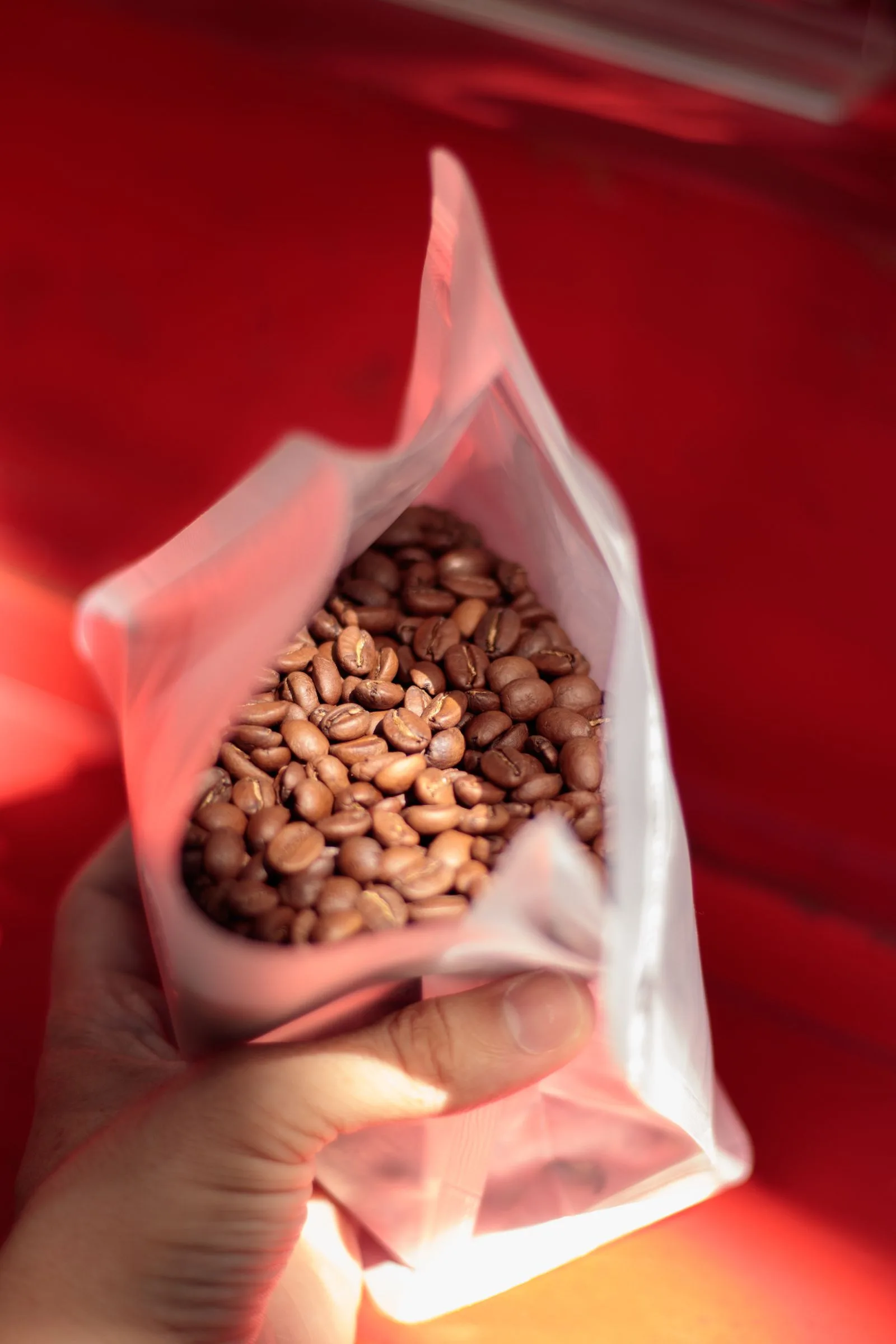
Both guides mention a valve-equipped option, but Stone Creek is the one that explains the mechanism: a one-way valve “lets CO2 escape while keeping air out.” That matters because freshly roasted beans continue releasing carbon dioxide for days to weeks after roasting, a process called degassing. A fully sealed container with no valve traps that gas inside, and in a rigid canister that is mostly a non-issue, but in a flexible bag it can cause the bag to swell or, in poorly designed packaging, force the seal open from the inside. A one-way valve solves that by letting the built-up CO2 vent outward while its physical design blocks outside air from moving in the opposite direction.
This is why most specialty roasters ship beans in a valve bag rather than a fully sealed one, and it is also why that same valve bag makes a reasonable short-term storage container in its own right, which is what Bean Box means by “a sealed bag with a one-way valve works fine too.” The valve is solving a packaging problem specific to fresh-roasted beans still degassing; it is not a requirement for a rigid canister you are filling with beans that have already finished releasing most of their gas, which is most beans by the time you have owned the bag for more than a few days.
Why the fridge is not the answer
Both sourced guides reject the refrigerator outright, and both give the same two reasons. Bean Box: “What you should not do is keep coffee in the fridge. It’s humid, it’s full of strong odors that coffee eagerly absorbs, and the temperature swings cause condensation every time you open the door.” Stone Creek Coffee agrees in almost identical terms: “Refrigerators are not ideal for coffee bean storage because they contain moisture and food odors that coffee can absorb.”
The mechanism behind both objections is the same hygroscopic property Stone Creek names directly: roasted beans absorb moisture and odor from whatever air surrounds them. A refrigerator is humid by design, it is built to keep produce from drying out, and it is packed with strong-smelling food sharing that same humid air. Every time the door opens, warm kitchen air meets the fridge’s cold interior and condenses, and coffee sitting anywhere near that cycle picks up both the moisture and whatever leftovers happen to be on the shelf next to it. This is a different failure mode than the freezer. This site’s freezing guide covers peer-reviewed research showing a genuinely sealed, portioned bag does fine in a freezer specifically because a proper freezer bag or vacuum-sealed portion is not exposed to that same cycle of humid air and opening-and-closing condensation the way a loosely covered dish in the fridge door is. The refrigerator sits in an uncomfortable middle ground: not cold enough to meaningfully slow staling the way a freezer does, but humid and odor-heavy enough to actively damage the beans faster than a good countertop container would.
How long properly stored coffee actually stays at its best
Both sourced guides converge on the same window for whole beans stored well. Bean Box states beans “are at their best for about 2 to 4 weeks after the roast date, stored well,” and adds that they “stay drinkable for a couple of months but slowly lose their brightness and aromatics” past that point. Stone Creek Coffee lands on nearly the identical figure independently: whole beans are “generally best when used within 2 to 4 weeks of roasting,” even with a proper airtight, opaque setup in place.
That is a genuinely useful number because it tells you what good storage can and cannot do. A great container will not stretch a bag’s peak flavor window much past 2 to 4 weeks, since both guides give that figure assuming the coffee is already stored correctly. What good storage actually buys you is protecting that window from closing early, keeping a bag that should last a month from going flat in a week because it sat open, in the light, or next to the stove. This site’s own shelf life breakdown covers the fuller timeline in more depth, including how the picture changes for ground coffee and for bags that stay sealed for months rather than weeks, and reconciles a wider spread of published figures than the two focused on containers here.
Container types compared
| Container | Opaque | Airtight | Vents CO2 | Best for |
|---|---|---|---|---|
| Ceramic or steel canister, sealed lid | Yes, by default | Yes, if the seal is good | No | Beans past initial degassing, everyday counter or pantry use |
| Valve-equipped storage bag | Yes, if the bag material is opaque | Yes, one-directional | Yes | Fresh-roasted beans still degassing, first several days after roast |
| Clear glass jar with rubber seal | Only if kept in a dark cabinet | Yes, if the seal is good | No | Pantry storage away from light; not counter display |
| Original bag, folded and clipped | Usually, if the bag itself is opaque | No, a clip is not airtight | Not controlled | Not recommended for more than a day or two |
Worked example: setting up your storage routine
- Check whether your beans are fresh-roasted or already a few weeks old. A bag with a roast date inside the last week is still actively degassing; a bag older than that has mostly finished. This determines whether the valve matters for your setup.
- Choose an opaque, airtight container. A ceramic or steel canister with a solid seal is the simplest option per both sourced guides. If you prefer glass, commit to storing it inside a cabinet rather than on an open counter, since a clear jar cannot satisfy the opacity requirement on its own.
- Transfer freshly roasted beans into a valve bag or leave them in the roaster’s original valve packaging for the first several days, so built-up CO2 can vent without letting outside air in. Once that initial degassing period passes, moving them into a rigid, non-valve canister works just as well.
- Pick a spot that is genuinely cool and dark, a cabinet or pantry shelf away from the stove, oven, or a sunlit window, not the fridge and not next to a heat-generating appliance.
- Grind only what you need per session. Both this site’s grind size chart and the shelf life research above point to the same conclusion: ground coffee’s larger exposed surface area stales far faster than whole beans, so keeping beans whole until brewing time protects the 2 to 4 week window the two sourced guides describe.
- Use the bag within 2 to 4 weeks of the roast date for peak flavor, and treat anything stretching well past a month as a candidate for the freezer instead of the counter, per this site’s freezing guide.
If you are buying a container for the first time rather than repurposing something already in the kitchen, a vacuum-sealed coffee storage container with a built-in one-way valve covers both the fresh-roast degassing period and the longer-term airtight storage afterward in a single purchase, which is a reasonable middle ground if you do not want to manage two separate containers for the two phases described above.
Common mistakes
Leaving beans in the bag they shipped in, folded over and clipped, is the most common one. A clip is not an airtight seal, and both sourced guides build their entire recommendation around a container that is both opaque and genuinely airtight, not just closed. Storing coffee in the fridge because it seems like the same logic as refrigerating other food is the second, and it is the mistake both guides call out most directly: coffee is dry and shelf-stable, not perishable in the way food that actually needs refrigeration is, and the fridge’s humidity and odors do active damage that a countertop container does not. Choosing a container based on looks rather than opacity is the third, a clear glass canister on display looks appealing on a counter, but unless it lives somewhere dark, it fails the light-blocking requirement both sourced guides name as one of coffee’s four main enemies.
Common questions
What is the best container for storing coffee beans? An opaque, airtight container kept somewhere cool and dark. Bean Box recommends a ceramic or steel canister with a good seal; Stone Creek Coffee independently recommends stainless steel canisters or glass jars with rubber seals, provided the glass is kept out of direct light.
Should I store coffee beans in the fridge? No. Both sourced guides reject the refrigerator directly, citing the same two reasons: refrigerators are humid, and they hold strong food odors that coffee’s porous, hygroscopic beans readily absorb. The temperature swings every time the door opens also cause condensation, adding moisture damage on top of the odor problem.
Do I need a container with a one-way valve? Only really during the first several days after roasting, while beans are still actively releasing carbon dioxide. A one-way valve lets that gas escape without letting outside air back in. Once a bag has finished its initial degassing, a well-sealed canister without a valve works just as well, per both sourced guides.
Does the container material matter, ceramic versus steel versus glass? Less than whether it is opaque and airtight. Bean Box names ceramic or steel as ideal; Stone Creek Coffee also recommends glass jars with rubber seals. Glass works fine as long as it is stored somewhere dark, since a clear container cannot block light on its own no matter how tight its seal is.
How long will beans stay fresh in a good storage container? About 2 to 4 weeks from the roast date for peak flavor, a figure both sourced guides land on independently. Good storage protects that window from closing early; it does not extend it dramatically beyond what the beans would give you anyway. This site’s shelf life guide covers the fuller timeline, including what happens to flavor after that peak window closes.
What if I will not finish a bag within a few weeks? Move the extra beans to the freezer instead of leaving them on the counter past their peak window. This site’s guide to freezing coffee beans covers the research behind why a properly portioned, sealed freezer setup slows staling far more effectively than any countertop container can on its own.
Good storage is also part of the answer if your coffee has started tasting flat or thin before you expected it to; this site’s guide to watery or weak coffee covers staling as one of several contributing causes alongside grind size and ratio. For more sourced storage and freshness breakdowns like this one, delivered weekly, subscribe to The Sunday Pour.