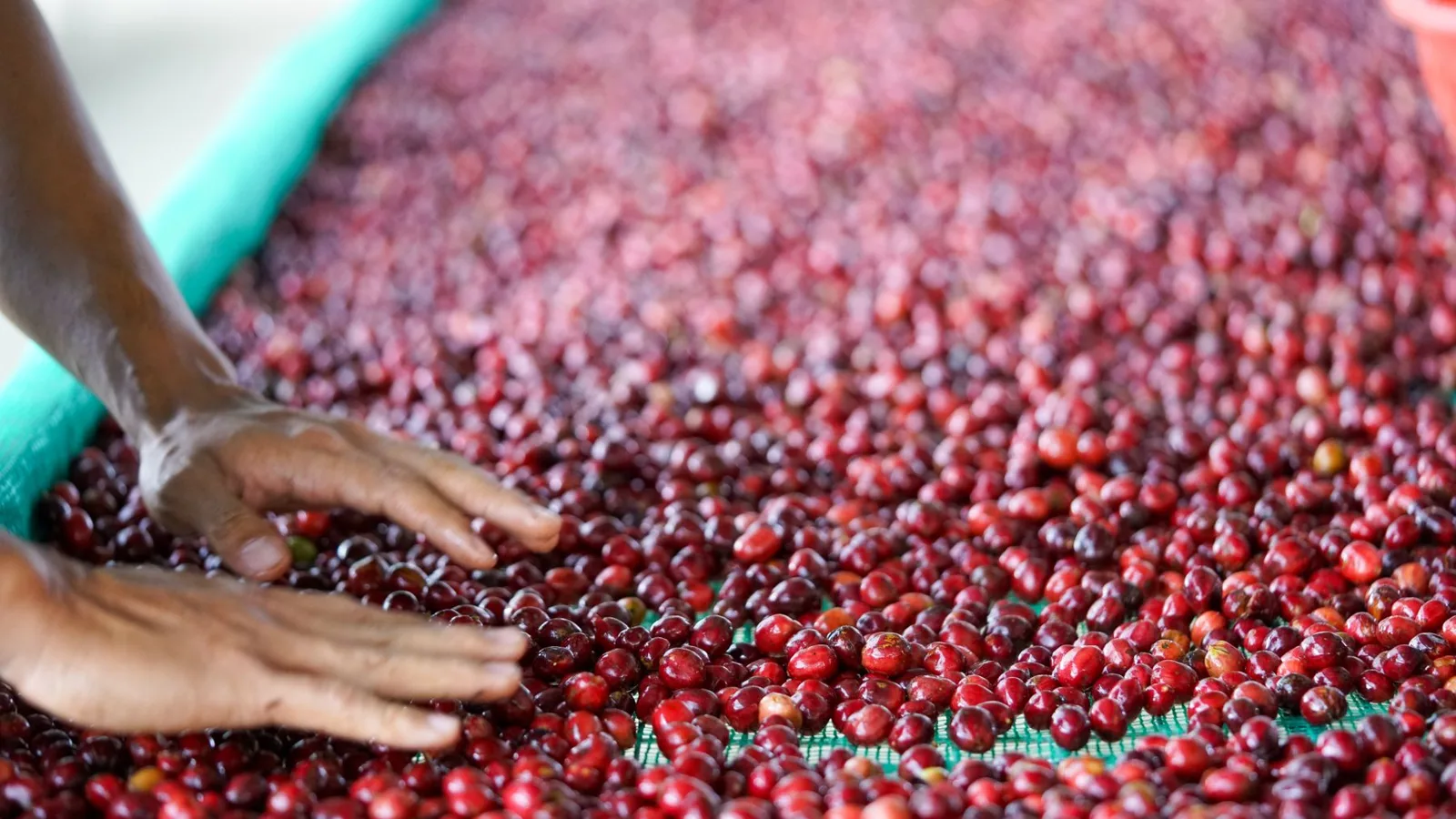
Photo by 1500m Coffee on Pexels
The Coffee Atlas
Thermal Shock Coffee Processing
Thermal shock coffee processing rinses fermented beans in hot, then cold water to halt fermentation. Where it began and what two Coffee Review lots show.
Flavor profile
avg. of 2 published reviewsScale: 1-10, Coffee Review / SCA-classic-form convention. Averaged from 2 dated Coffee Review lot scores of thermal-shock coffees from Finca El Paraiso: KenntaRoast Finca El Paraiso Flor Lichi (August 2026, 96) and Frequent Coffee Colombia El Paraiso Castillo Yeast-Inoculated Decaf (September 2026, 93). The second lot is a decaf, so its scores are a hedge on the first, not a clean like-for-like pair. Two lots from one producer is a tiny sample, and thermal shock is always combined with other fermentation steps, so these scores describe the whole process chain, not the rinse alone.
What it tastes like
Thermal shock is a finishing step in a longer fermentation chain, not a stand-alone way of making coffee. According to Black & White Roasters, the coffee is heated in its juices to between 104 and 122 F (about 40 to 50 C) and then hit with cold water around 50 F, which they describe as a shock that contracts the beans after they absorb the juice’s esters. Ineffable Coffee describes one El Paraiso lot as a 40 C rinse followed by a 12 C rinse that stops fermentation. The process is credited to Finca El Paraiso in Cauca, Colombia, where Diego Bermudez partnered with Wilton Benitez, and Ineffable Coffee says the rinse accentuates sweet and fruity flavors. That mechanism is the producers’ and roasters’ own claim: this page found no independent lab study isolating the rinse’s effect.
The two Coffee Review lots show what the full chain looks like in practice. KenntaRoast’s Flor Lichi was described as double-anaerobic washed: whole cherries submerged for 48 hours, pulped, fermented with Lactobacillus for 24 hours, then given the hot and cold rinses. It scored 96 with lychee, white peach, strawberry cream, rose and vanilla bean. Frequent Coffee’s Castillo lot used the same chain, was decaffeinated with ethyl acetate, and still scored 93 with strawberry, lychee and white chocolate.
The honest caveat is that every lot here comes from one producer and one fermentation recipe. Lychee and strawberry may owe as much to the yeast, bacteria and anaerobic stages as to the temperature step, so treat “thermal shock” on a bag as a signal of an engineered, fermentation-forward coffee, not a guarantee of a particular cup.
How to brew it
Method fit for this origin · editorial guidance from roaster convention
A clean, filtered brew keeps the lychee, strawberry and rose aromatics distinct, which is the whole point of paying for a heavily engineered process.
The sweetness and juicy acidity can shine as a shot, but these lots are intense and often expensive, so many roasters keep them for filter.
Full immersion tends to muddy the delicate floral and fruit top notes that a process like this is designed to show off.
⚠ Fit tiers are editorial guidance drawn from roaster convention; no industry standard scores brew fit, so we show tiers, never invented numbers. Editorial judgment based on how specialty roasters commonly position fermentation-forward lots (filter first), not an SCA-defined standard or measured data.
Caffeine content
Caffeine by dry weight · each gold dot = 0.1%
Caffeine content tracks species, not processing method: roughly 1.2% for Arabica versus roughly 2.2% for Robusta. Thermal shock is a rinse applied to fermented beans in parchment, and no credible per-process caffeine difference exists at a category level. Note that one of the two Coffee Review lots above is an ethyl acetate decaf, which is a separate step from thermal shock.
Where to buy it
Transparency: some links on this site are affiliate links; if you buy through them we may earn a commission at no cost to you. Roasters are picked for genuine, current sourcing of this coffee, never for who pays us.
Sources & data
- Coffee Review: Finca El Paraiso Flor Lichi, KenntaRoastFull attribute cupping scores (1 of 2 averaged), reviewed August 2026, rated 96; describes double-anaerobic washed processing with a 48-hour whole-cherry submersion, 24-hour Lactobacillus fermentation, then thermal shock with hot and cold rinses
- Coffee Review: Colombia El Paraiso Castillo Yeast-Inoculated Decaf, Frequent CoffeeFull attribute cupping scores (2 of 2 averaged), reviewed September 2026, rated 93; same process chain with thermal shock, then ethyl acetate decaffeination
- Black & White Roasters: What Does Thermal Shock Process Mean?Roaster explainer: the coffee is heated in its juices to between 104 and 122 F (about 40-50 C), then cleaned with cold water around 50 F (about 10 C); credits Finca El Paraiso in Cauca, Colombia, with Diego Bermudez and Wilton Benitez, with originating the process
- Ineffable Coffee: Thermal Shock CoffeeRoaster explainer on a Finca El Paraiso lot processed by Diego Bermudez: after a double fermentation, a 40 C water rinse then a 12 C rinse, said to accentuate sweet and fruity flavors