Image: Caffeine & Co studio
The Coffee Atlas
Infused Coffee Beans
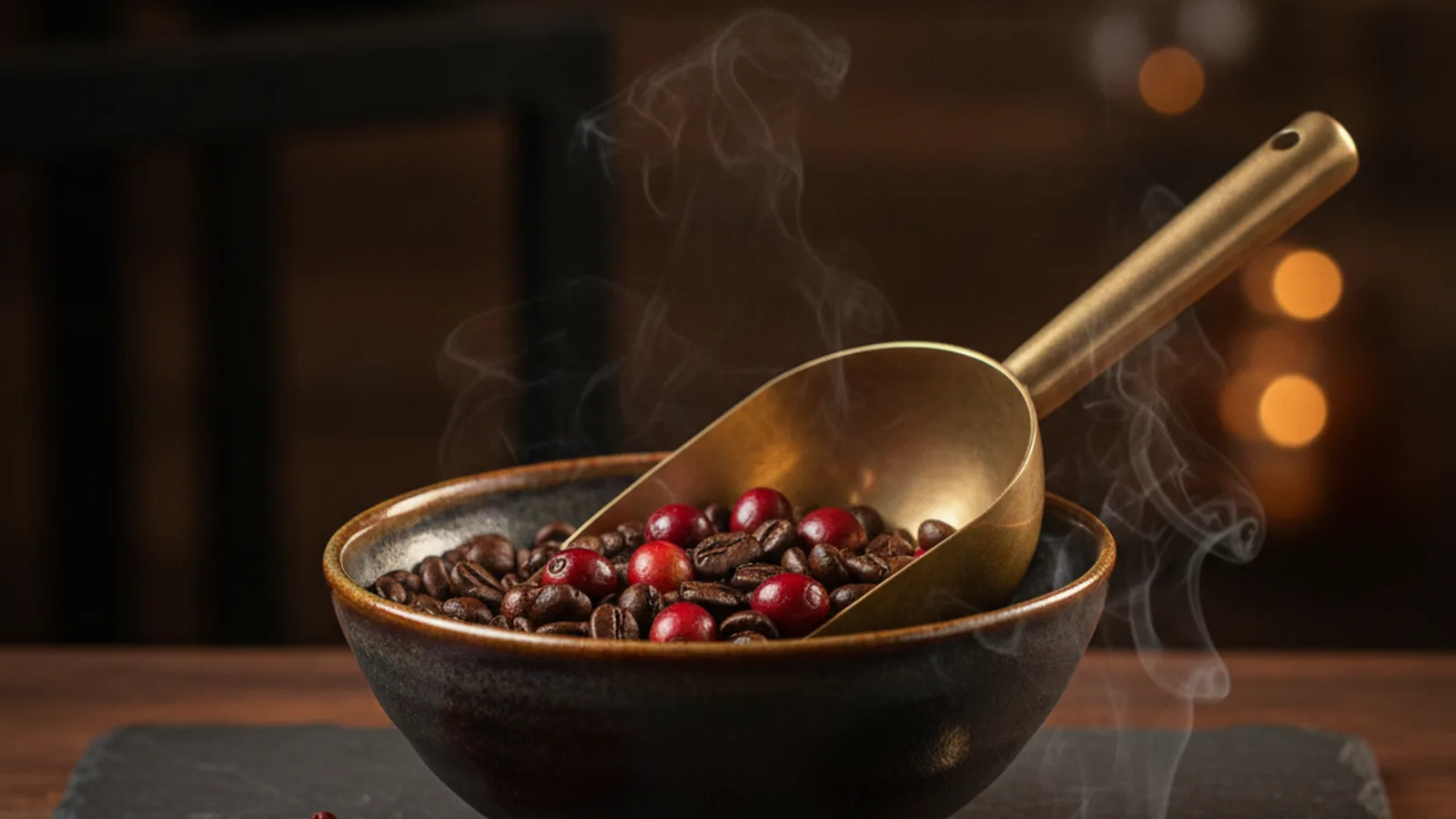
Infused coffee beans pick up fruit or spice flavor from ingredients added during processing. What Coffee Review scored, and why the label is contested.
Flavor profile
avg. of 3 published reviewsScale: 1-10, Coffee Review / SCA-classic-form convention. Averaged from 3 independently published, dated Coffee Review lot scores of co-fermented (fruit-added) coffees: Hula Daddy Kahiko Orange (Kona Typica, orange; November 2024), Bonlife Finca La Sirena Mango Co-Ferment (Castillo, mango; May 2025), and Utopian Colombia Edwin Norena Natural Raspberry (Caturra, raspberry; February 2026). Three lots cannot represent a whole category: the base varieties, added fruits, and fermentation methods differ, all three are among the highest-scoring examples Coffee Review has published rather than a random sample, and the Hula Daddy lot (98) lifts every average. Treat these as a snapshot of well-made examples, not what an average bag tastes like.
What it tastes like
“Infused” is an umbrella label for green coffee that has had something added before roasting, and it covers practices that are not the same. In the version Coffee Review reviews most, called co-fermentation or fruit-infused, a producer puts natural fruit into the fermentation tank with the coffee. The fruit itself disappears, and what remains in the bean is the product of that fermentation. Specialty Coffee ID separates this from direct infusion of flavor compounds after fermentation, the method it calls the most contested.
The cup differs from a typical washed or natural lot mainly in aroma. Hula Daddy’s Kahiko Orange, Kona Typica co-fermented with oranges from the same farm, scored 98 with honeysuckle, muscat grape, and bergamot, while Utopian’s raspberry-added Caturra read as raspberry jam over dark chocolate. Note that the finished fruit note does not always match the ingredient: the orange lot is described in floral and grape terms, not as orange juice.
The disagreement is about labeling and identity, not only taste. Per Perfect Daily Grind, the SCA’s World Barista Championship rules permit infused coffees if the ingredients go in before the green coffee stage, while Best of Panama excluded them in 2024. Because “infused,” “flavoured,” and “co-fermented” are used loosely, check what the roaster says was added, and when, before buying.
How to brew it
Method fit for this origin · editorial guidance from roaster convention
A filtered cup keeps the added-fruit aromatics distinct and is how roasters usually present these lots.
Immersion emphasizes the syrupy mouthfeel the reviewers noted, though it can blur the brighter fruit top notes.
Concentrating a lot with this much fruit can push acidity and sweetness hard, so it suits some palates and not others; dialing in is a gamble.
⚠ Fit tiers are editorial guidance drawn from roaster convention; no industry standard scores brew fit, so we show tiers, never invented numbers. Editorial judgment based on the aromatic, fruit-forward profiles in the three Coffee Review lots; not measured data and not an SCA-defined standard.
Caffeine content
Caffeine by dry weight · each gold dot = 0.1%
Caffeine content tracks species, not processing method: robusta beans contain almost twice as much caffeine as arabica (see Sources & data). Adding fruit or spices during processing changes flavor compounds, not the bean's own caffeine, and no credible infused-vs-unflavored caffeine difference exists at a category level.
Where to buy it
Transparency: some links on this site are affiliate links; if you buy through them we may earn a commission at no cost to you. Roasters are picked for genuine, current sourcing of this coffee, never for who pays us.
Kona farm whose Kahiko Orange, a whole-cherry co-ferment with orange grown on the farm, is the 98-point Coffee Review lot behind this page. Availability of specific lots rotates.
View lot→Cleveland, Tennessee roaster whose Colombian co-ferment lots (including the Coffee Review-scored mango) have been sold through its own shop and Bean Box. Lots rotate, so check current availability.
View lot→Fort Wayne, Indiana roaster behind the Edwin Norena co-ferment lots Coffee Review has scored; check the shop for what is in stock now.
View lot→Selection is wide and includes artificially flavored coffee; check roast dates, whether the bag says fruit was added during processing, and seller reviews.
View lot→Sources & data
- Crozier et al.: Espresso coffees, caffeine and chlorogenic acid intake (Food & Function, 2012)Peer-reviewed (Univ. of Glasgow): states robusta coffee beans contain almost twice as much caffeine as arabica, by species
- Coffee Review: Kahiko Orange, Hula Daddy Kona CoffeeFull attribute scores (1 of 3 averaged), overall 98, November 2024; Kona Typica co-fermented whole-cherry with Kona oranges grown on the farm; butterscotch, honeysuckle, cocoa nib, muscat grape, bergamot
- Coffee Review: Colombia Finca La Sirena Mango Co-Ferment, Bonlife CoffeeFull attribute scores (2 of 3 averaged), overall 94, May 2025; Castillo from Quindio, honey process with osmotic dehydration plus mango co-fermentation; guava, cocoa nib, neroli
- Coffee Review: Colombia Edwin Norena Natural (Raspberry), Utopian CoffeeFull attribute scores (3 of 3 averaged), overall 93, February 2026; Caturra natural with raspberry added during fermentation; raspberry jam, dark chocolate, hibiscus, blood orange zest
- Coffee Review: Commenting on the Coffee and Fruit Co-Fermenting Debate (Kenneth Davids, December 2024)Defines fruit added to the fermentation tank, also called fruit infused; reports the Specialty Coffee Association of Panama disqualifying four coffees in 2024 and calling the term co-fermented deceptive; Davids questions the evidence
- Perfect Daily Grind: Infused coffees, natural vs artificial flavourings (May 2025)Notes infused, flavoured, and co-fermented are used interchangeably; SCA World Barista Championship rules allow infused coffees if ingredients are added before the green coffee stage; Best of Panama excluded infused lots in 2024
- Specialty Coffee ID: Infused Coffee, Why Producers Make It and How It's Actually DoneDistinguishes co-fermentation (ingredients added during fermentation) from post-fermentation infusion of flavor compounds, the most contested method; secondary source, used for definitions only