Image: Caffeine & Co studio
The Coffee Atlas
Double Fermentation Coffee
Double fermentation splits a coffee's ferment into two stages, such as whole cherry then pulped bean. What the term covers and what three cupped lots show.
Flavor profile
avg. of 3 published reviewsScale: 1-10, Coffee Review / SCA-classic-form convention. Averaged from 3 dated Coffee Review lot scores of double-anaerobic coffees: Double-Anaerobic Fermentation Tamiru Tadesse (Genesis Coffee Lab, November 2022), Peru Yanesha Geisha Double-Anaerobic (Fumi Coffee, May 2021), and Colombia Cauca Finca El Paraiso Double Anaerobic Flor Lichi (Lee Dong Coffee, October 2023). Coffee Review scores are whole numbers, so averages are coarse. These are three high-scoring lots from different origins and varieties, all in the anaerobic family, and they say nothing about Kenyan-style double washing or other uses of the term. Treat them as a snapshot, not a category average.
What it tastes like
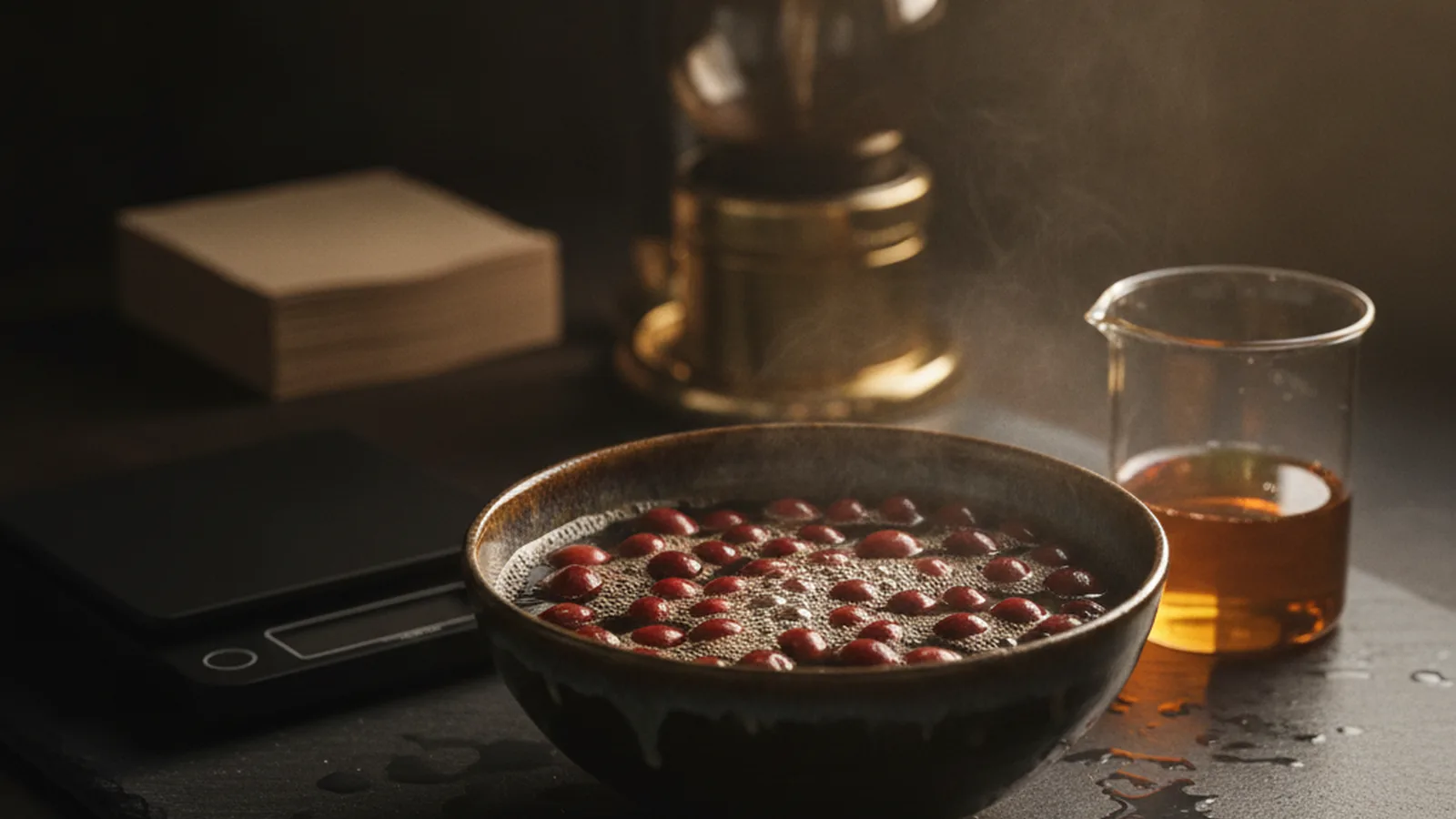
“Double fermentation” is a label, not a single recipe. Barista Magazine’s explainer notes the term is often applied to coffees soaked in water after fermenting and washing, a Kenyan practice that began as a way to hold washed coffee while drying space was scarce. It also describes a Guatemalan pre-fermentation, where cherries sit about 24 hours before depulping and then ferment in tanks for about 36 hours. Always ask which version a bag means.
The version that dominates specialty menus lately is double anaerobic: ferment whole cherries in a sealed, low-oxygen vessel, depulp, then ferment the beans again. Lee Dong Coffee’s Finca El Paraiso lot used 48 hours on whole cherry and 24 hours on pulped beans with Lactobacillus, and reviewers found mango, orange zest, and dark chocolate in a plush, syrupy cup.
The cups vary with the coffee underneath. Genesis Coffee Lab’s Ethiopian Sidamo read honeysuckle and lime zest, while Fumi Coffee’s Peru Yanesha Geisha leaned chocolaty with lavender and pink peppercorn. Three lots cannot show what the second ferment itself adds, since variety, altitude, and the producer’s control of time and temperature shape the cup as much as the extra step.
How to brew it
Method fit for this origin · editorial guidance from roaster convention
A filtered cup keeps the floral and citrus top notes the reviewed lots show distinct and clean.
Immersion suits the plush, syrupy mouthfeel reviewers noted, though paper filtration keeps delicate aromatics sharper.
These lots are usually roasted light for filter, so the bright acidity can read sharp under pressure without a dialed-in recipe.
⚠ Fit tiers are editorial guidance drawn from roaster convention; no industry standard scores brew fit, so we show tiers, never invented numbers. Editorial judgment based on the cup descriptions in the three Coffee Review lots above and general specialty-roaster practice, not on measured extraction data or an SCA-defined standard.
Caffeine content
Caffeine by dry weight · each gold dot = 0.1%
Caffeine is driven by species, not by processing: Arabica runs about 1.2% and Robusta about 2.2% by weight. All three reviewed lots are Arabica. No credible per-process caffeine figure exists for a brewed cup, so this page publishes none.
Where to buy it
Transparency: some links on this site are affiliate links; if you buy through them we may earn a commission at no cost to you. Roasters are picked for genuine, current sourcing of this coffee, never for who pays us.
Green coffee merchant that has listed a Colombia Huila Double Ferment Pacamara; home roasters can check the shop for current double-ferment lots.
View lot→Roaster that has listed a Colombia Huila Double Fermentation coffee; availability varies by season.
View lot→Roaster that has listed Ethiopian extended-fermentation washed lots; check for current double-fermentation offerings.
View lot→Selection is wide and uneven: check roast dates, look for listings that spell out the fermentation steps and name the origin, and read seller reviews.
View lot→Sources & data
- Barista Magazine: Understanding the Process: Double FermentationExplains the term is used loosely: the Kenyan version soaks washed beans in water after fermenting, and a Guatemalan pre-fermentation holds cherries about 24 hours before depulping and then ferments in tanks about 36 hours
- Coffee Review: Double-Anaerobic Fermentation Tamiru Tadesse, Genesis Coffee LabScores and notes (1 of 3 averaged); reviewed November 2022, Ethiopian Sidamo landrace varieties, anaerobic washed; honeysuckle, lime zest, cocoa nib, marjoram, cedar
- Coffee Review: Peru Yanesha Geisha Double-Anaerobic, Fumi CoffeeScores and notes (2 of 3 averaged); reviewed May 2021; whole cherries fermented in limited oxygen, then depulped and fermented again
- Coffee Review: Colombia Cauca Finca El Paraiso Double Anaerobic Flor Lichi, Lee Dong CoffeeScores and notes (3 of 3 averaged); reviewed October 2023; whole cherry submersion 48 hours, then pulped-bean fermentation with Lactobacillus 24 hours; mango, orange zest, dark chocolate