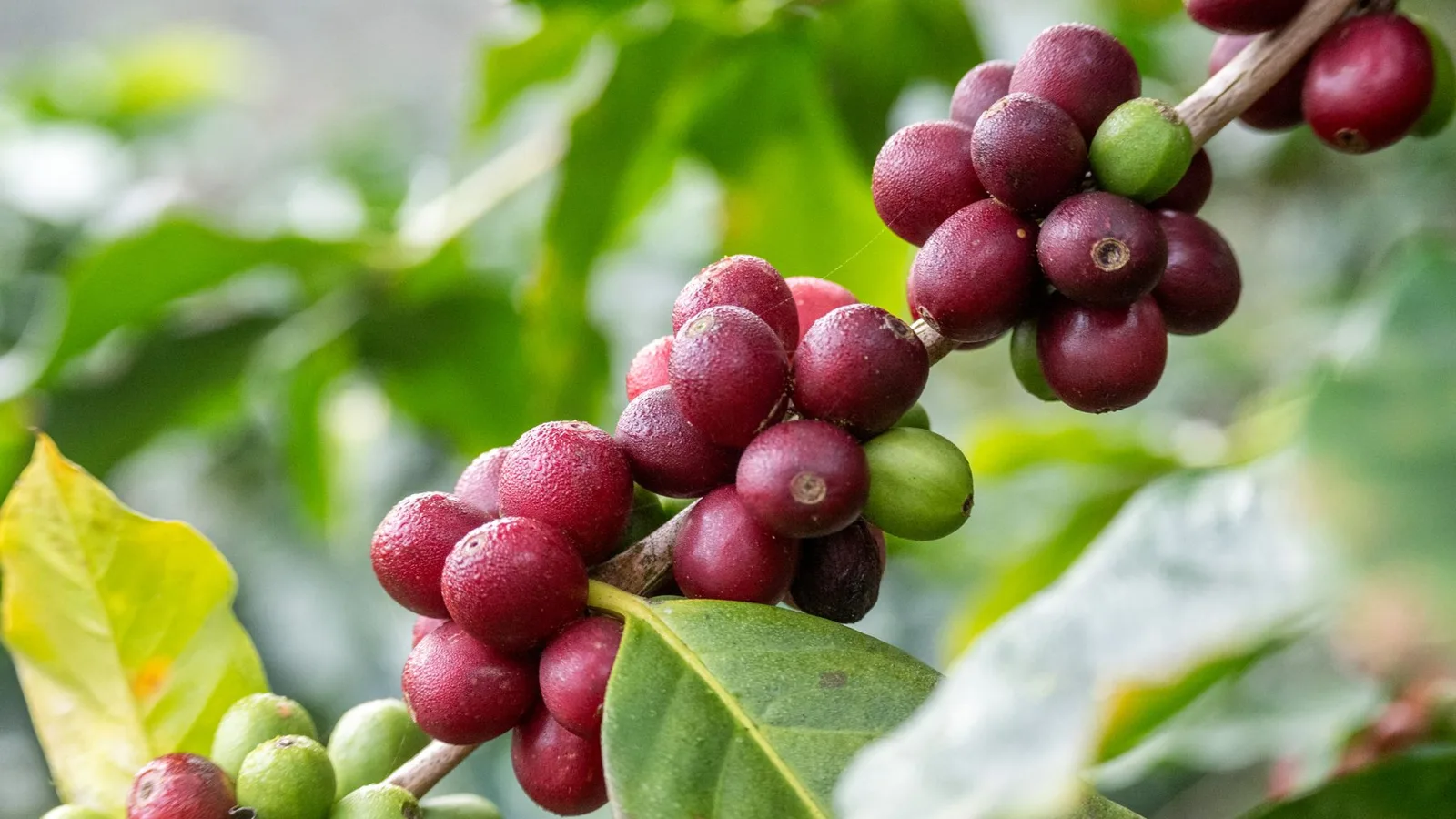
Photo by Irvin David on Pexels
The Coffee Atlas
Peru Amazonas
Amazonas, northern Peru, grows coffee on the Andes-meets-Amazon slope; two Coffee Review lots, one washed and one natural, score 93 and 90 here.
Flavor profile
avg. of 2 published reviewsScale: 1-10, Coffee Review / SCA-classic-form convention. Averaged from 2 independently published Coffee Review lot scores, both explicitly Amazonas lots: Peru Cafe de Mujer, Utopian Coffee, April 2024, 93 points, washed, Rodriguez de Mendoza (aroma 9, flavor 9, acidity 8, aftertaste 8, body 9); and Mina Rica Peru, Placer Roasting, August 2026, 90 points, natural, Utcubamba Province (all five attributes 8). The two lots use different processing methods and come from different provinces, so the average blends a washed and a natural cup. It is not a category-wide sample: individual lots vary by cooperative, harvest year, and processing.
What it tastes like
Amazonas sits where the Andes drop toward the Amazon basin, and the weather shows it. Ozone Coffee Roasters’ producer profile describes roughly 1,300 mm of rain a year in Utcubamba, concentrated from January to May, which makes drying a real problem for farmers there. Most of what leaves the department comes from small mixed plots of Typica, Caturra, Catimor, and Bourbon, per Perfect Daily Grind’s regional guide.
The two lots behind this entry’s scores taste alike even though they were processed differently. Utopian Coffee’s washed Cafe de Mujer is “deeply chocolaty”: dark chocolate, cashew, key lime, and magnolia, with gentle acidity and a creamy body. Placer Roasting’s natural Mina Rica reads as dried plum, baking chocolate, and hazelnut, with soft acidity and a satiny mouthfeel. Chocolate and nut run through both, and neither has the sharp acidity of a high-grown Kenya or Ethiopia.
That is a pattern across just two lots, not a rule for the department. The highest Amazonas scores Coffee Review lists are Geisha lots, such as Guardian del Bosque at 94, and a Geisha cup says little about the mixed-variety coffee most growers sell, so those are left out of the averages. Treat the scores here as a starting point and check any specific lot’s cooperative, process, and harvest year.
How to brew it
Method fit for this origin · editorial guidance from roaster convention
Both reviews describe soft, rounded acidity and a smooth, creamy or satiny mouthfeel, which a filter brew shows off without sharpening.
A chocolate-and-nut, low-edge profile holds up across a big batch and a long hold time better than a bright, floral cup does.
The chocolaty body suits milk drinks, but the gentle acidity gives less sparkle in a straight shot.
⚠ Fit tiers are editorial guidance drawn from roaster convention; no industry standard scores brew fit, so we show tiers, never invented numbers. Reflects brew guidance commonly published by specialty roasters for soft-acidity, chocolate-forward South American lots, not an SCA-defined standard.
Altitude & region
Growing elevation, meters above sea level · this entry vs comparison bands
Peru Amazonas' 1,500-1,900 m band is drawn directly from two lot-level trader and roaster profiles (see Sources & data); Perfect Daily Grind's wider 900-2,100 m departmental figure is noted but not used as the headline. Colombia Huila, Kenya AA, and Brazil Cerrado are shown for scale only, using the commonly published origin bands already used elsewhere on this site, not a lot-specific measurement.
Caffeine content
Caffeine by dry weight · each gold dot = 0.1%
Caffeine content tracks species, not origin, altitude, or processing: roughly 1.2% for Arabica versus roughly 2.2% for Robusta, close to double (see Sources & data). This entry is 100% Arabica; no credible per-origin caffeine figure exists at a category level, so the comparison is by species only, not a measurement of this specific lot.
Where to buy it
Transparency: some links on this site are affiliate links; if you buy through them we may earn a commission at no cost to you. Roasters are picked for genuine, current sourcing of this coffee, never for who pays us.
Fort Wayne, Indiana roaster whose Peru Cafe de Mujer, from the APROCCURMA cooperative in Rodriguez de Mendoza, scored 93 at Coffee Review; check current listings for availability.
View lot→Rocklin, California roaster behind the Mina Rica Peru natural from Utcubamba that Coffee Review scored 90; check their shop for what is in stock.
View lot→UK roaster that profiles Amazonas producer Roiber Becerra (Finca Morales, Utcubamba) on its own site; availability varies by season.
View lot→Selection is wide and quality varies lot to lot; check roast dates, 100%-origin labeling, and seller reviews before buying.
View lot→Sources & data
- Coffee Review: Peru Cafe de Mujer, Utopian CoffeeCupping scores (1 of 2 averaged): washed lot from Rodriguez de Mendoza, Amazonas, April 2024, 93 points; varieties Bourbon, Catimor, Pache, Caturra, Typica; APROCCURMA cooperative
- Coffee Review: Mina Rica Peru, Placer RoastingCupping scores (2 of 2 averaged): natural lot from Utcubamba Province, Amazonas, August 2026, 90 points
- Coffee Review: Peru Geisha Guardian del Bosque, City Boy CoffeeNot averaged. Shown only to explain why Amazonas Geisha lots were excluded from the flavor profile
- The Way to Coffee: Peru Rodriguez de Mendoza GR 1 OrganicAltitude 1,500-1,800 m, Bourbon/Catimor/Typica, washed, Rodriguez de Mendoza province, Amazonas
- Ozone Coffee Roasters: Roiber Becerra, Finca MoralesUtcubamba, Amazonas farm at 1,900 m; January-May rainy season of about 1,300 mm that makes drying difficult; Norcafe cooperative
- Perfect Daily Grind: A Guide to Peru's Coffee-Producing Regional ProfilesAmazonas elevation range of 900-2,100 m and Typica, Caturra, Catimor as cultivated varieties
- Development of a fast and simple method to identify pure Arabica coffee and blended coffee by Infrared Spectroscopy (J. Food Sci. Technol., 2021, PMC8292507)Peer-reviewed, open-access: Arabica beans usually present 1.0 to 1.5% w/w of caffeine and Robusta beans 2.0 to 2.5% w/w, source for this entry's 1.2% Arabica / 2.2% Robusta figures