Photo by Sean Witter on Pexels
The Coffee Atlas
Jamaica Blue Mountain Coffee
Jamaica Blue Mountain costs $50 to $120 a bag, driven by scarcity and Japanese demand. Real Coffee Review scores test whether the cup backs up the hype.
Flavor profile
avg. of 2 published reviewsScale: 1-10, Coffee Review / SCA-classic-form convention. Averaged from 2 independently published, dated Coffee Review scores of 100% Jamaica Blue Mountain lots. Not a category-wide statistical sample: individual lots, mills, and roast dates vary, and both reviewed lots here landed at 89/100 overall, a solid but not exceptional score by Coffee Review's own scale, a gap this entry's body addresses directly against the price.
What it tastes like
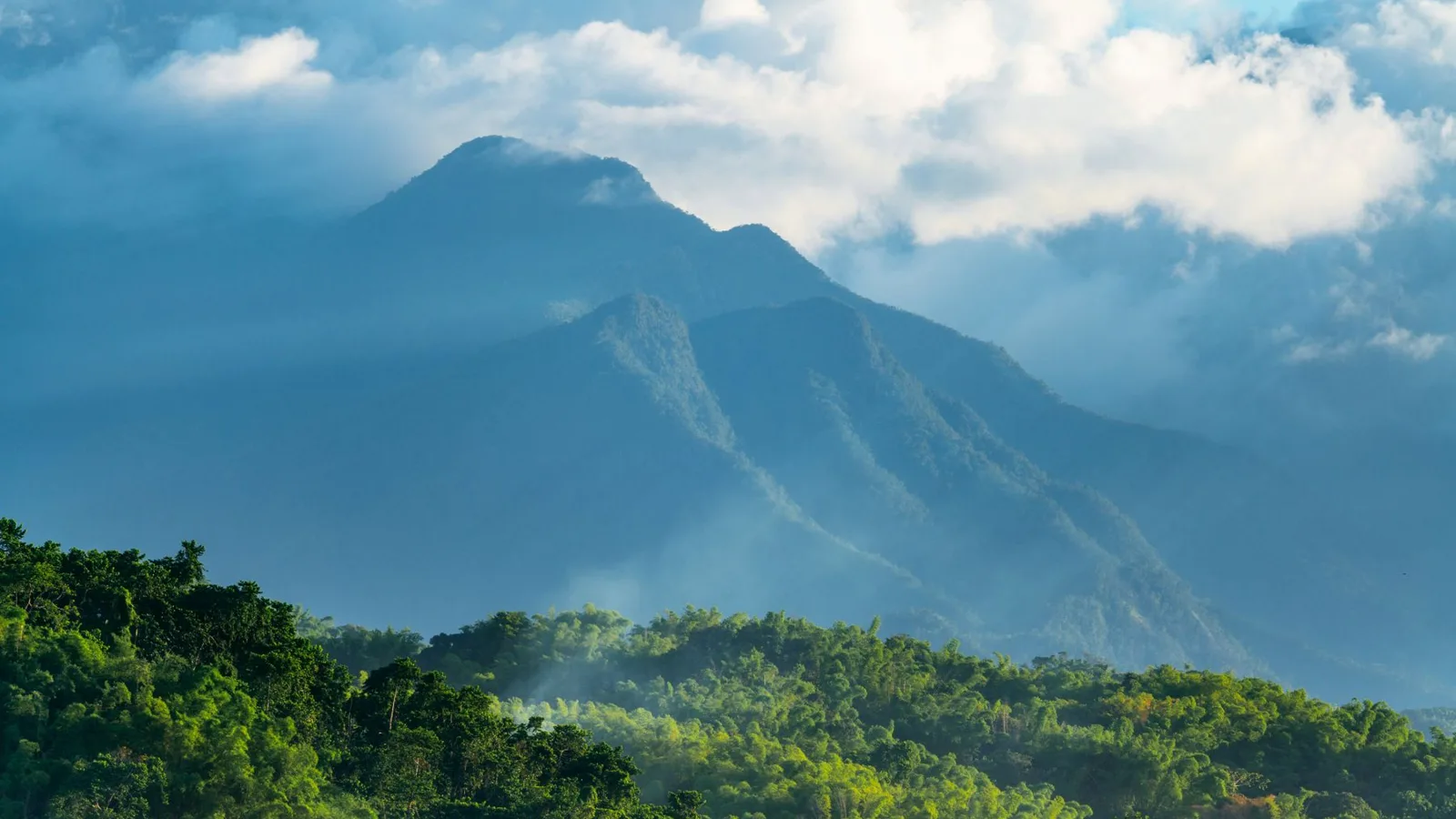
Jamaica Blue Mountain grows across four certified parishes, Saint Andrew, Saint Thomas, Portland, and Saint Mary, in the mist-covered range east of Kingston, where Blue Mountain Coffee Jamaica’s own location page caps the qualifying growing altitude at 1,800 m and the Jamaica Agricultural Commodities Regulatory Authority, formed in 2018 by merging the regulatory functions of the Coffee Industry Board, Cocoa Industry Board, and Coconut Industry Board, inspects, grades, and licenses every export lot. The variety underneath the name is almost entirely Typica, the same low-yield, disease-prone, Ethiopian-descended cultivar that dominated the Americas until the 1940s: World Coffee Research’s own variety profile names Jamaica as one of the last places it is still widely planted, still hand-picked, washed, and sun- and mechanically-dried today.
None of that scarcity comes cheap. Retail bags of certified 100% Blue Mountain run $50 to $120, and roughly 70 percent of the harvest is bought by Japan before it reaches anyone else, a relationship that Perfect Daily Grind’s 2025 reporting on Jamaica’s coffee sector puts against a total supply of under 0.01 percent of the world’s coffee. That combination, a tiny harvest plus a decades-deep dedicated export market, is most of what sets the price, independent of how the cup itself scores.
And the cup itself is genuinely good, not generationally so. Two independently dated Coffee Review lots, Stoneleigh Coffee’s 2015 Blue Mountain and Green Mountain Coffee’s 2013 lot sourced from the Mavis Bank mill, both landed at 89 out of 100: round, low-acid, full-bodied coffee with brown sugar, vanilla, and cocoa running through the cup, and in the Green Mountain lot, a bright orange-toned fruitiness. That is a solid, well-made specialty score, but it sits several points under this Atlas’s own Ethiopia Yirgacheffe entry, a coffee that grows at a comparable or higher elevation and sells for a fraction of the price. The reputation is not fabricated, Blue Mountain earns its name for balance and drinkability, but the premium tracks scarcity and a decades-long export relationship with Japan more than it tracks the blind cupping table.
Buyers should also budget for the fact that a meaningful share of what is sold as Blue Mountain outside Jamaica is not: unlicensed blends and outright counterfeits are common enough that mtpak’s price-and-hype analysis flags buyer disappointment with fakes as a bigger threat to the coffee’s reputation than its price tag is. JACRA certification and a named single estate or mill, not a generic “Jamaican” label, are what separate the genuine article from the rest.
How to brew it
Method fit for this origin · editorial guidance from roaster convention
Filtered brewing keeps the classic low-acid, full, brown-sugar-and-cocoa profile clean, the preparation Jamaican mills and export literature most often recommend for showcasing the cup.
Full immersion suits the coffee's naturally fuller body, though it can blunt the delicate vanilla and orange-toned top notes the reviewed lots show.
Roasters overwhelmingly reserve Blue Mountain for filter brewing: concentrating a coffee this mild and this expensive under crema mutes the subtlety buyers are paying the premium for.
⚠ Fit tiers are editorial guidance drawn from roaster convention; no industry standard scores brew fit, so we show tiers, never invented numbers. Reflects brew guidance commonly published by roasters and Jamaican mills for Blue Mountain specifically, mild and low-acid, easily overwhelmed by concentration, not an SCA-defined standard.
Altitude & region
Growing elevation, meters above sea level · this entry vs comparison bands
Jamaica Blue Mountain's own range above blends the widely published 3,000-5,500 ft trade figure with Blue Mountain Coffee Jamaica's own stated 1,800 m altitude ceiling (see Sources & data); both cluster in the same band. Kenya AA and Brazil Cerrado are shown for scale using the same commonly published origin bands used elsewhere in this Atlas. Ethiopia Yirgacheffe is shown because it grows at a comparable or higher elevation yet, as the flavor and pricing discussion above lays out, sells for a fraction of Jamaica Blue Mountain's retail price.
Caffeine content
Caffeine by dry weight · each gold dot = 0.1%
Caffeine content tracks species, not origin, altitude, or processing: robusta beans contain almost twice as much caffeine as arabica, by species (see Sources & data). This entry is 100% Arabica (Typica); no credible per-origin caffeine figure exists at a category level, so the comparison above is by species only, not a measurement of this specific lot.
Where to buy it
Transparency: some links on this site are affiliate links; if you buy through them we may earn a commission at no cost to you. Roasters are picked for genuine, current sourcing of this coffee, never for who pays us.
US specialty retailer stocking multiple JACRA-certified 100% Blue Mountain lots (Wallenford, Clydesdale, Clifton Mount), each listed with its own mill and price.
View lot→Family-owned boutique coffee supplier based in Wasaga Beach, Ontario, Canada, with a buyer relationship to the JABLUM/Mavis Bank Coffee Estate; not Mavis Bank's own storefront and not based in Jamaica.
View lot→UK importer and roaster carrying Stoneleigh Estate's single-estate lot with published altitude, variety, and processing specs.
View lot→Sells Alex Twyman's Old Tavern Estate coffee, Jamaica's original single-estate Blue Mountain farm; the estate's own site describes over 50 years of family coffee cultivation, passed down through generations.
View lot→Listings range from certified single-estate to heavily stretched blends; look for JACRA certification language and per-pound pricing that matches the real market.
View lot→Sources & data
- Crozier et al.: Espresso coffees, caffeine and chlorogenic acid intake (Food & Function, 2012)Peer-reviewed (Univ. of Glasgow): robusta coffee beans contain almost twice as much caffeine as arabica, by species
- World Coffee Research: Typica variety profileTypica's Ethiopian origin, low-yield/disease-prone characteristics, and confirmation it is still widely planted in Jamaica, where it is called Jamaica Blue Mountain
- Blue Mountain Coffee Jamaica: LocationFour certified parishes (Saint Andrew, Saint Thomas, Portland, Saint Mary) and the 1,800 m altitude ceiling for the designation
- Blue Mountain Coffee Jamaica: Specifications & QualityWashed processing (aqua pulper and traditional fermentation), two harvest cycles, moisture content and grading standards
- mtpak.coffee: Jamaica Blue Mountain coffee, is it worth the hype and price3,000-5,500 ft altitude figure, $50-120 per-bag retail price range, and counterfeit/unlicensed-blend risk to the category's reputation
- Perfect Daily Grind: How Jamaica's coffee sector is evolvingAbout 70% of Blue Mountain exports go to Japan, under 0.01% of total world coffee supply, named quote from Blue Mountain Estates Coffee's general manager
- Sea Island Coffee: Jamaica Blue Mountain, Stoneleigh EstateSingle-estate specs: Typica variety, washed and sun-dried processing, 1,100-1,220 m growing altitude
- Coffee Review: Jamaica Blue Mountain by Stoneleigh CoffeeCupping scores (1 of 2 averaged); October 2015; $32.00 per 8 ounces
- Coffee Review: Jamaica Blue Mountain by Green Mountain CoffeeCupping scores (2 of 2 averaged); October 2013; $24.99 per 10 ounces; sourced from the Mavis Bank mill
- Coffee Review: scoring methodology1-10 attribute scale definition
- Jamaica Coffee Distributors: Alex Twyman's Jamaica Blue Mountain Coffee (Old Tavern Estate)Old Tavern Estate altitude (3,500-4,000 ft, roughly 1,070-1,220 m) and single-estate, family-run production for over 50 years, passed down through generations