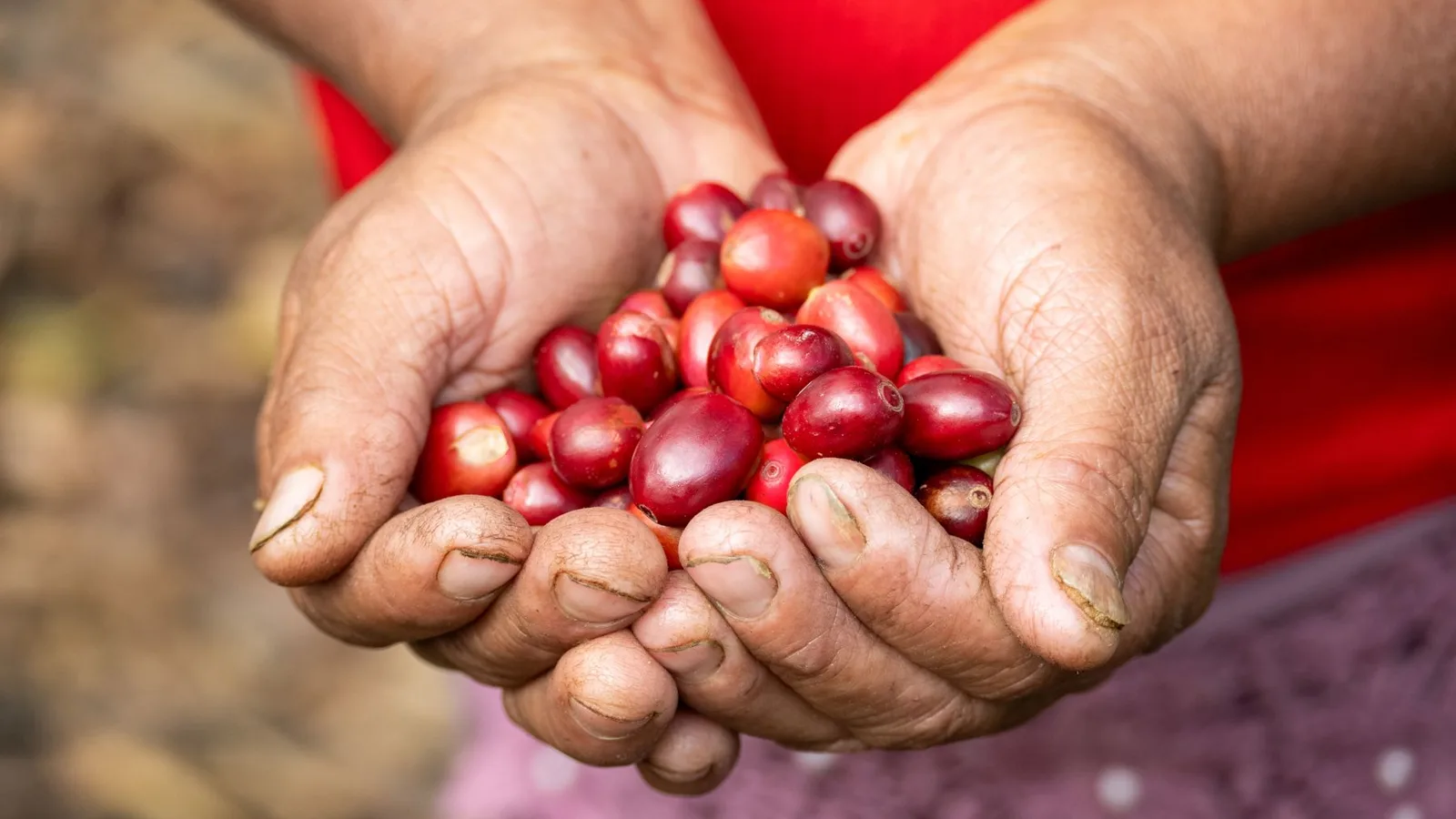
Photo by Irvin David on Pexels
The Coffee Atlas
Brazil Pulped Natural
Brazil pulped natural strips the cherry skin but dries the beans in their sticky mucilage: how the process works and what three Coffee Review lots scored.
Flavor profile
avg. of 3 published reviewsScale: 1-10, Coffee Review / SCA-classic-form convention. Averaged from 3 independently published Coffee Review lot scores of Brazilian pulped natural coffees, all from the same May 2018 Brazil tasting report: Auto Coffee (Fazenda Recreio Bourbon), Nook Bakery & Coffee Bar (Fazenda Santa Tereza), and Corvus Coffee Roasters (Ouro de Minas). Small-N, single-report sample from one tasting month: individual lots, farms, varieties, and roast levels vary, so this shows what well-made lots can taste like, not a category-wide average.
What it tastes like
Pulped natural, called cereja descascado in Portuguese, sits between washed and natural processing. As Cafe Imports describes it, the fruit’s skin is removed within about 24 hours of harvest, but the mucilage stays on the seed while it dries on patios, typically 10-15 days, down to roughly 11% moisture. The method was developed in Brazil to shorten drying compared with a full natural, which lowers the risk of the over-fermented, spoiled lots a slow-drying cherry can produce. Perfect Daily Grind notes that in Brazil the lot usually behaves like a yellow honey, and that the amount of mucilage left is what separates one honey grade from another.
The three Coffee Review lots behind this page’s scores, all cupped for the May 2018 Brazil report, show a consistent shape: Flavor 9 across the board, Body 8 to 9, and Acidity/Structure at a steady 8, described as “roundly sweet-tart” rather than sharp. The notes cluster around cocoa and roasted cashew, with Auto Coffee’s Fazenda Recreio Bourbon adding blackberry, pear, and lavender and Corvus’s Ouro de Minas leaning lemon zest, cedar, and carnation.
That is the distinct appeal: a Brazil that keeps the chocolate-and-nut sweetness the origin is known for, with a soft, satiny to syrupy body, but with more floral and fruit detail than a plain washed lot usually offers. It is also a small sample from one tasting month, and a pulped natural from a different farm, variety, or roast will land somewhere else on that range.
How to brew it
Method fit for this origin · editorial guidance from roaster convention
The low-acid, nutty, chocolate-leaning, syrupy profile is a long-standing roaster convention for espresso blend bases and holds up well to pressure extraction.
Full immersion emphasizes the round body and sweetness these lots are known for, and the moderate acidity means little brightness is lost.
A filter brew can show the delicate floral and citrus edge some lots carry, but the style is usually prized more for sweetness and body than clarity.
⚠ Fit tiers are editorial guidance drawn from roaster convention; no industry standard scores brew fit, so we show tiers, never invented numbers. Editorial judgment based on the body and acidity described in the cited Coffee Review notes and the process profile in Cafe Imports' description; not an SCA-defined standard and not measured data.
Caffeine content
Caffeine by dry weight · each gold dot = 0.1%
Caffeine content tracks species, not processing method: robusta beans contain almost twice as much caffeine as arabica. Leaving mucilage on the bean during drying changes the sugars and flavor compounds around the seed, not its caffeine, so no credible pulped-natural-vs-other-process caffeine difference exists at a category level.
Where to buy it
Transparency: some links on this site are affiliate links; if you buy through them we may earn a commission at no cost to you. Roasters are picked for genuine, current sourcing of this coffee, never for who pays us.
Denver roaster behind the Coffee Review-scored Brazil Ouro de Minas Pulped Natural; check the current lineup, as lots rotate.
View lot→Seattle roaster; availability varies by season, so search the shop for Brazil lots and check the process label.
View lot→Selection is wide and uneven: check roast dates, whether the label says 100% Brazil and names the process, and seller reviews.
View lot→Sources & data
- Crozier et al.: Espresso coffees, caffeine and chlorogenic acid intake (Food & Function, 2012)Peer-reviewed (Univ. of Glasgow): states robusta coffee beans contain almost twice as much caffeine as arabica, by species
- Coffee Review: Fazenda Recreio Bourbon Pulped Natural, Auto CoffeeFull attribute scores and notes (1 of 3 averaged); May 2018, Carmo de Minas, Bourbon, rated 93
- Coffee Review: Brazil Pulped Natural, Nook Bakery & Coffee BarFull attribute scores and notes (2 of 3 averaged); May 2018, southern Minas Gerais, Red and Yellow Catuai, rated 91
- Coffee Review: Brazil Ouro de Minas Pulped Natural, Corvus Coffee RoastersFull attribute scores and notes (3 of 3 averaged); May 2018, Minas Gerais, rated 92
- Cafe Imports: Pulped NaturalTrader explanation: skin removed within 24 hours of harvest, mucilage left on the seed, roughly 10-15 days drying on patios to about 11% moisture, developed in Brazil to speed drying versus natural
- Perfect Daily Grind: Explorando los cafes naturales, honey y despulpados naturalesSpanish-language trade article: in Brazil the name despulpado natural is more common, and the result typically resembles a yellow honey; mucilage amount sets the honey classification