Gear Dossier · Grinders · No 06 of 8
FellowOde Gen 2.
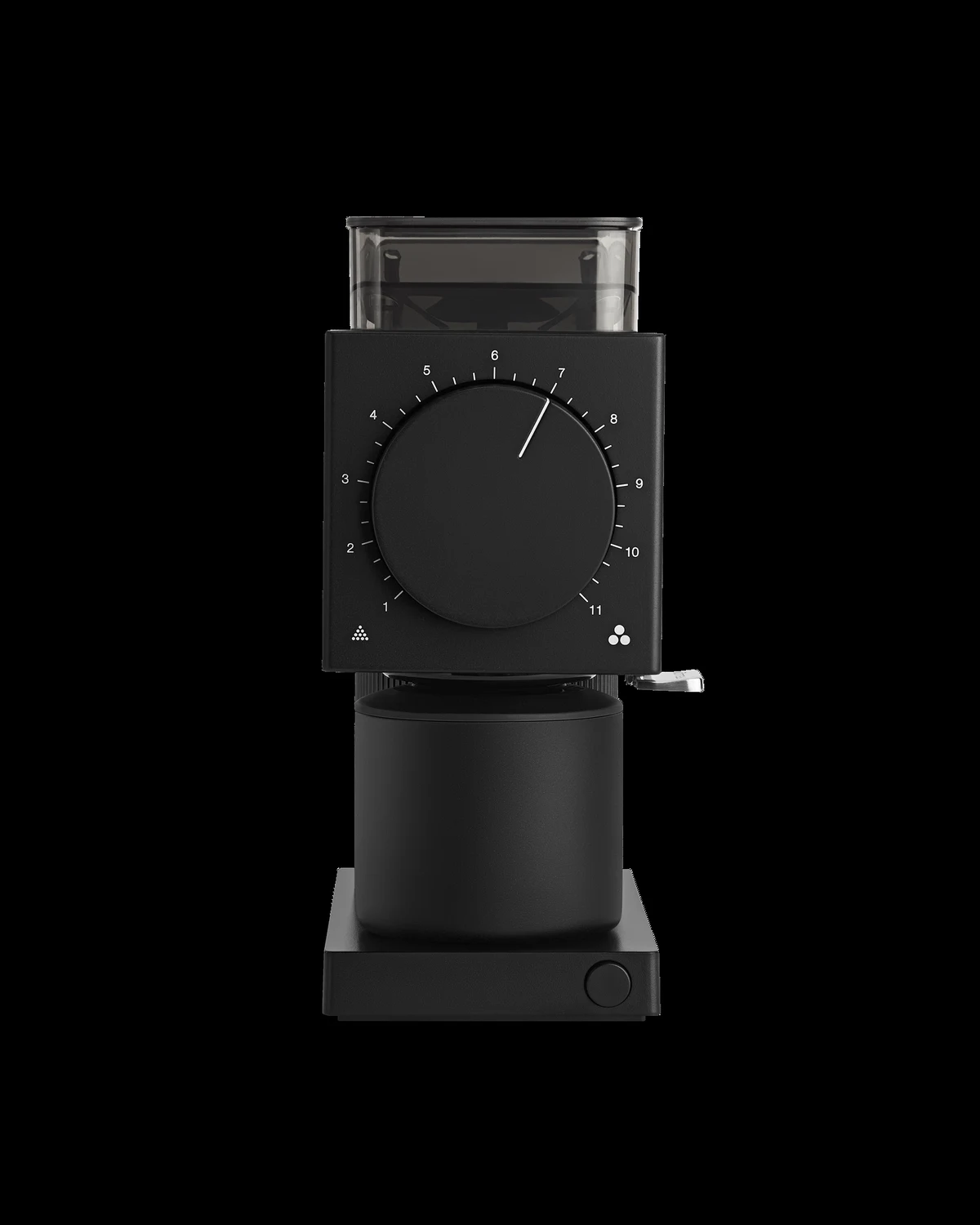
The verdict in one line: Fellow's own spec sheet builds the Ode Gen 2 around 64mm flat burrs, an 11 setting, 31 step dial, and a 100g single-dose hopper aimed squarely at filter brewing, and Seattle Coffee Gear's product guide settings table places V60 (grouped with Chemex) at settings 10 to 20, comfortably inside the medium grind our pour-over guide calls for.
The fit meter
Not a score. A count.
Every requirement below comes straight out of our own brew guides. Each segment is one requirement; hover or focus any segment to see the exact check it stands for. Lit means the published spec meets the recipe. We do not light what we cannot cite.
7 of 7 checks pass · every unlit segment is stated, not hidden
Every check, shown working
The recipe interrogates the spec.
Plain speech
Buy it, or don't.
For you if
- You brew pour-over exclusively and want a grinder built for it: Fellow's own product page lists 64mm flat burrs and 31 total steps aimed at AeroPress, pour-over, electric coffee makers, French press, and cold brew, not espresso.
- You dial in V60 by weight already: Seattle Coffee Gear's product guide's settings breakdown places V60 at settings 10 to 20, a clear medium band between AeroPress's 1 to 8 fine end and cold brew's 25 to 31 coarse end on the same dial.
- You want a single-dose workflow that limits leftover grounds between brews: Fellow's own materials describe anti-static tech cutting retention from about 1g down to as low as 0.1g against a 100g load bin.
Not for you if
- You want one grinder that also covers espresso: Fellow's own product page states the Ode Gen 2 is not intended for espresso, unlike the finer-grinding Opus 2 in Fellow's own comparison chart.
- You want a stepless grinder: Fellow's own compare-grinders page marks the Ode Gen 2 'X' on stepless grind adjustment, using a clicked 11-setting, 31-step dial instead.
- You need Fellow's own manufacturer noise spec in decibels before buying for a shared space: Fellow's product page and gear guide describe the design as engineered to reduce grind noise but state no decibel figure.
Where to buy
Transparency: the buttons above are affiliate links; if you buy through them we may earn a commission at no cost to you. As an Amazon Associate we earn from qualifying purchases. Fit notes come from manufacturer specifications read against our brew guides, not hands-on trials.
Questions, answered plainly
FAQ.
Our pour-over guide calls for a medium grind, about the texture of granulated sugar, on the way to a 1:16-1:17 cup. The Ode Gen 2’s own product page builds toward that same target from the hardware side: 64mm stainless steel flat burrs on an 11 setting, 31 step dial, sold as a filter-only grinder for AeroPress, pour-over, electric coffee makers, French press, and cold brew, with espresso named out explicitly. Seattle Coffee Gear’s product guide draws the line inside that dial: its settings breakdown places V60, grouped with Chemex, at settings 10 to 20, sitting well clear of AeroPress’s 1 to 8 fine end and cold brew’s 25 to 31 coarse end.
Capacity lines up with a single cup, too. Fellow’s own gear guide states the 100g load bin “can hold 100g of beans, enough for 12 cups of brewed coffee at the golden ratio of 1:16,” a ratio close enough to our guide’s own 1:16-1:17 band that the two numbers are describing the same brew. Our guide’s single-cup dose, 15g into 250g of water, uses a fraction of that hopper. The single-dose workflow still leaves weighing to a separate scale, exactly what our guide’s gear list already calls for, and Fellow’s anti-static claim, cutting retention from about 1g down to as low as 0.1g, matters here because that retained coffee is the difference between what you weighed out and what actually lands in the cup.
Fellow’s own numbers do not agree with every retailer’s. Seattle Coffee Gear lists a 1-year manufacturer warranty against Fellow’s own stated 2-year standard warranty; this dossier uses Fellow’s figure since it is the manufacturer’s own claim. Neither source publishes a decibel rating, so despite Fellow’s own “engineered to reduce grind noise” language, no noise number appears anywhere on this page.
FAQ
What grind setting should I use for V60 pour-over on the Ode Gen 2?
Seattle Coffee Gear’s product guide’s settings breakdown table lists “V60 and Chemex (settings 10-20),” on a dial where setting 1 is finest and setting 31 is coarsest. That sits inside the medium range our pour-over guide calls for, between the fine settings recommended for AeroPress and the coarse settings recommended for cold brew and French press.
Can the Ode Gen 2 grind fine enough for espresso?
No. Fellow’s own compare-grinders page marks the Ode Gen 2 without espresso capability, and its product page lists intended methods as AeroPress, pour over, electric coffee makers, French press, and cold brew, with espresso excluded. Fellow’s own grind-range figure for the Gen 2 Brew Burrs, as fine as 250 microns, stops well short of the sub-200 micron range espresso needs.
How much coffee does the 100g hopper hold relative to a single pour-over cup?
Our pour-over guide doses 15g of coffee for a one-cup, 250g brew, a small fraction of the Ode Gen 2’s 100g single-dose load bin. Fellow’s own gear guide frames that same 100g capacity as good for approximately 12 cups of brewed coffee at a 1:16 ratio, in the same range as our guide’s own 1:16-1:17.
Does the Ode Gen 2 include a built-in scale?
No. Seattle Coffee Gear’s product guide describes a single-dose workflow: “Weigh your coffee dose on a scale before loading. Pour beans directly into the load bin.” That means a separate digital scale is still required, which is exactly what our pour-over guide’s gear list already calls for.
How much ground coffee gets left behind in the grinder between doses?
Fellow’s own gear guide states its anti-static technology reduces grounds retention “from ~1g to as low as 0.1g.” Against a 15g pour-over dose, even the higher end of that range is a small share of the total, and the lower end keeps the weighed dose close to what ends up in the filter.
Sources & data
- Fellow, Ode Brew Grinder Gen 2 product pageManufacturer's own product page for the Ode Gen 2. Burr size and material (64mm stainless steel flat), grind settings (11 settings, 31 total steps), hopper capacity (100g), dimensions (239mm x 105mm x 248.3mm), weight (4.6kg / 10.14 lb), power (120V~, 140W, 1.3A, 50-60Hz), materials, colors (Matte Black, Matte White), warranty (2-year standard, option to extend), and intended brew methods, fetched directly on 2026-09-18. Also the product image source (Web_PDP_OdeBrewGrinderGen2_Black_1.png, position 1 in the page's own product media gallery).
- Fellow, Ode Brew Grinder Gear GuideManufacturer's own gear guide page. Grind range ('as fine as 250 microns' for Gen 2 Brew Burrs, versus 500 microns on the original Ode), hopper capacity framed against brew volume ('can hold 100g of beans, enough for 12 cups of brewed coffee at the golden ratio of 1:16'), and anti-static retention figures ('from ~1g to as low as 0.1g'), fetched directly on 2026-09-18.
- Fellow, Compare Grinders pageManufacturer's own grinder comparison table. Confirms the Ode Gen 2 is marked not espresso capable and not stepless, against the 64mm uncoated stainless steel flat burr description, fetched directly on 2026-09-18.
- Seattle Coffee Gear, Fellow Ode Coffee Grinder Gen 2 product pageCorroborating specialist retailer listing, confirmed as the Gen 2 model. Corroborates burr size (64mm), grind settings (31), hopper (100g), power (140W/120V), dimensions, and shipping weight (10.01 lb); states a 1-year manufacturer warranty, which disagrees with Fellow's own stated 2-year warranty, so this dossier uses Fellow's own figure, fetched directly on 2026-09-18.
- Seattle Coffee Gear, Fellow Ode Gen 2 product guideCorroborating specialist retailer guide. Settings breakdown table: 'V60 and Chemex (settings 10-20)' out of 31 total settings, plus the single-dose weighed workflow description, fetched directly on 2026-09-18.
- Caffeine & Co, Pour-over brew guideOur own pour-over grind (medium, texture of granulated sugar), dose and yield (15g to 250g for one cup), ratio (1:16-1:17, 60g coffee per litre water baseline), and required gear list (burr grinder; digital scale with a timer).