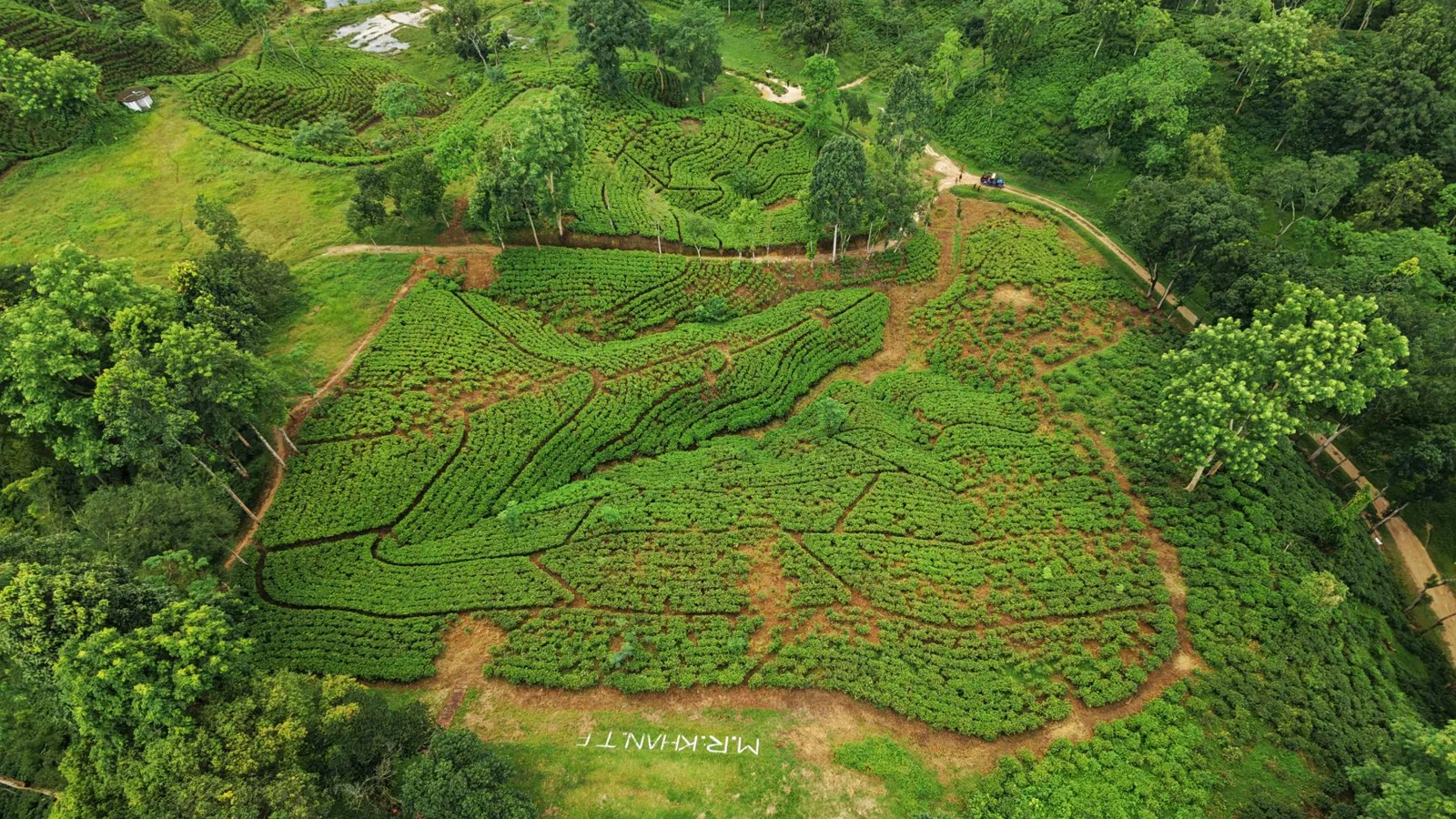
Photo by Anupom Datta on Pexels
The Coffee Atlas
India Wayanad
Wayanad, Kerala's Robusta heartland, holds a GI tag for a full-bodied, low-acid, chocolatey coffee: sourced altitude, harvest, and honest cupping caveats.
Flavor profile
avg. of 1 published reviewScale: 1-10, Coffee Review / SCA-classic-form convention. No Coffee Review lot score, competition result, or other dated per-attribute cupping for a Wayanad coffee was found, so these five numbers are NOT an average of real scores. They are an editorial translation of one qualitative description (soft to neutral cup, full body, low acidity, chocolate and nut notes, as repeated in the Outlook Traveller piece cited under Sources) onto the 1-10 radar scale. nReviewsAveraged is set to 1 only because the schema requires a minimum of 1; it counts that single qualitative description, not a scored review. Treat the shape (heavy body, low acidity) as the information and the exact digits as illustrative; individual lots, especially specialty-grade washed or natural lots, will vary.
What it tastes like
Wayanad is Kerala’s coffee district: by South First’s account it holds roughly 90 percent of the state’s coffee area, farmed by nearly 60,000 growers, and it received a Geographical Indication tag for Wayanad Robusta in 2019. Arabica came first here; pest and disease outbreaks in the second half of the 19th century pushed growers toward hardier Robusta, which is now the district’s defining crop.
The cup is the opposite of a bright Ethiopian. Outlook Traveller describes it as full-bodied and smooth with low acidity and rich chocolate and nutty notes, grown under shade alongside pepper and arecanut and processed mostly by traditional washed and natural methods. That makes it a body-and-crema coffee, which is why it so often ends up in blends with Arabica rather than on a pour-over bar.
Unlike most entries in this Atlas, there is no scored third-party cupping behind the radar chart here. The numbers are an editorial reading of that regional description, labeled low confidence, and a specialty-grade lot may well cup higher than they suggest.
How to brew it
Method fit for this origin · editorial guidance from roaster convention
Heavy body and low acidity are what Robusta-forward blends are built around, and Wayanad Robusta is widely described as a blending component for crema and body.
Full immersion keeps the round, chocolatey body front and center, with little bright acidity to lose.
Works for a clean cup, but there is little acidity or floral lift for the filter's clarity to showcase.
⚠ Fit tiers are editorial guidance drawn from roaster convention; no industry standard scores brew fit, so we show tiers, never invented numbers. Editorial judgment based on the general roaster convention for low-acid, full-bodied Robusta-dominant coffees, not lab data for any Wayanad lot and not an SCA-defined standard.
Altitude & region
Growing elevation, meters above sea level · this entry vs comparison bands
Wayanad's 700-2,100 m range is sourced directly from South First (see Sources & data) and describes the district's growing span, not a lot-specific measurement. India Coorg, Kenya AA, and Brazil Cerrado are shown for scale using the same commonly published bands already used elsewhere in this Atlas.
Caffeine content
Caffeine by dry weight · each gold dot = 0.1%
Caffeine content tracks species, not origin, altitude, or processing: roughly 1.2% for Arabica versus roughly 2.2% for Robusta, close to double (see Sources & data). Wayanad is mostly Robusta, so its coffee generally sits at the higher-caffeine species end, but no credible per-origin caffeine figure exists at a category level, and a given bag may be Arabica or a blend.
Where to buy it
Transparency: some links on this site are affiliate links; if you buy through them we may earn a commission at no cost to you. Roasters are picked for genuine, current sourcing of this coffee, never for who pays us.
Wayanad-based brand selling GI-labeled pure Wayanad Robusta coffee powder with no added chicory; ground rather than whole bean, and shipping to your country is not confirmed.
View lot→Lists a single-origin Robusta sourced from Wayanad district; check the product page for roast level and grind, and whether it ships to you.
View lot→Large Indian specialty roaster working with Indian farms; browse their coffee range for current single-origin lots, as a Wayanad-named lot was not confirmed at drafting time.
View lot→Wide selection; confirm listings actually name Wayanad rather than generic Indian Robusta, and check roast dates, whole-bean labeling, and seller reviews.
View lot→Sources & data
- South First: From colonial roots to global recognition, how Wayanad Robusta coffee is brewing big dreamsGI tag in 2019, altitude 700-2,100 m, roughly 90 percent of Kerala's coffee area, nearly 60,000 farmers, and the 19th-century shift from Arabica to Robusta after pest and disease outbreaks
- Outlook Traveller: The Taste Of Wayanad, Inside Kerala's Specialty Coffee BoomRobusta dominance, the full body / low acidity / chocolate and nutty description used for the flavor profile, shade-grown alongside pepper and arecanut, and traditional washed and natural processing
- Onmanorama: GI-tagged Wayanad Robusta Coffee earns national recognitionWayanad contributes 70% of Kerala's Robusta production; 95% of its 60,000 coffee farmers are small-scale; often blended with Arabica
- Royal Coffee: India Organic Robusta Cherry A (Wayanad)Basis for the Dec-Mar harvest window and natural (cherry) sun and mechanical drying, taken from a search-result snippet because the page fetch was rate-limited; treat as less firmly verified than the sources above
- Triba CoffeeConfirms a Wayanad-based brand selling GI-labeled Wayanad Robusta powder
- Crozier et al.: Espresso coffees, caffeine and chlorogenic acid intake (Food & Function, 2012)Peer-reviewed (Univ. of Glasgow): states robusta coffee beans contain almost twice as much caffeine as arabica, by species (no percentage figures given in this paper)
- Development of a fast and simple method to identify pure Arabica coffee and blended coffee by Infrared Spectroscopy (J. Food Sci. Technol., 2021, PMC8292507)Peer-reviewed, open-access: "The Arabica beans usually presents 1.0 to 1.5% w.w-1 of caffeine and Robusta beans presents 2.0 to 2.5% w.w-1" (quoted verbatim, source's own wording), source for this entry's 1.2% Arabica / 2.2% Robusta figures, both within the stated ranges