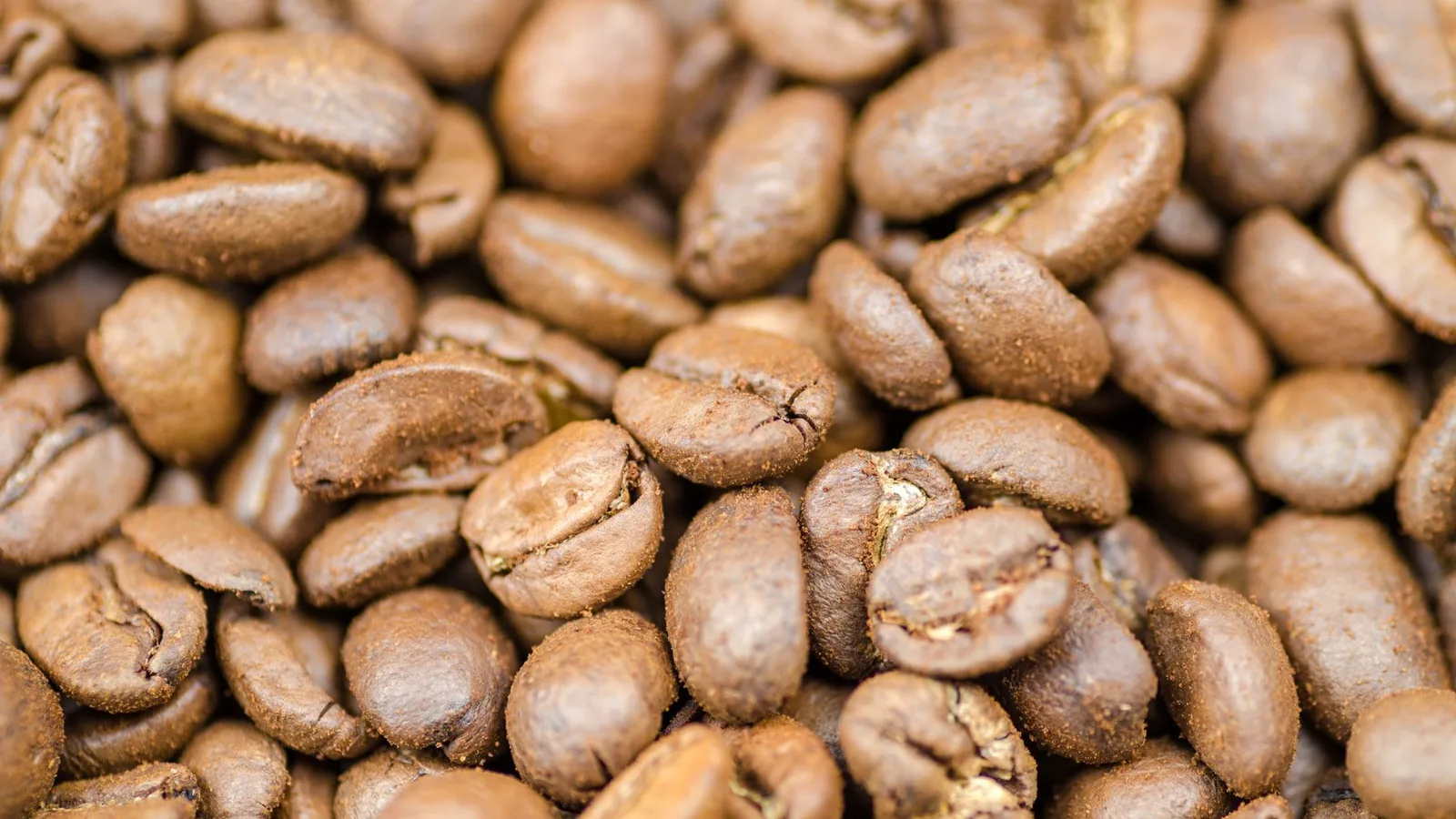
Photo by Lukas Blazek on Pexels
The Coffee Atlas
Honduras Santa Barbara
Honduras Santa Barbara, the western highland department behind many Pacas and Bourbon lots, with a cupping profile averaged from three Coffee Review scores.
Flavor profile
avg. of 3 published reviewsScale: 1-10, Coffee Review / SCA-classic-form convention. Averaged from 3 independently published, dated Coffee Review scores of Santa Barbara Department lots (Bard Coffee, September 2011, rated 90; Cafe Grumpy, May 2014, rated 90; Victrola Coffee Roasters, October 2015, rated 92). Coffee Review published these sub-scores as whole numbers, so the averages are coarse. Roast levels differ (medium-dark to medium), the reviews span four years, and each is a single lot from one farm, so this is not a category-wide statistical sample.
What it tastes like
Santa Barbara sits in western Honduras, split between the Opalaca and Copan coffee zones, and the lots Coffee Review has scored from it share a quiet, balanced sweetness rather than a single loud signature. The three cited lots land at 90, 90, and 92, with every attribute between 8 and 9.
What repeats across them is a cocoa-and-dried-fruit core. The Cafe Grumpy lot reads molasses, pecan, and raisin with a syrupy mouthfeel, while the Victrola lot leans brighter: raspberry, orange, and cacao nib with a cushiony body. All three reviewed lots are Pacas or Bourbon-and-Pacas, the Bourbon-derived varieties typical of the department, which suits the round, tart-sweet cup.
Lot variance is real: the three reviews differ in farm, year, and roast level, so treat the averages as a starting point rather than a promise about any bag.
How to brew it
Method fit for this origin · editorial guidance from roaster convention
Filtered clarity keeps the berry and orange top notes distinct from the cocoa base, the balanced profile roasters most often serve this way.
The cocoa and dried-fruit sweetness gives a rounded shot, though the moderate acidity makes it less vivid than brighter, higher-altitude origins.
Full immersion suits the round, cushiony body noted in the reviews, but it softens the citrus and floral edges.
⚠ Fit tiers are editorial guidance drawn from roaster convention; no industry standard scores brew fit, so we show tiers, never invented numbers. Reflects brew guidance commonly published by specialty roasters for balanced Central American lots, not an SCA-defined standard.
Altitude & region
Growing elevation, meters above sea level · this entry vs comparison bands
Honduras Santa Barbara's 1,100-1,500 m is Perfect Daily Grind's Opalaca-zone figure (see Sources & data), the zone covering much of the department. Honduras Copan and Honduras Marcala use the ranges already published in their own Atlas entries, and Brazil Cerrado uses the typical range used elsewhere in this Atlas; all three are shown for scale only, not as lot-specific measurements.
Caffeine content
Caffeine by dry weight · each gold dot = 0.1%
Caffeine content tracks species, not origin, altitude, or processing: roughly 1.2% for Arabica versus roughly 2.2% for Robusta, close to double (see Sources & data). This entry is 100% Arabica; no credible per-origin caffeine figure exists at a category level, so the comparison above is by species only, not a measurement of this specific lot.
Where to buy it
Transparency: some links on this site are affiliate links; if you buy through them we may earn a commission at no cost to you. Roasters are picked for genuine, current sourcing of this coffee, never for who pays us.
Ashland, Oregon direct-trade roaster that has listed a Santa Barbara lot (Jose Perez, 1,550 m); check the single-origin collection for the current offering.
View lot→Boston roaster that has offered Santa Barbara lots, including a Pacas honey-process from Pedro Sagastume; availability rotates.
View lot→Seattle roaster whose Santa Barbara Finca Las Brisas lots were scored by Coffee Review; check the single-origin collection for current Honduras offerings.
View lot→Wide selection in one place; check roast dates, 100%-origin labeling, and seller reviews before buying.
View lot→Sources & data
- Crozier et al.: Espresso coffees, caffeine and chlorogenic acid intake (Food & Function, 2012)Peer-reviewed (Univ. of Glasgow): states robusta coffee beans contain almost twice as much caffeine as arabica, by species (no percentage figures given in this paper)
- Development of a fast and simple method to identify pure Arabica coffee and blended coffee by Infrared Spectroscopy (J. Food Sci. Technol., 2021, PMC8292507)Peer-reviewed, open-access source for this entry's Arabica (1.0-1.5%) / Robusta (2.0-2.5%) caffeine ranges
- Perfect Daily Grind: Introducing the 6 coffee regions of HondurasSanta Barbara's placement in the Opalaca (1,100-1,500 m) and Copan (1,000-1,500 m) zones, and typical varieties
- Honduras Travel: coffee harvesting season in HondurasOctober-February harvest activity; names Santa Barbara among western Honduras's significant coffee areas
- Coffee Review: Honduras Santa Barbara, Bard CoffeeCupping scores (1 of 3 averaged); Pacas lot, September 2011, rated 90
- Coffee Review: Las Flores Honduras, Cafe GrumpyCupping scores (2 of 3 averaged); Bourbon and Pacas lot near Pena Blanca, May 2014, rated 90
- Coffee Review: Honduras Finca Las Brisas, Victrola Coffee RoastersCupping scores (3 of 3 averaged); Bourbon and Pacas lot, October 2015, rated 92
- The Way to Coffee: Honduras Jose Perez (Case Coffee Roasters)Example Santa Barbara lot listed at 1,550 m, showing farm-level altitude above the regional range